Every time we travel around Campania we notice that the wine changes every few kilometres: from the volcanoes to the hills of Irpinia, from the islands of the gulf to the seaside terraces of the coast. That is why we have gathered all the region's appellations in a single guide, province by province, with the grape varieties to know and a few tips for planning your own wine tour. From here you can open the page for each wine.
Campania's wine at a glance
Campania currently has 4 DOCGs, 15 DOCs and 10 IGTs. Its strength lies in its native grape varieties: the region has preserved extremely ancient varieties, many of them grown almost nowhere else, and has tied them to very different terroirs. They range from the volcanic soils of Vesuvius, the Campi Flegrei and Ischia to the clay and limestone hills inland, where vineyards climb above 500 metres and the temperature swings between day and night are pronounced.
Every year this heritage is showcased by the Guida Catalogo delle aziende vitivinicole e vinicole della Campania, the catalogue of Campania's wineries edited by the Region together with AIS Campania (the regional sommelier association), which reached its tenth edition in 2024. One trend highlighted by the guide really convinces us: more and more wineries are extending bottle ageing, as shown by the Riserva versions of Fiano di Avellino and Greco di Tufo, a path that Falanghina del Sannio and Campi Flegrei Falanghina are also ready to follow.
Before setting off, we suggest reading our in-depth article the native grape varieties of Campania: knowing Aglianico, Fiano, Greco and Falanghina makes it much easier to find your way among the labels.
The four DOCGs
The DOCG (controlled and guaranteed designation of origin) wines sit at the top of the pyramid. Three are in Irpinia, one in the Sannio:
- Taurasi DOCG: the great red made from Aglianico, the first DOCG in southern Italy, recognised in 1993.
- Fiano di Avellino DOCG: a white made from Fiano grapes, a DOCG since 2003, which ages beautifully over the years.
- Greco di Tufo DOCG: a white made from Greco grapes, also a DOCG since 2003, produced in a sparkling version too.
- Aglianico del Taburno DOCG: the red of the Taburno massif, a DOCG since 2011, the most recent addition.
Wine country, province by province
Avellino and Irpinia
Irpinia is the province of the three DOCGs. Taurasi comes from the hills around Taurasi, Fiano from around Avellino and Lapio, Greco from the villages around Tufo. The whole province is covered by Irpinia DOC, which includes whites, reds and various single-varietal styles. For a local overview read the wines of Avellino and our guide Avellino and its surroundings.
Benevento and the Sannio
The Sannio is the province with the most vineyards in the region and the home of Falanghina. Besides Aglianico del Taburno you will find Falanghina del Sannio DOC, with its sub-zones Taburno, Solopaca, Guardia Sanframondi (or Guardiolo) and Sant'Agata dei Goti, and the broader Sannio DOC. The geographical indications are Beneventano IGT and Dugenta IGT. Two villages not to miss are Solopaca and Guardia Sanframondi; find out more in the wines of the Benevento area and Benevento and its surroundings.
Caserta and the Terra di Lavoro
In the Caserta area, wine has Roman roots: Falernian was one of the most celebrated wines of antiquity and lives on today in Falerno del Massico DOC, between Sessa Aurunca and Mondragone. Around Aversa they grow Asprinio on tall vines trained up trees, protected by Aversa DOC (we tell you all about it in Asprinio di Aversa and its tree-trained vines). Then there are Galluccio DOC, on the slopes of the extinct Roccamonfina volcano, and Casavecchia di Pontelatone DOC, around Pontelatone. The IGTs are Roccamonfina IGT and Terre del Volturno IGT, the latter home to white and black Pallagrello. Also read the wines of Caserta and Caserta and its surroundings.
Naples, Vesuvius and the islands
The province of Napoli is the kingdom of volcanic soils. On the slopes of Vesuvius they make Vesuvio DOC, including the famous Lacryma Christi; west of the city lie the Campi Flegrei DOC vineyards, with Falanghina and Piedirosso. The islands have their own appellations: Ischia DOC, one of the first in Italy (1966), and Capri DOC. To the south, Penisola Sorrentina DOC includes the sparkling red of Gragnano and Lettere. The IGTs are Catalanesca del Monte Somma IGT, Pompeiano IGT and Epomeo IGT. Find out more in the wines of Naples and Naples and its surroundings.
Salerno, the coast and the Cilento
In the province of Salerno, vines climb the terraces of Costa d'Amalfi DOC, with the sub-zones Furore, Ravello and Tramonti: in Tramonti some very old vines still survive. Further south are Cilento DOC and Castel San Lorenzo DOC, in the valley of the Salerno Calore river. The IGTs are Colli di Salerno IGT and Paestum IGT. For the full picture read the wines of Salerno and Salerno and its surroundings.
The regional IGT
Finally, Campania IGT covers the whole region: it is the indication used for many single-varietal wines and for producers' experiments.
The main grape varieties
Among the reds, the star is Aglianico, a late-ripening, tannic variety that yields wines built for long ageing. Alongside it are Piedirosso, softer and fruitier, typical of the volcanic areas, Sciascinoso from the Sorrento peninsula, and Casavecchia and Pallagrello nero from the Caserta area.
Among the whites, Fiano, Greco and Falanghina stand out, followed by Coda di Volpe, Asprinio, Pallagrello bianco, Ischia's Biancolella and Forastera, and Vesuvius's Catalanesca and Caprettone. We introduce them one by one in the native grape varieties of Campania.
Wine tourism in Campania: the new rules
Since 2024 Campania has had its own wine tourism law: Regional Law no. 7 of 15 May 2024, "Esercizio delle attività enoturistiche sul territorio della Regione Campania" (on wine tourism activities in the Campania Region). It is the latest step in a process that began with the 2017 national law and the 2019 ministerial decree, and continued at regional level with the rules for wine and olive oil tourism activities approved in 2023.
For travellers this means more guarantees: wineries listed in the regional register of wine tourism operators must meet minimum quality standards, such as set opening days, a multilingual website with online booking, information signs at the entrance and materials in several languages. The activities covered include guided tours of the vineyards and cellars, tastings with local products and educational grape harvests. The law also sets up a Regional Wine Tourism Observatory. Wineries wishing to register can find forms and information on the Campania Region's wine tourism page.
Behind the appellations there are also the protection consortia recognised by the Ministry: the Irpinia wine consortium, the Sannio wine consortium, VITICA in the Caserta area, the Vesuvio and Campi Flegrei e Ischia consortia in the Naples area, and Vita Salernum Vites in Salerno. According to the 2024 guide, a Penisola Sorrentina consortium has also been set up and is awaiting recognition.
Our tips for a wine tour in Campania
- Choose one area at a time. Distances look short, but between hill roads and coastal traffic it pays to focus on a single territory: Irpinia and its three DOCGs, the Sannio and its Falanghina, Vesuvius and the Campi Flegrei, or the coast.
- Look for wineries listed in the regional register of wine tourism operators: they guarantee tours and hospitality to the standards of the new law.
- Always book ahead. Many wineries are small family businesses: visits are by appointment, especially on weekdays.
- Go for autumn. The grape harvest runs from September to November, and in Irpinia Aglianico is often the last grape picked, late in the season. We suggest reading autumn in Campania: the grape harvest and chestnut festivals.
- Pair wine with landscape. A winery itinerary becomes even better if you alternate it with villages, castles and trails: for a ready-made idea there is Irpinia and the Sannio in a weekend.
- Don't drive after tastings. Choose a designated driver, use the spittoon or book an organised tour.
- Taste at the table. Every wine shows its best with the food of its own land: a Greco with fish, a Taurasi with Irpinia's meat dishes, a Gragnano with pizza.
Among the recurring grape festivals, we recommend the one in Solopaca, described in Solopaca and the Grape Festival. Dates change every year: always check them on the official websites before you go.
Nearby
To pair the wines with local specialities, start with Campania's DOP and IGP products. If you want to combine wine and relaxation, take a look at the spas of Campania, while for a longer trip we recommend Campania in 7 days.
Sources
Sources: Campania Region with AIS Campania, Guida Catalogo 2024 of Campania's wineries (for general data on appellations, consortia and wine tourism); Campania Region, Wine tourism; MASAF, lists and production specifications of DOP and IGP wines; DOCG production specifications consulted on the AIS fact sheets.
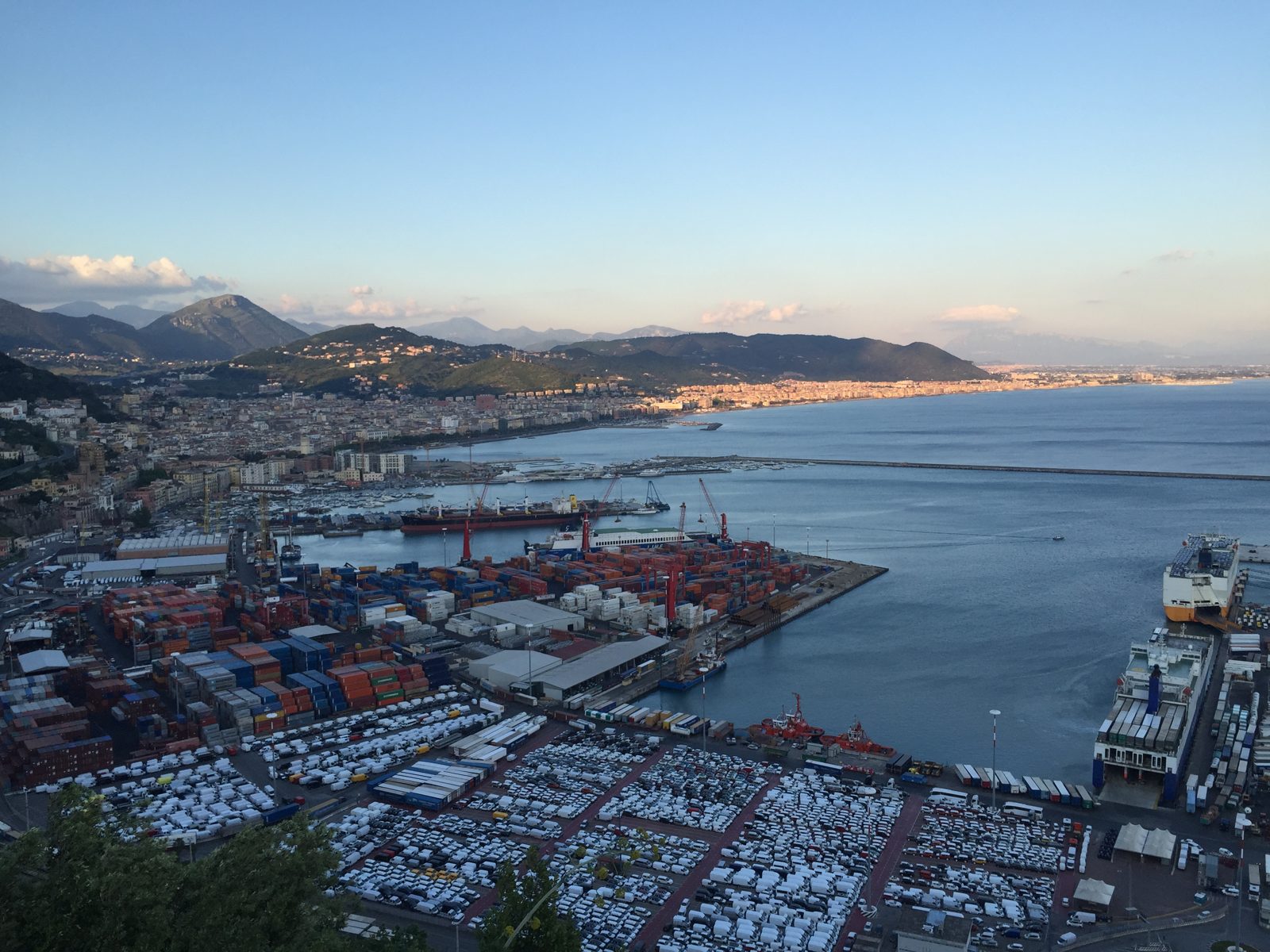
Top photo (Napoli): This Photo was taken by Wolfgang Moroder. Feel free to use my photos, but please mention me as the author and send me a message. This image is not in the public domain. Please respect the copyright protection. It may only be used according to the rules mentioned here. This specifically excludes use in social media, if applicable terms of the licenses listed here not appropriate. Please do not upload an updated image here without consultation with the Author. The author would like to make corrections only at his own source. This ensures that the changes are preserved.Please if you think that any changes should be required, please inform the author.Otherwise you can upload a new image with a new name. Please use one of the templates derivative or extract., CC BY-SA 3.0, via Wikimedia Commons.