When we started travelling around Campania, from Napoli to the most remote inland villages, to tell the story of its flavours, we soon realised that almost every valley has its own signature product. Many of them are protected by the European Union with a quality label: we have lined them up for you, province by province, with links to our detailed pages.
DOP, IGP and STG: what they mean
DOP (Denominazione di Origine Protetta, the Italian equivalent of PDO) indicates a product whose every production stage takes place in a defined area, with characteristics tied to that territory. IGP (Indicazione Geografica Protetta, or PGI) requires at least one stage to take place in the area of origin. STG (Specialità Tradizionale Garantita, or TSG), on the other hand, protects not an area but a traditional recipe or method. Each product has a disciplinare (production specification) setting out its rules, areas and inspections.
According to the Qualigeo database, Campania currently has 15 DOPs and 15 IGPs in the food sector (excluding wines), some shared with other regions, plus the STGs. In this guide we don't cover wines: for those, see the wines of Campania: our guide.
Dairy products and meat
The most famous product is undoubtedly Mozzarella di Bufala Campana DOP, protected since 1996, with a production area stretching from the Caserta area to the Piana del Sele and also taking in parts of Lazio, Puglia and Molise. The same whey gives us Ricotta di Bufala Campana, a DOP since 2010.
In the Monti Lattari they make Provolone del Monaco DOP, aged for at least six months and made partly with milk from the Agerolese cow. Caciocavallo Silano DOP, by contrast, is a denomination shared by five southern regions, Campania included. Among meats there is Vitellone Bianco dell'Appennino Centrale IGP (white Apennine beef), which also covers the inland areas of the region. It isn't a DOP, but if you love goat's cheese we also recommend Cacioricotta caprino del Cilento, a goat's milk cheese.
Vegetables and tomatoes
Volcanic soil and fertile plains have given Campania some unique vegetables. Pomodoro San Marzano dell'Agro Sarnese-Nocerino DOP (1996) is the ultimate tomato for peeled tinned tomatoes; on the slopes of Vesuvius grows Pomodorino del Piennolo del Vesuvio DOP (2009), a cherry tomato stored hanging in large clusters. In the same Agro Nocerino-Sarnese area they grow Cipollotto Nocerino DOP (spring onion) (2008).
In the Piana del Sele grow Carciofo di Paestum IGP (Paestum artichoke) (2004) and two younger IGPs: Rucola della Piana del Sele IGP (rocket, 2020) and Cavolfiore della Piana del Sele IGP (cauliflower), registered in 2024, the most recent Campanian product to join the European register.
Fruit, citrus and nuts
Citrus fruits are the face of the coast: Limone di Sorrento IGP (2000) and Limone Costa d'Amalfi IGP (2001) grow under traditional pergolas. These lemons also produce two spirit drinks protected as geographical indications: Liquore di limone di Sorrento and Liquore di limone della Costa d'Amalfi. We also talk about them in lemon cream liqueur, or cremoncello.
Melannurca Campana IGP (2006) is the apple that ripens to red on the ground, in beds called melai. In the Cilento, Fico Bianco del Cilento DOP (white fig) (2006) is sun-dried and often stuffed. More recent is Ciliegia di Bracigliano IGP (cherry), registered in 2023.
Then there is the big chapter of nuts. In Irpinia we find the Castagna di Montella IGP chestnut, the first Italian chestnut to be protected (1996), and Marrone di Serino IGP (2018). In the Salerno area there are Marrone di Roccadaspide IGP and the Nocciola di Giffoni IGP hazelnut; in the Caserta area, on the extinct volcano, Castagna di Roccamonfina IGP (2022).
Extra virgin olive oils
Campania has five DOP oils, each linked to local olive varieties. Three were registered in 1997: Cilento DOP extra virgin olive oil, Colline Salernitane DOP extra virgin olive oil and Penisola Sorrentina DOP extra virgin olive oil. Then came Irpinia Colline dell'Ufita DOP extra virgin olive oil, based on the Ravece variety, and Terre Aurunche DOP extra virgin olive oil, based on Sessana.
Since 2023 there has also been Olio Campania IGP, covering the whole region. Finally, part of the production area of Oliva di Gaeta DOP, a table olive shared with Lazio, lies in the Caserta area.
From the sea: colatura
In Cetara, on the Amalfi Coast, they make Colatura di Alici di Cetara, a DOP since 2020: a liquid seasoning obtained by maturing salted anchovies. Just a few drops on a plate of spaghetti are enough.
Pasta and pizza
Pasta di Gragnano IGP (2013) is bronze-die extruded and slowly dried in Gragnano, at the foot of the Monti Lattari. And then there is the queen herself: Neapolitan pizza, registered as an STG in 2010. As a traditional speciality guaranteed, it can be made anywhere, as long as the method in the specification is followed. The STGs also include traditional Mozzarella, though this is a national protection, not just a Campanian one.
How to find your way among the labels
When you buy a protected product, look on the label for the EU logo (red and yellow for DOP, blue and yellow for IGP and STG) and the full name of the denomination. Many protection consortia organise visits and open days: we recommend checking their websites before you go. And remember that seasons matter: chestnuts and annurca apples in autumn, artichokes in late winter, tomatoes in summer. Season matters less for cheeses, but buffalo mozzarella in particular should be eaten very fresh, ideally in the area where it is made.
One last tip: beware of imitations. Names like "San Marzano" or "piennolo" often appear on products that have nothing to do with the denomination. Only the EU logo and the full name on the label guarantee that what you are buying was produced in the area and according to the rules of the specification.
Nearby
To discover where to taste these products in traditional dishes, start with typical Neapolitan dishes, typical dishes of Salerno and typical dishes of Caserta. If you are travelling in autumn, read autumn in Campania: the grape harvest and chestnut festivals. To plan your trip, our provincial guides are Naples and its surroundings, Salerno and its surroundings, Caserta and its surroundings, Avellino and its surroundings and Benevento and its surroundings.
Sources: Qualigeo – DOP, IGP and STG products of Campania; Eunews – IGP registration of Cavolfiore della Piana del Sele.
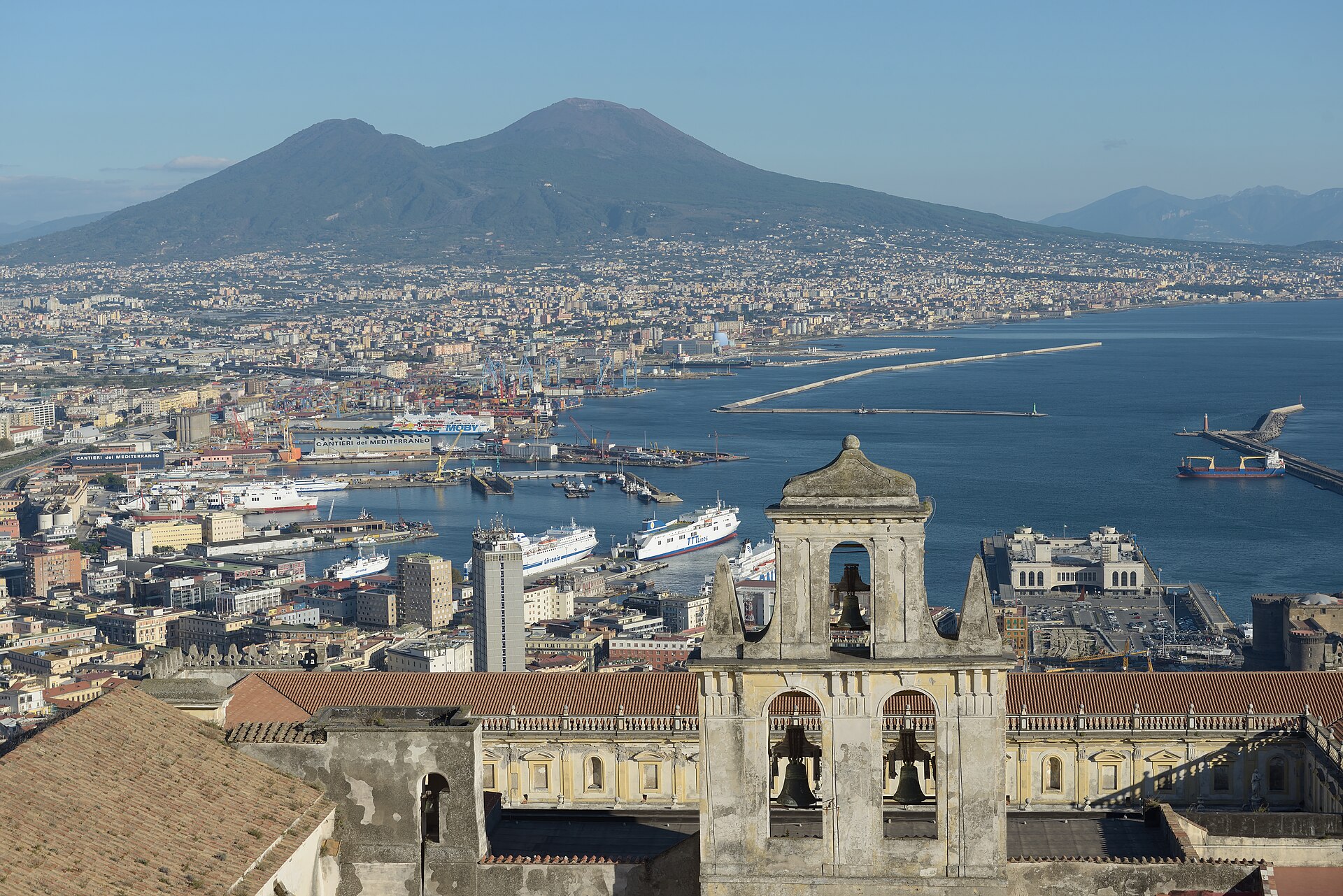
Top photo (Napoli): This Photo was taken by Wolfgang Moroder. Feel free to use my photos, but please mention me as the author and send me a message. This image is not in the public domain. Please respect the copyright protection. It may only be used according to the rules mentioned here. This specifically excludes use in social media, if applicable terms of the licenses listed here not appropriate. Please do not upload an updated image here without consultation with the Author. The author would like to make corrections only at his own source. This ensures that the changes are preserved.Please if you think that any changes should be required, please inform the author.Otherwise you can upload a new image with a new name. Please use one of the templates derivative or extract., CC BY-SA 3.0, via Wikimedia Commons.