When people ask us where to start exploring the province of Caserta, we always give the same answer: from the Reggia, but without stopping there. The old Terra di Lavoro brings together Roman cities, medieval villages, Bourbon residences, extinct volcanoes and mountain lakes. This is our guide to help you find your way, with links to all the articles we have devoted to it.
Caserta city: the Reggia and the centre
The starting point is the Reggia di Caserta (Royal Palace of Caserta), designed by Luigi Vanvitelli for Carlo di Borbone (Charles of Bourbon) and a UNESCO World Heritage Site since 1997. To plan your visit read what to see in Caserta, then go into detail with the Royal Apartments of the Reggia di Caserta, the Royal Gardens of Caserta and the English Garden of the Reggia di Caserta. The churches and squares of the centre, from the cathedral to Vanvitelli's tomb, are gathered in Caserta's monuments and churches.
If you are short on time and want to get straight to the point, start with 5 must-see places in Caserta; if instead you are looking for experiences, from cycling in the park to excursions, you will find our ideas in things to do in Caserta.
Beyond the Reggia: Casertavecchia, San Leucio and the Aqueduct
The UNESCO site doesn't end at the palace. Our complete itinerary is in what to visit in Caserta. On the Monti Tifatini stands the medieval village described in Casertavecchia, with the Romanesque cathedral consecrated in 1153, to which we devoted the Cathedral of Casertavecchia.
At San Leucio, Ferdinando IV founded a silk-making colony at the end of the 18th century: read the Belvedere of San Leucio, the Silk Museum of San Leucio and San Leucio silk, a Bourbon tradition. Finally, between Maddaloni and Valle di Maddaloni, the arches of the Ponti della Valle await you in the Carolino Aqueduct and the Ponti della Valle.
Ancient Capua and the plain
Just a few kilometres from the provincial capital you enter the Roman world. In Santa Maria Capua Vetere stands the Anfiteatro Campano (Campanian Amphitheatre), second in size only to the Colosseum, described in the Campanian Amphitheatre and the Mithraeum of Santa Maria Capua Vetere. In Capua we recommend the Museo Provinciale Campano in Capua, with its famous collection of Matres Matutae (mother-goddess statues), and on the slopes of Mount Tifata the basilica of Sant'Angelo in Formis, described in the Basilica of Sant'Angelo in Formis, with its 11th-century frescoes.
Further south, Aversa became the first Norman county in southern Italy, in 1030: you will find it in Norman Aversa: cathedral and old town. Out on the plain, at San Tammaro, stands the Bourbon estate of Carditello, brought back to life in the Royal Site of Carditello.
The north of the province: Teano, Sessa Aurunca and Roccamonfina
Heading north towards Lazio, the landscape changes. Teano and Sessa Aurunca preserve Roman theatres and medieval old towns, which we have described together in Teano and Sessa Aurunca, between Romans and the Middle Ages. Between the two rises the ancient volcano of Roccamonfina, with its caldera almost 6 kilometres wide and its chestnut woods: it is all in the Roccamonfina volcano and its park.
The Matese and the Volturno valley
For mountain lovers, the Matese is a surprise. At around 1,014 metres, in the municipality of San Gregorio Matese, lies a karst lake overlooked by Monte Miletto: we cover it in Lake Matese. The costumes, festivals and crafts of these mountains are gathered in the traditions of the Matese.
Heading down towards the Volturno, Caiazzo preserves a castle of Lombard origin and an old town that won us over: read the village of Caiazzo.
The flavours and wines of the province
The province is one of the heartlands of the buffalo: don't miss Mozzarella di Bufala Campana DOP and Ricotta di Bufala Campana. For home cooking, start with what to eat in Caserta and typical dishes of Caserta.
Wine deserves a chapter of its own, and indeed you will find it in the wines of Caserta. On Monte Massico grows Falerno del Massico DOC, heir to a wine celebrated by the Romans; around Aversa the tall vines of Asprinio are grown, described in Asprinio di Aversa and its tree-trained vines and protected by Aversa DOC. Completing the picture are Galluccio DOC, Casavecchia di Pontelatone DOC, Roccamonfina IGT and Terre del Volturno IGT.
Getting there and when to go
Caserta is on the Rome-Naples railway line and the station is right opposite the Reggia; by car, the A1 motorway crosses the province, with exits at Caserta Nord, Caserta Sud, Capua and others further north. For the Matese, Roccamonfina and the villages a car is essential. Spring and autumn are the best seasons; the Matese is pleasant in summer too. Check opening times and tickets on the official websites before you go.
Nearby
The province borders the Sannio, and from Caserta you can also quickly reach inland Campania. If you want to continue your trip, read our guides Benevento and its surroundings, with the Valle Caudina and the Taburno just a stone's throw from the Carolino Aqueduct, and Avellino and its surroundings to discover Irpinia.
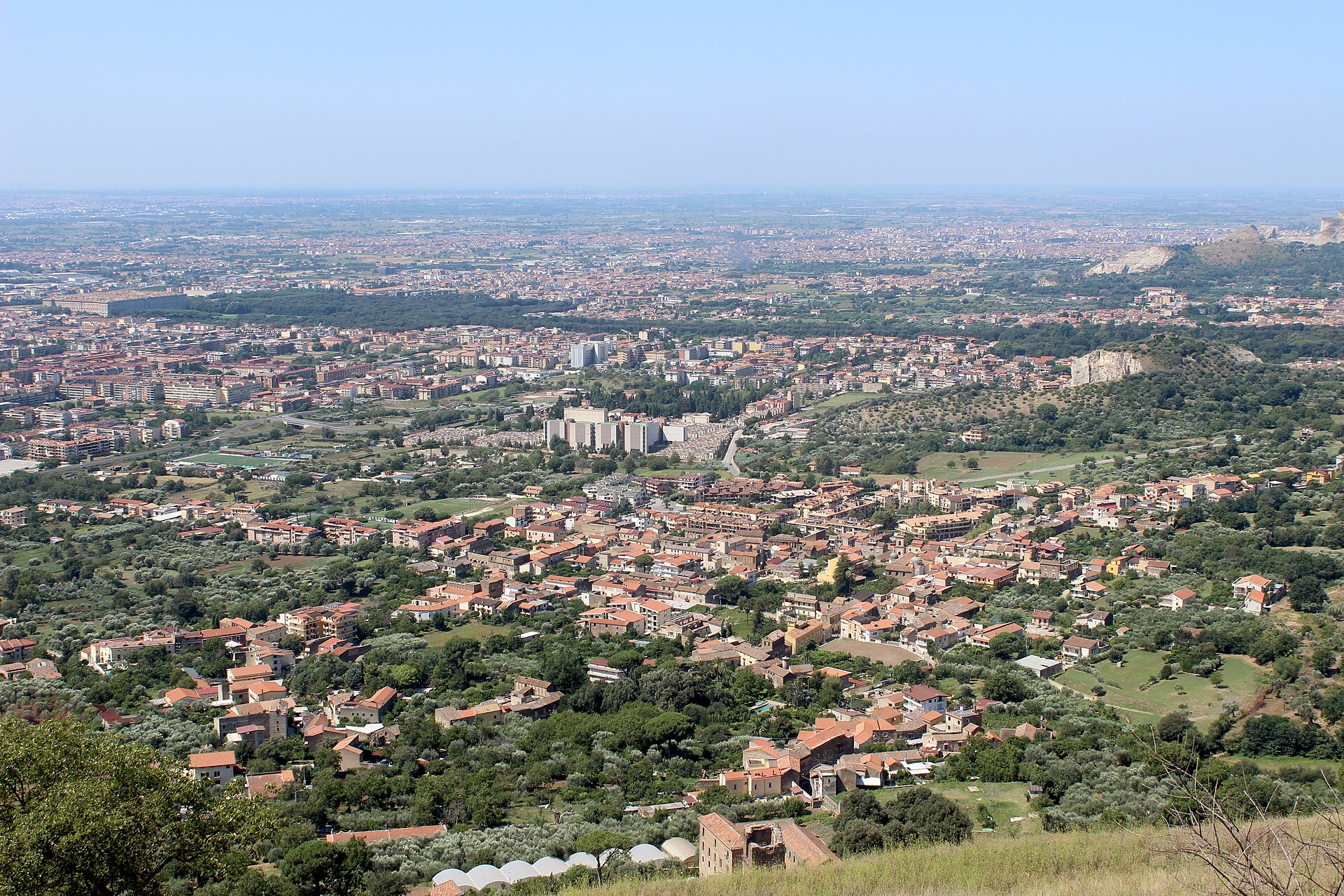
Top photo (Caserta): Miguel Hermoso Cuesta, CC BY-SA 4.0, via Wikimedia Commons.