Many people arriving in Avellino for the first time never get beyond the city itself, but we have learned that Irpinia deserves to be experienced as a whole: the city, the mountains around it, the stone-built villages, the abbeys and the vine-covered hills. In this guide we bring together everything we have written about the province, to help you plan your own trip.
The city: history, monuments and curiosities
Avellino lies in a green basin crossed by the Sabato river, sheltered by the Partenio massif and, to the south-east, by the Monti Picentini. Ancient Roman Abellinum stood on what is now the territory of Atripalda; today's city instead grew up around the Collina della Terra hill, home to the cathedral and the remains of the castle.
For a first visit, start with what to see in Avellino, covering the city's landmarks. If you want a complete walking route, from the oldest quarter all the way to the Corso, follow our itinerary what to visit in Avellino. If you love hidden corners, you will find crypts, vanished statues and legends in things to do in Avellino: mysterious and fascinating places.
We have also written in-depth pieces on individual monuments: the Lombard Castle of Avellino, linked to the history of the Caracciolo family; the Obelisk of Charles II and Palazzo De Conciliis, where a very young Victor Hugo stayed in 1808; and the Museo Irpino and the former Bourbon Prison, for anyone who wants to explore the area's history from ancient finds onwards.
Mountains and places of faith
The best-loved destination in the area is the Santuario di Montevergine, on Monte Partenio above Mercogliano, founded in the 12th century by San Guglielmo da Vercelli (Saint William of Vercelli): we tell you all about it in the Sanctuary of Montevergine. From the same massif you can reach Summonte, one of the Borghi più belli d'Italia (Most Beautiful Villages in Italy) since 2017, with its panoramic tower: here is the Tower of Summonte.
Further east, in Sant'Angelo dei Lombardi, stands the Abbazia del Goleto, also founded by William of Vercelli around 1133: you will find it in the Abbey of Goleto. If you are short on time and only want the essential stops outside the city, we have picked them for you in 5 must-see places around Avellino.
Nature, lakes and unusual landscapes
Nature lovers are spoilt for choice. In the Picentini mountains, at Bagnoli Irpino, Lago Laceno is a karst lake that changes with the seasons, surrounded by woods and trails: read Lake Laceno and its plateau.
In Alta Irpinia, at Conza della Campania, the reservoir on the Ofanto river has become a nature reserve of around 800 hectares, one of the most important wetlands in Campania, home to herons, storks and many other species: we cover it in the WWF Oasis of Lake Conza. Not far away, at Rocca San Felice, the Valle d'Ansanto releases gases from underground and was sacred to the goddess Mefite (Mephitis): it is all in the Valle d'Ansanto and the Mefite.
Castles and villages to discover
In Ariano Irpino the restored Norman castle has housed the Museo della Civiltà Normanna (Museum of Norman Civilisation) since 2009: find out more in the Castle of Ariano Irpino and the Museum of Norman Civilisation. In Calitri, a village clinging to the Ofanto valley, the Borgo Castello quarter hosts a Museo della Ceramica (Ceramics Museum) that tells the story of an ancient local craft, from medieval pottery to Renaissance majolica.
Three villages have stayed in our hearts, and all belong to the Most Beautiful Villages in Italy network: Zungoli, Monteverde and Nusco. We cover them together in the most beautiful villages of Irpinia: Zungoli, Monteverde, Nusco.
At the table and in the cellar
Irpinia is also something to discover at the table. In what to eat in Avellino you will find the traditional dishes, with two in-depth articles on fusilli avellinesi, Avellino's handmade pasta and the cicci di Santa Lucia, the grain and pulse soup eaten on 13 December. The mountains yield precious products such as the Castagna di Montella IGP chestnut and the black truffle of Bagnoli Irpino.
This is also one of the great wine lands of southern Italy, with three DOCG wines. Start with the wines of Avellino and then explore the individual appellations: Fiano di Avellino DOCG, Greco di Tufo DOCG, Taurasi DOCG wine and the appellation that covers the whole province, Irpinia DOC.
Getting there and when to go
Avellino is linked to Naples and Bari by the A16 motorway and to Salerno by the motorway link road. To explore the surroundings a car is almost essential, as many villages and natural sites can only be reached on inland roads. Spring and autumn are the best seasons: autumn in particular coincides with the grape harvest and chestnut picking. In winter, check mountain road conditions before setting off. To plan two well-spent days, read a weekend in Avellino.
Nearby
If you are planning a longer trip, the province of Avellino borders the Sannio: start with Benevento and its surroundings. For mountain lovers there is mountain tourism in Campania: peaks, trails and snow, while those travelling for faith will find more sanctuaries in religious tourism in Campania: sanctuaries and pilgrimage routes. And if the lakes of Irpinia have caught your interest, carry on with lake tourism in Campania: lakes to discover.
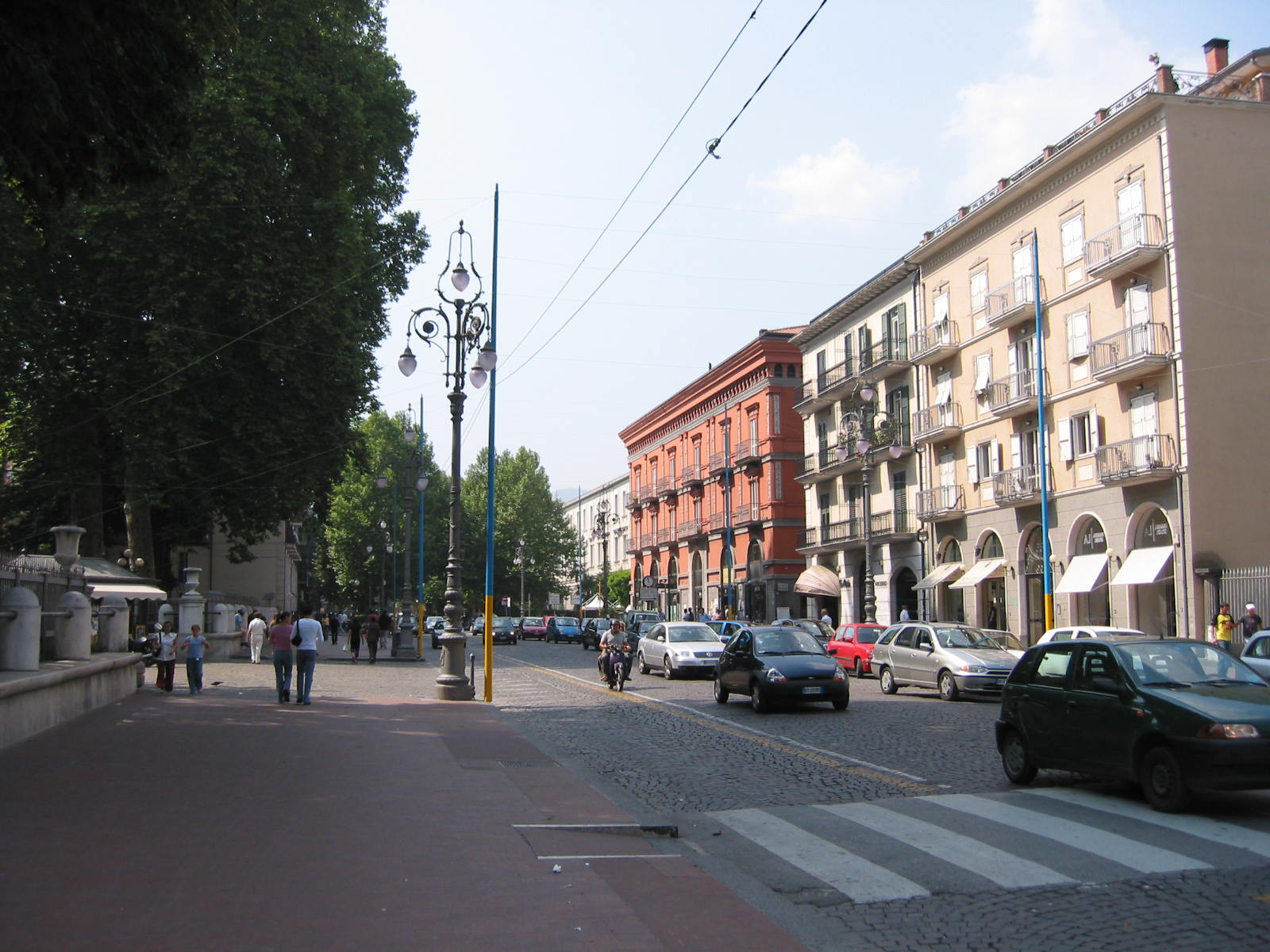
Top photo (Avellino): autore sconosciuto, CC BY-SA 3.0, via Wikimedia Commons.