When we visit a city, we often forget about the villages around it. With Benevento that would be a real shame: the Sannio is a land of villages, mountains, vineyards and ancient stories. In this guide we bring together everything we have told you about the city and its province, so you can choose where to begin.
Benevento, the starting point
If you are short on time, start with 3 must-see places in Benevento: the Arco di Traiano (Arch of Trajan), the Lombard church of Santa Sofia and the Teatro Romano (Roman Theatre). Each also has its own dedicated page: the Arch of Trajan, Santa Sofia and the Museo del Sannio and the Roman Theatre of Benevento.
For a route through the lesser-known Roman and Lombard monuments there is what to see in Benevento, while museums and churches, from the cathedral to the Museo Arcos, are covered in what to visit in Benevento. Don't miss the Rocca dei Rettori and the open-air artwork by Mimmo Paladino, described in the Rocca dei Rettori and the Hortus Conclusus. If you are looking for experiences, shows and walks, read things to do in Benevento; to plan two full days, see our weekend in Benevento. And to discover the city's more mysterious side: the janare: the legend of the witches of Benevento.
The Valle Caudina and Montesarchio
About 18 kilometres south-west of the city lies Montesarchio, identified with ancient Caudium, the main centre of the Caudine Samnites. It was here, in the valley, that in 321 BC the Romans suffered the humiliation of the Forche Caudine (Caudine Forks). The medieval castle and its tower dominate the town and house the Museo Archeologico Nazionale del Sannio Caudino, where we were enchanted by the krater of Assteas depicting the abduction of Europa. It is all in the Castle and the Museo del Sannio Caudino.
Pietrelcina, the hometown of Padre Pio
Pietrelcina borders Benevento and is the village where Francesco Forgione, the future Padre Pio, was born on 25 May 1887. We strolled between his birthplace in vico Storto Valle, the church of Santa Maria degli Angeli and the hamlet of Piana Romana, linked to the saint's youth. Even those who don't come as pilgrims will find a quiet, intimate village. The complete guide is in Pietrelcina, the places of Padre Pio.
The Taburno: Solopaca and Sant'Agata de' Goti
The Taburno-Camposauro massif is the green lung west of the city, ideal for hikes and views: we cover it in the Taburno-Camposauro Park. At its foot, along the Calore river, lies Solopaca, a village of vines and olive trees famous for its Festa dell'uva (Grape Festival), traditionally held on the second Sunday of September with floats covered in grapes: we tell its story in Solopaca and the Grape Festival.
On the western side of the Taburno, perched on a spur of tuff, stands Sant'Agata de' Goti. We were struck by the houses overhanging the drop and by the church of the Annunziata, with its large 15th-century Giudizio Universale (Last Judgement). It was also the episcopal seat of Sant'Alfonso Maria de' Liguori. You will find everything in Sant'Agata de' Goti.
Towards the Matese: Cerreto Sannita and Pietraroja
Further north, Cerreto Sannita is a small town rebuilt on a regular grid after the 1688 earthquake and famous for its ceramics, a tradition that began with the arrival of master potters from Naples: we tell the story in Cerreto Sannita and its ceramics.
Climbing higher you reach Pietraroja, at over 800 metres beneath Monte Mutria. This is where Scipionyx samniticus was found, the small dinosaur nicknamed Ciro, the first in Italy with its internal organs preserved. At the Paleolab you can discover its story, and the village is also known for its prosciutto. Find out more in Pietraroja and the Paleolab, the land of Ciro.
The flavours and wines of the Sannio
The Sannio is also something to discover at the table. For the local dishes there is what to eat in Benevento; for sweets, Benevento torrone (nougat) and the trip to San Marco dei Cavoti described in the torrone of San Marco dei Cavoti. Not to be forgotten is Strega liqueur, created in the city in the 19th century.
The Sannio also has a long winemaking tradition. Start with the wines of the Benevento area and then explore the individual appellations: Aglianico del Taburno DOCG, Falanghina del Sannio DOC and Sannio DOC.
Getting there and when to go
Benevento is connected by train to Naples and Caserta and, by car, to the A16 motorway via the link road. For the villages of the province a car is almost essential, as public transport is limited. Spring and autumn are the best seasons for hiking and the grape harvest; summer is perfect for the Matese mountains. Check opening times and tickets on the official websites before you go.
Nearby
The Sannio borders Irpinia: if you want to extend your trip, Avellino awaits to the south, with our guide Avellino and its surroundings. If you are staying in the area, our tips for getting started are 3 must-see places in Benevento, Pietrelcina, the places of Padre Pio, Sant'Agata de' Goti and the Taburno-Camposauro Park.
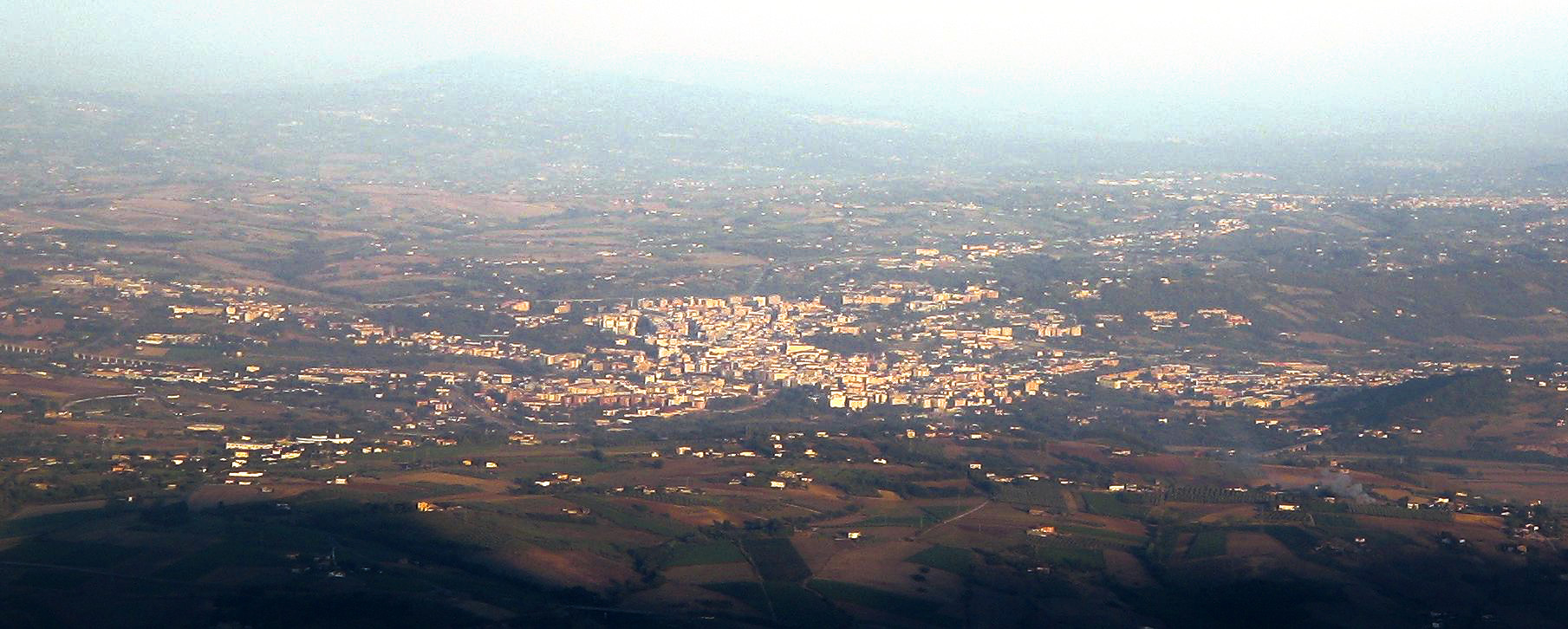
Top photo (Benevento): Dэя-Бøяg, CC BY-SA 3.0, via Wikimedia Commons.