Every time we drive up to Casertavecchia, it feels as though we change centuries in the space of a few hairpin bends. The medieval village overlooks the plain from high up on the Tifatini Mountains (Monti Tifatini), about ten kilometres from the centre of Caserta, and preserves stone alleys, the castle tower and one of the most beautiful Romanesque cathedrals in southern Italy. Here is why it deserves at least half a day.
A hilltop village, built for defence
Casertavecchia stands at an altitude of about 401 metres. The first reliable record dates back to 861: the monk Erchempert, in his history of the Lombards of Benevento, mentions it under the name Casa Hirta, meaning “village set up high”. Its perched position explains its fortune: when Saracen raids were devastating the plain, many inhabitants took refuge up here.
Under the Lombards the village became the seat of a county, and from the end of the 9th century the line of the counts of Caserta began. The bishop’s seat also moved here, and the village became the true centre of the area.
Normans and Swabians, the golden centuries
Its period of greatest splendour came with the Normans, from the second half of the 11th century. It was in those years, in 1113, that Bishop Rainulf began building the cathedral dedicated to Saint Michael the Archangel, consecrated in 1153. Under the Swabians, with Count Riccardo di Lauro, the village enjoyed another prosperous season: the bell tower, completed in 1234, dates from this period.
We have devoted a separate article to the cathedral, La Cattedrale di Casertavecchia, because its blend of styles alone would be worth the trip.
Decline and rebirth
From 1442, with the arrival of the Aragonese, a slow decline began. The population gradually moved down to the plain, where the new Caserta was growing, and the final blow came when the Bourbons built their Royal Palace there. In the 19th century the bishop’s seat was also transferred to the city, and the church lost its status as a cathedral.
It was precisely this abandonment that preserved the village almost intact. In 1960 Casertavecchia was declared a national monument, and since then restoration and care have turned it into one of the best-loved destinations in the province.
What to see as you stroll through the village
Its heart is the Cathedral square, with the tuff façade and the bell tower straddling the street with an arch. From here we suggest you get lost, unhurried, in the alleys: grey stone houses, arches, little stairways and small squares that suddenly open onto the valley.
On the edge of the village stand the ruins of the castle, an irregular hexagon of which the walls and towers survive, including the great cylindrical keep. The church of the Annunziata is also worth a stop, with its Gothic arch and rose window on the façade; it was damaged in the 20th century and later restored.
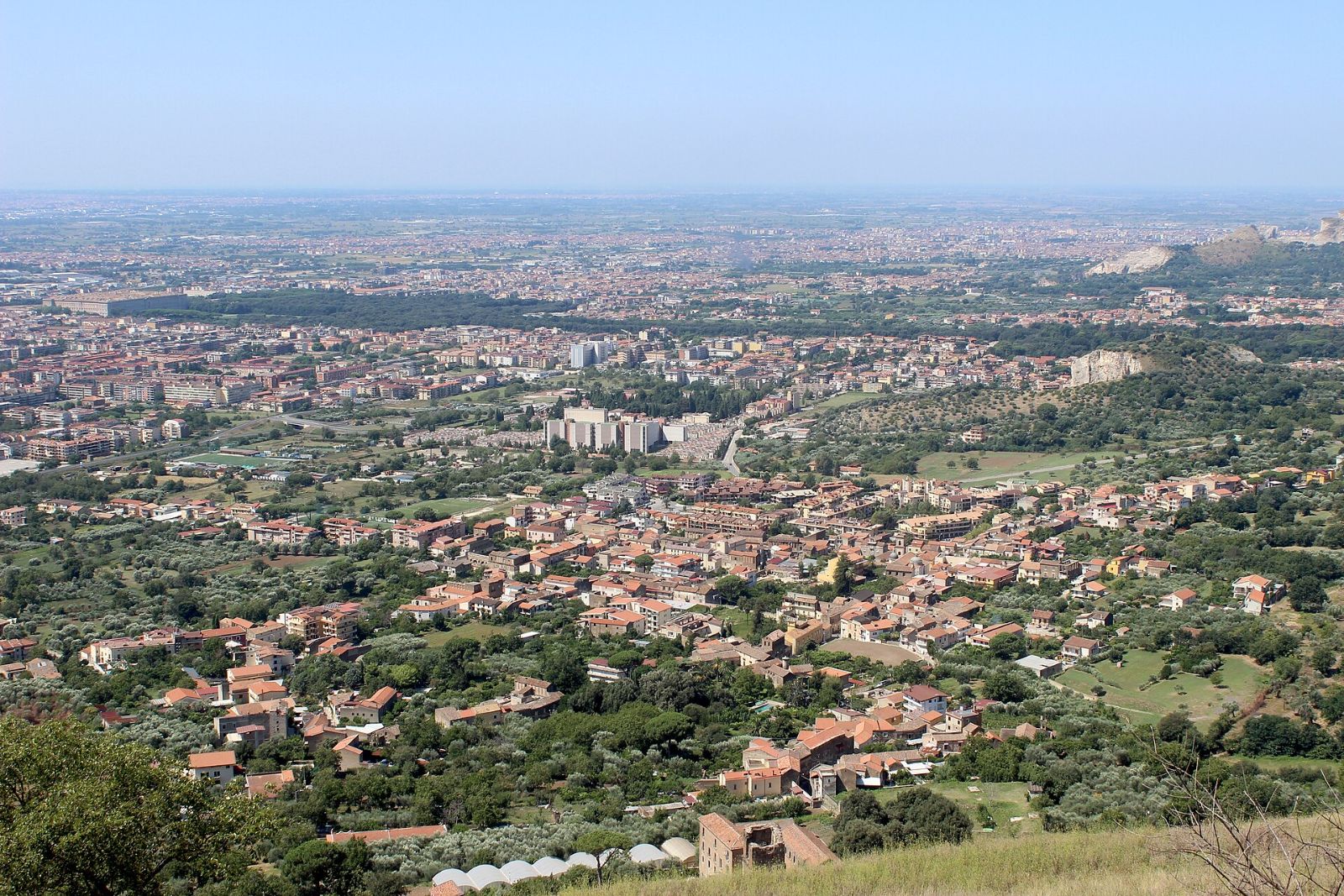
What struck us most, though, is the view: from the village’s viewpoints you can look out over Caserta and the Campanian plain, and on clear days your gaze reaches all the way to the sea. At sunset the stone takes on a warm colour that makes everything even more atmospheric.
The village through the year
In summer, thanks to the altitude, the air up here is cooler than in the city. Between late summer and early autumn, for decades the village has hosted Settembre al Borgo, a festival of shows, music and theatre that draws large crowds into the alleys. If you are looking for peace and quiet, choose a weekday.
Getting there and when to go
Casertavecchia is about 10 km by road from the centre of Caserta and can be reached by car in around twenty minutes, climbing the hairpin bends of the Tifatini; there are parking areas on the edge of the village, because the centre is explored on foot. Spring and autumn are the best seasons, while in summer it is best to go up in the late afternoon. For access to the cathedral, check opening times and services on the diocese’s official website before you set off.
Nearby
- Il Belvedere di San Leucio, the Bourbon silk colony.
- I Giardini Reali di Caserta, the park of the Royal Palace at the foot of the hill.
- Caserta tra monumenti e chiese, to round off your visit to the city.
- Caserta e dintorni, our complete guide to the area.
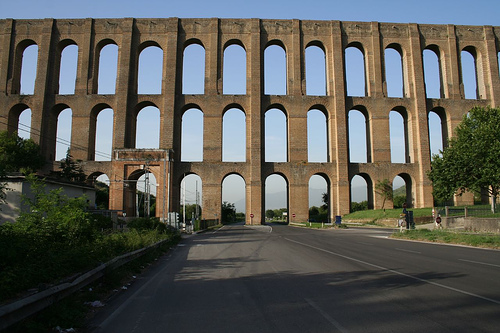
Top photo (Caserta): Miguel Hermoso Cuesta, CC BY-SA 4.0, via Wikimedia Commons.