When we reached the far end of the Royal Palace park, after three kilometres of pools and fountains, we thought we had seen everything. Then we walked through the gate of the English Garden and found ourselves in another world: winding paths, huge trees, fake ruins and ponds. Here is why, in our opinion, it deserves a good part of the day all on its own.
A garden wanted by a queen
The English Garden (Giardino Inglese) was strongly desired by Maria Carolina of Habsburg, wife of Ferdinand IV. She was also encouraged by the British ambassador William Hamilton, and it is said that the queen wanted to rival the Petit Trianon of her sister Marie Antoinette at Versailles.
To create it, the English botanist and gardener John Andrew Graefer was called in; he worked here from the mid-1780s until 1798. The garden’s buildings and architectural features, on the other hand, are the work of Carlo Vanvitelli, Luigi’s son. The result was one of the first English-style gardens created in Italy.
A “natural” landscape built with art
Unlike the Italian-style park, with its perfectly straight axes, here everything is designed to look spontaneous. The ground is shaped into small hills and hollows, the winding paths open up ever-changing views, and the water for the ponds comes from the same Carolino Aqueduct system that feeds the Great Waterfall right next door.
As we walked, we really had the feeling of an ideal landscape, the kind 18th-century travellers dreamed of after seeing paintings of classical ruins. But behind this apparent naturalness lie very sophisticated works of architecture and hydraulic engineering.
The Bath of Venus and the Cryptoporticus
The spot that moved us most is the Bath of Venus (Bagno di Venere): a small lake hidden among the vegetation, where a statue of the goddess seems to have just stepped out of the water. It is the Venus by Tommaso Solari, the same sculptor who created the Royal Majesty on the Palace’s grand staircase.
Not far away lies the Cryptoporticus (Criptoportico), a fake Roman ruin built specifically to look ancient, with niches housing ancient sculptures from the Bourbon collections, linked to the Vesuvian excavations and to the Farnese collection. It reflects the taste for antiquity typical of those years, when the excavations of Pompeii and Herculaneum were the great sensation of Europe.
Along the route you will also find the Tempio Diruto (Ruined Temple), another artificial ruin that has recently been restored.
Rare plants, greenhouses and the Aperia
Graefer turned the garden into a place of botanical experimentation. Exotic species that were then extremely rare arrived here, including camellias from Japan. Today you will be struck above all by the gigantic cedars of Lebanon, the plane trees, palms, pines and cypresses, as well as the flower beds and lawns.
Alongside the trees are the “service” buildings: the English House (Casa Inglese), where Graefer lived, Graefer’s Greenhouses, reopened to the public in 2024, and the Aperia, built to a Vanvitelli design as a water reservoir and later used for beekeeping.
Getting there and when to go
The English Garden lies at the northern end of the park of the Royal Palace of Caserta, next to the Great Waterfall. It is about three kilometres from the Palace: you can cover them on foot, by bike (there is a rental service in the park) or by the internal shuttle. The Royal Palace ticket usually includes the park and garden, but check opening hours and tickets on the official website before you set off.
We recommend spring, when the camellias are in bloom, or autumn, with its coloured leaves. In summer go early in the morning: the shade of the trees helps, but the walk to get there is long and sunny.
Nearby
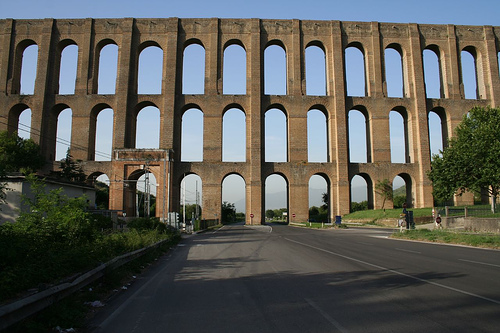
After the garden, head back towards the palace and visit Gli Appartamenti Reali della Reggia di Caserta, or retrace the great fountains with our guide to I Giardini Reali di Caserta. If you want to see where the water for the ponds comes from, continue with L’Acquedotto Carolino e i Ponti della Valle. For a dip into the Middle Ages, head up to Casertavecchia. All our ideas for the province are in Caserta e dintorni.
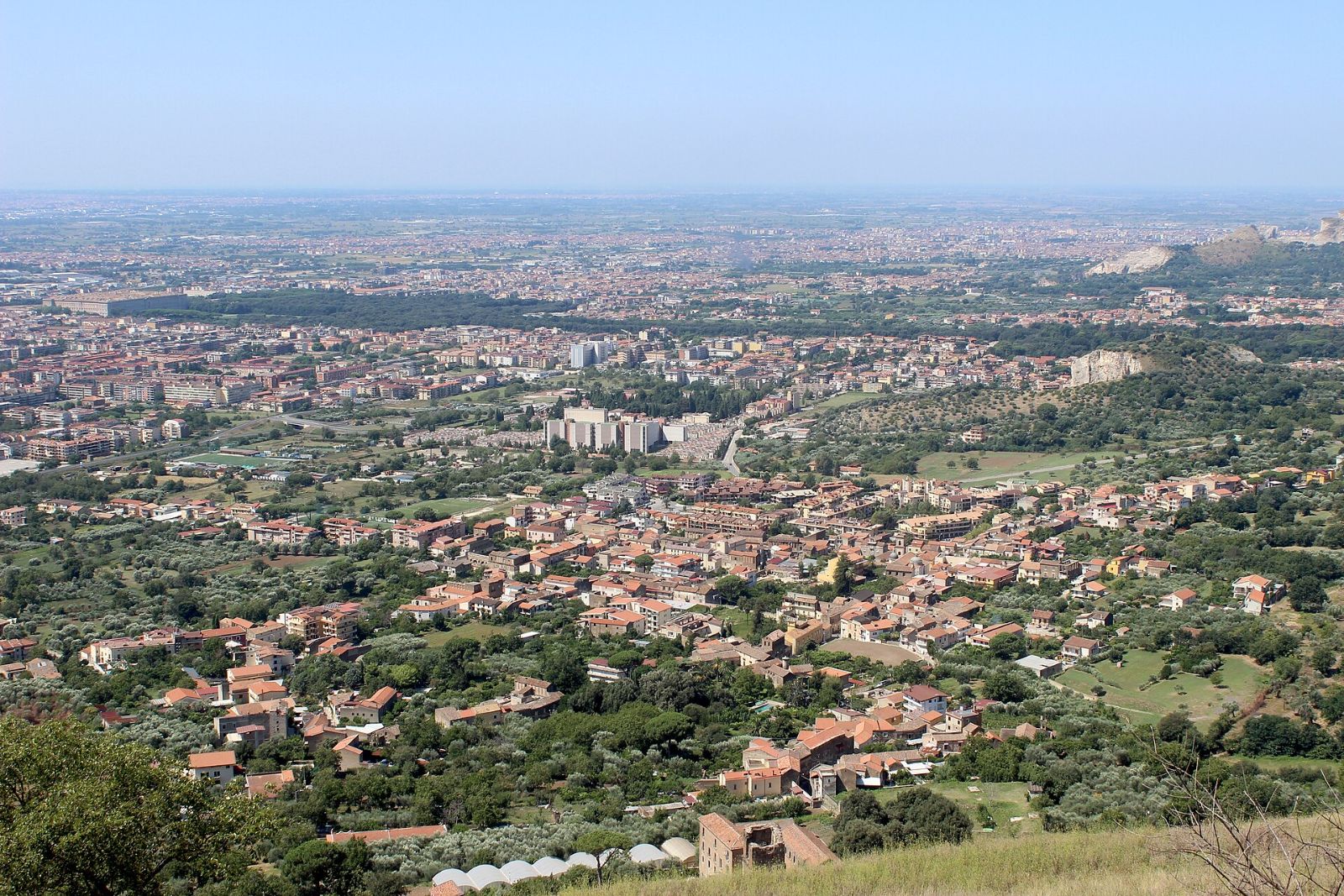
Top photo (Caserta): Miguel Hermoso Cuesta, CC BY-SA 4.0, via Wikimedia Commons.
Read also: The Royal Apartments of the Royal Palace of Caserta