Many people think that to see a great Roman amphitheatre you have to go to Rome. We discovered that half an hour from Naples there is one that, in size and importance, comes second only to the Colosseum. And just a few streets away you can head underground into a painted sanctuary dedicated to a god who came from the East. Here is how we spent our day in ancient Capua.
Ancient Capua, city of gladiators
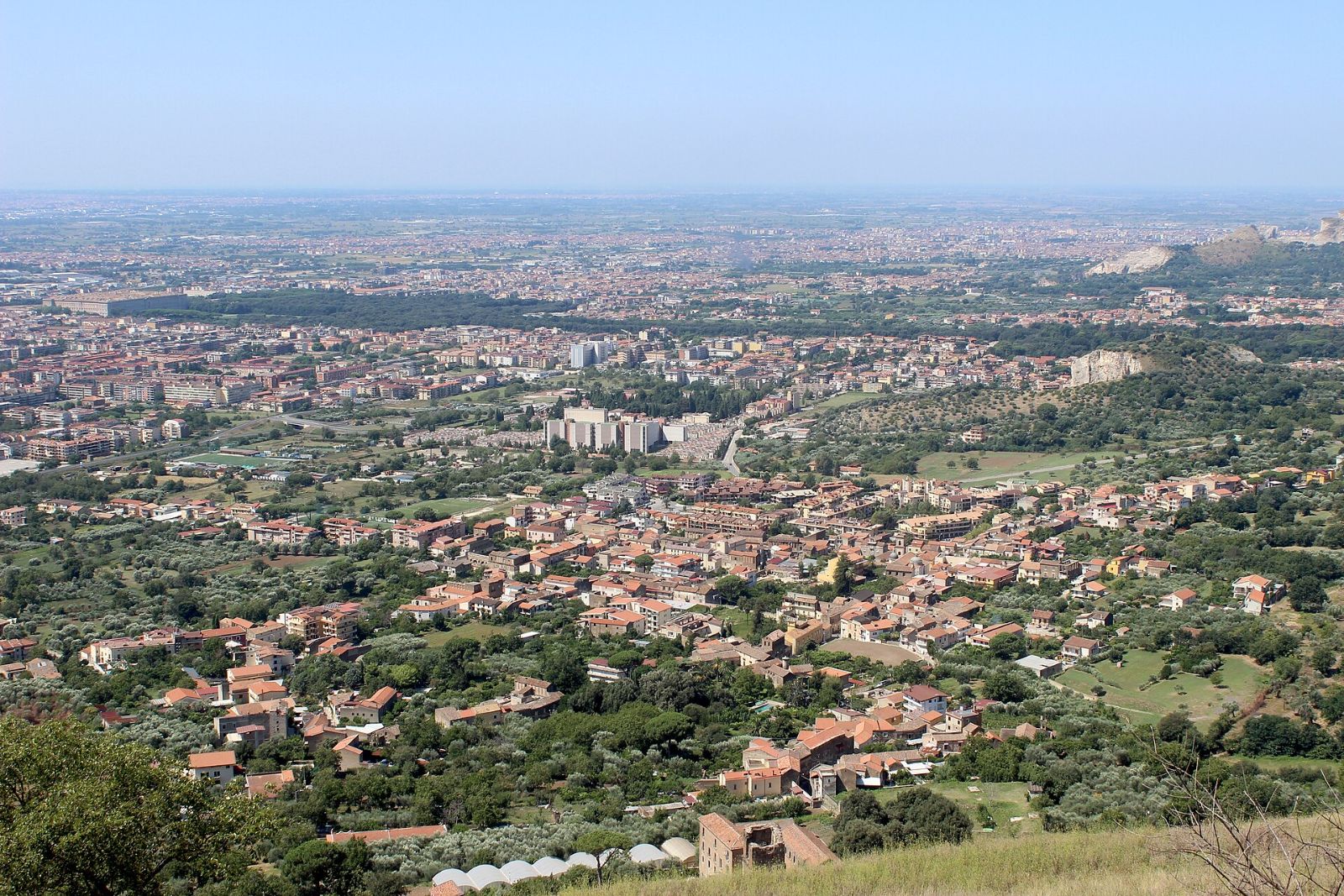
Today’s Santa Maria Capua Vetere stands on the site of Roman Capua, one of the richest and most powerful cities of ancient Italy. This was home to the most famous gladiator school in the Roman world, and it was from here, in 73 BC, that the revolt of Spartacus broke out: the Thracian gladiator who held Rome in check for two years.
Later, Julius Caesar founded a gladiatorial troupe here that became one of the most prestigious of its time. Walking through the modern town, we often had the feeling that antiquity surfaces everywhere, among arches, remains of walls and street names.
The Campanian Amphitheatre
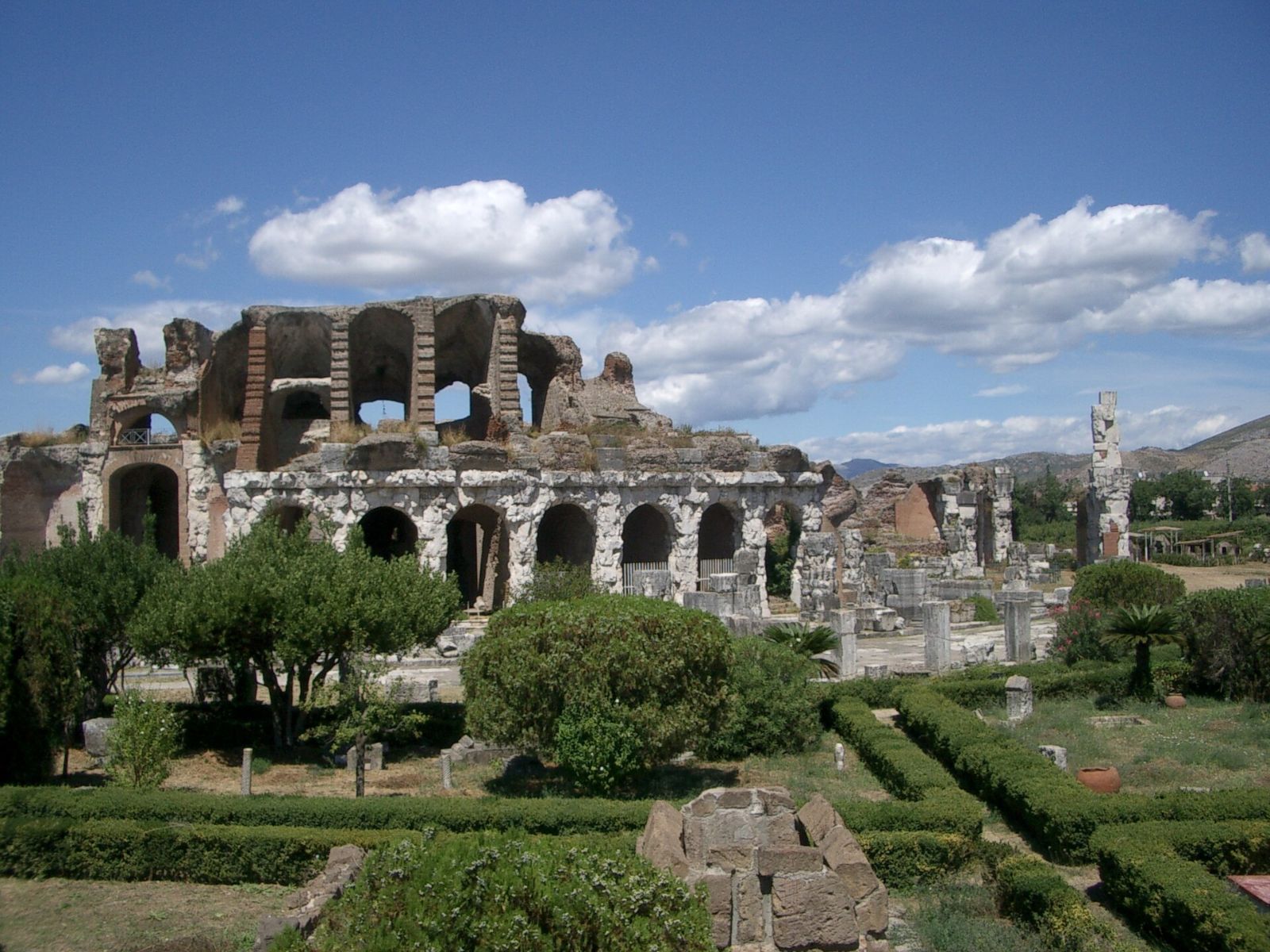
The Campanian Amphitheatre is the second Roman amphitheatre in size and importance after the Colosseum. It was built in the Flavian period, between the end of the 1st and the 2nd century AD, in place of an older arena, the one where Spartacus’s gladiators fought. Emperor Hadrian had it restored and decorated with columns and statues, and it was inaugurated by his successor Antoninus Pius.
It could hold up to around 60,000 spectators. Today the tiers of seating are largely lost, but you only need to step into the arena to grasp its proportions. The part that impressed us most was the underground area: corridors and rooms where the shows were prepared, with the systems of pulleys and cages that made men and animals appear on stage.
The Gladiator Museum
Next to the amphitheatre is the small Gladiator Museum, which we recommend you don’t skip. It tells the story of the life, weapons and shows of the gladiators of Capua and helps you “fill” the arena you have just seen with your imagination. We found it especially useful for understanding how the world of the gladiator schools was organised.
The Mithraeum: an underground sanctuary
A short distance from the amphitheatre is the Mithraeum, discovered in 1922 and opened to visitors in 1937. It dates back to the end of the 1st century AD and is considered one of the most important places of Mithraic worship in the Roman world.
The cult of Mithras, a solar deity of Indo-Persian origin, reached Italy with merchants and slaves through the port of Puteoli, today’s Pozzuoli, and had a large following among soldiers, slaves and gladiators between the 2nd and 3rd centuries. The faithful gathered in underground rooms that evoked the cave in which the god was said to have been born.
Going down, you pass through a dark vestibule and enter the worship hall. On the back wall is the great fresco of the tauroctony, Mithras slaying the bull, still rich in colour; the vault is painted with stars. There are also marble reliefs of Cupid and Psyche. It is a small space, and that is exactly why it is so evocative.
The Archaeological Museum of Ancient Capua
The visit is rounded off by the National Archaeological Museum of Ancient Capua, housed in a former 19th-century cavalry barracks. It displays Roman sculptures and portraits, finds from excavations in the area and some of the tuff matres from the sanctuary of Fondo Patturelli. The museum has undergone renovation work: check whether it is open before you go.
How to get there and when to go
Santa Maria Capua Vetere is on the Naples–Caserta–Rome railway line and is very close to the Santa Maria Capua Vetere exit of the A1 motorway. The amphitheatre, Mithraeum and museum are part of a single visitor circuit. The Mithraeum can only be visited by reservation and in small groups, so plan ahead. Check opening hours and tickets on the official website before you set off.
The amphitheatre is open-air with little shade: in summer we recommend early morning, while in spring and autumn any time of day is fine.
In the surroundings
A few kilometres away is Capua, the medieval town that grew up on the Volturno river: don’t miss the Museo Provinciale Campano in Capua, with its extraordinary Matres Matutae, and the Basilica of Sant’Angelo in Formis. Lovers of Roman history can continue north to Teano and Sessa Aurunca, between Romans and the Middle Ages. In half an hour you can be at the Royal Palace with the Royal Apartments of the Royal Palace of Caserta. All the itineraries in the province are in Caserta and surroundings.
Top photo (Santa Maria Capua Vetere): Rico Heil, CC BY-SA 3.0, via Wikimedia Commons.