We visited Pompei and Ercolano just a few days apart and realised that, although they tell the story of the same catastrophe, they are two very different experiences. Pompeii is an entire city to explore on foot, Herculaneum a compact and astonishingly well-preserved neighbourhood. Here is what to see at both and how to plan your visit.
Two cities buried by the same eruption
Both were buried by the eruption of Vesuvius in AD 79, but in different ways. Pompeii was covered mainly by lapilli and ash, while Herculaneum ended up under a layer of volcanic material 10 to 25 metres thick, which solidified into a tuff-like rock. That is why beams, doors and even wooden furniture have survived at Herculaneum.
Excavations at Herculaneum began in 1738 under Carlo di Borbone (Charles of Bourbon), those at Pompeii in 1748. Since 1997 the two archaeological areas, together with Oplontis, have been a UNESCO World Heritage Site.
Pompeii: what not to miss
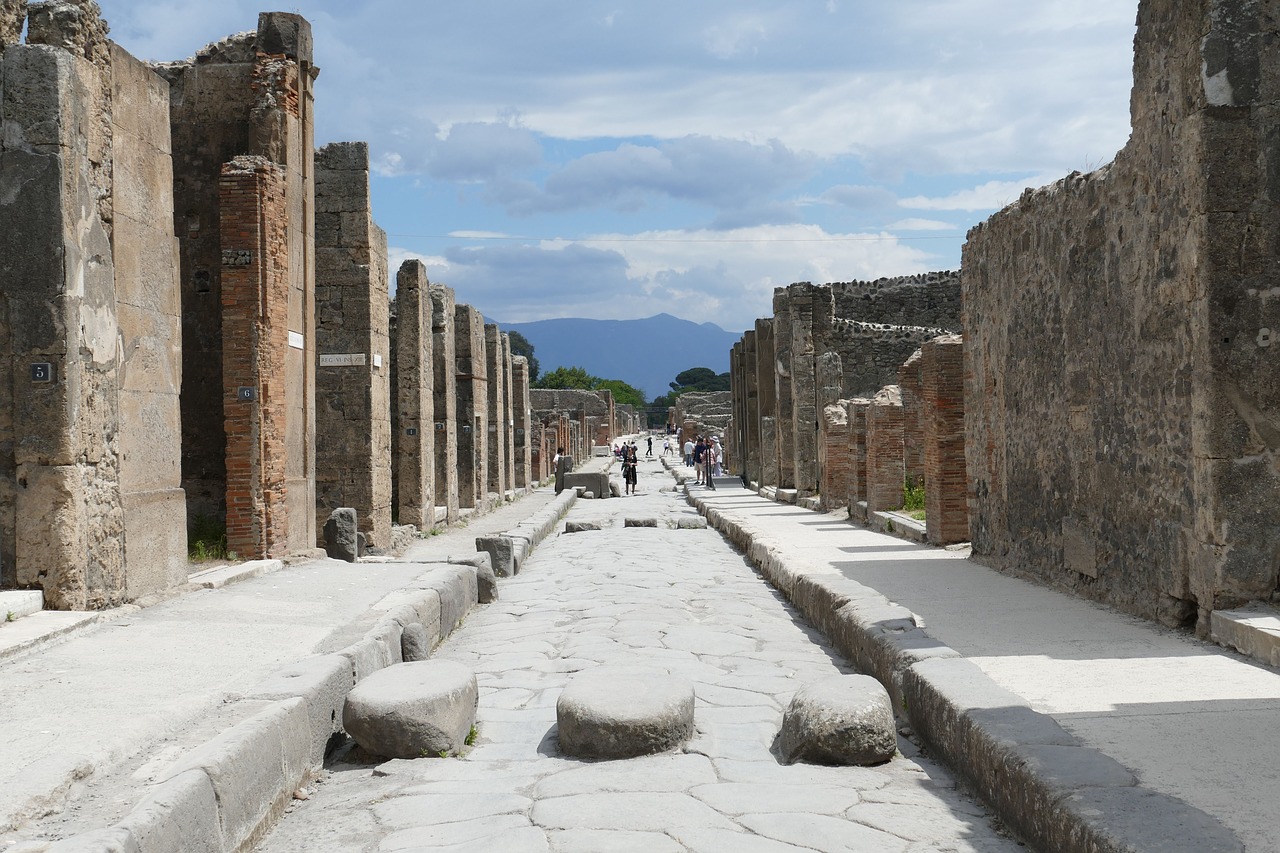
Pompeii is large, so it pays to choose a route. We started from the Forum, the heart of public life, and then lost ourselves in the paved streets, where you can still see the ruts left by carts.
- Casa del Menandro (House of the Menander): a large domus of almost 1,800 square metres, named after the portrait of the Greek playwright Menander painted inside. A treasure of 118 silver vessels was found here, wrapped in cloth and stored in a wooden chest. The house even had its own small private bath complex.
- Tempio di Iside (Temple of Isis): rebuilt after the earthquake of AD 62 at the expense of a freedman, who dedicated it in the name of his six-year-old son. In the courtyard a small shrine held the sacred water, probably from the Nile, used in rituals. Brought to light between 1764 and 1766, the temple attracted many travellers, including the young Mozart.
- Casa di Pinarius Cerialis (House of Pinarius Cerialis): a small but intriguing house, where 114 gems were found; for this reason the owner is thought to have been a gem engraver.
- Anfiteatro (Amphitheatre): built between 80 and 70 BC, it is one of the oldest and best-preserved in the world and could hold around 20,000 spectators.
- Villa dei Misteri (Villa of the Mysteries): just outside Porta Ercolano, with the great painted frieze of almost life-size figures that left us speechless.
Along the way you will also come across the plaster casts of the victims, made with the technique introduced by Giuseppe Fiorelli in 1863: the most moving moment of the visit.
Herculaneum: what not to miss
Herculaneum can be visited in half a day, and as you walk around you feel as if you have entered a city that has only just been abandoned. So far only part of it has been excavated, around 4 hectares.
- Casa di Nettuno e Anfitrite (House of Neptune and Amphitrite): named after the glass-paste mosaic of the two sea deities in the summer triclinium, next to a nymphaeum decorated with hunting scenes. Next door is one of the best-preserved shops in the city, with its wooden shelves and amphorae still in place.
- The ancient beaches and the fornici (boat sheds): in the 1980s, in the storerooms facing the ancient shoreline, around 300 skeletons were found of inhabitants who had sought shelter while waiting for rescue.
- Villa dei Papiri (Villa of the Papyri): discovered in 1750, under the direction of Roque Joaquín de Alcubierre and later Karl Weber. It yielded around 1,800 carbonised papyrus scrolls, mostly Epicurean philosophical texts by Philodemus of Gadara. The villa is attributed to Lucius Calpurnius Piso Caesoninus, Julius Caesar's father-in-law, although this is not certain. Only a few rooms can be seen, and they open only on certain occasions; its bronze statues are on display at the National Archaeological Museum in Napoli.
Our advice for your visit
If you only have one day, you will have to choose: Pompeii needs at least a full day, Herculaneum half a day. If you can, set aside two separate days and round things off with the nearby villa of Oplontis in Torre Annunziata. Bring water, a hat and comfortable shoes, because in summer there is almost no shade at Pompeii. Many finds, from the frescoes of the Temple of Isis to the statues of the Villa of the Papyri, are at the MANN: we recommend visiting it before or after the excavations to complete the picture.
Getting there and when to go
From Naples both archaeological areas can be reached by train on the Circumvesuviana, Napoli-Sorrento line: for Herculaneum get off at Ercolano Scavi, for Pompeii at Pompei Scavi-Villa dei Misteri. Check opening times and tickets on the official website before you go, as opening hours vary with the season and some houses open on a rotating basis.
The best months are in spring and autumn. In summer go first thing in the morning, when the light is beautiful and the heat still bearable.
Nearby
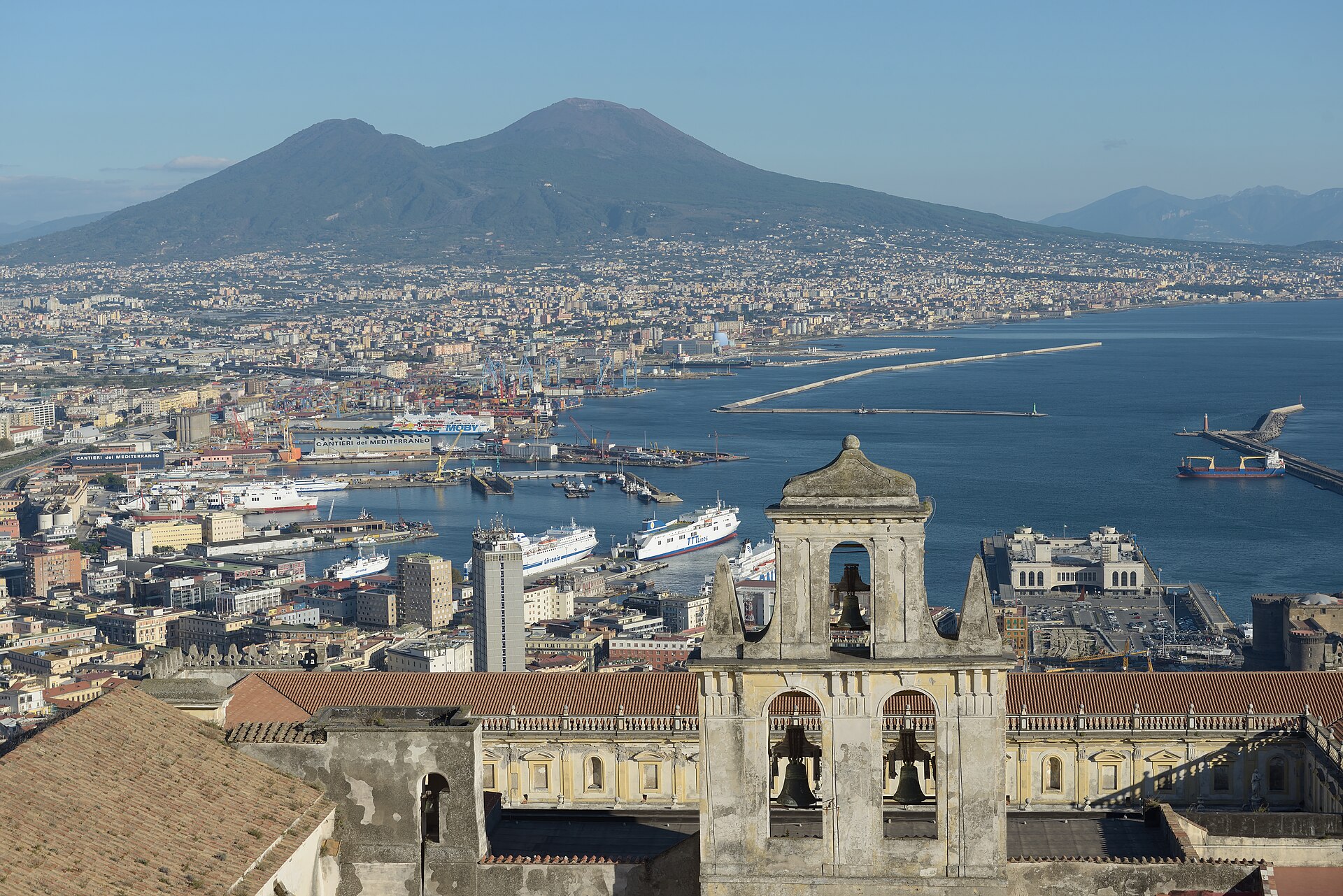
To understand what happened in AD 79, read Vesuvius: its history and, if you feel up to it, climb to the crater. The other sites buried by the eruption are described in the excavations of Oplontis, while the most precious finds await you at the National Archaeological Museum of Naples (MANN). Between one site and the next you can stop along the Miglio d'Oro: the luxury and elegance of its 18th-century villas and taste the wines of Pompeiano IGT. For everything else, there is our guide Naples and its surroundings.