We climbed the Palace’s grand staircase with our noses in the air, like everyone does, and realised that the real journey begins right afterwards, when you enter the Royal Apartments. Here, room after room, you walk through almost a hundred years of history of the Kingdom of Naples, from the Bourbons to the Murats and back to the Bourbons again. We’ll tell you what struck us and how to plan your visit.
From the Royal Staircase to the upper Vestibule
The tour starts from the Royal Staircase (Scalone Reale) designed by Luigi Vanvitelli, the architect to whom Charles of Bourbon entrusted the Palace, whose foundation stone was laid on 20 January 1752. There are 116 steps, and the central flight is watched over by two marble lions. At the top, three statues await you: Royal Majesty by Tommaso Solari, depicting King Charles, Merit by Andrea Violani and Truth by Gaetano Salomone.
Look up: the vault is double, and on the inner one is painted the Palace of Apollo by Girolamo Starace-Franchis. According to the museum, a hidden orchestra was placed between the two vaults and played during royal processions. From the octagonal upper Vestibule you reach the Palatine Chapel and the apartments.
The state rooms: Alexander, Mars, Astraea
The first room that made us stop is the Hall of Alexander (Sala di Alessandro), at the centre of the south façade. The vault was frescoed by Mariano Rossi with the Marriage of Alexander and Roxana, in 1787. The name pays tribute to Alexander the Great, a model dear to Charles of Bourbon. During the French period this room became the throne room of Joachim Murat, and the gilded wooden thrones you see today are among the few furnishings left from those years.
Next come the Hall of Mars (Sala di Marte) and the Hall of Astraea (Sala di Astrea), created from the French decade onwards in full Neoclassical taste. Between 1806 and 1815 Naples was ruled first by Joseph Bonaparte and then by Murat, who used the Palace as a state residence; the completion works were directed by Antonio de Simone. The stuccoes and gilding of these rooms, recently restored, are among the brightest sights of the tour.
The Throne Room
This is the largest and most solemn room in the apartments, designed for public audiences. Originally planned by Vanvitelli, it was begun in 1811 under Murat and only completed in 1845 by Ferdinand II of Bourbon: almost half a century of work. It was inaugurated on the occasion of the 7th Congress of Italian Scientists.
We lingered over the vault, where Gennaro Maldarelli painted the very laying of the Palace’s foundation stone in 1752, and over the portraits of the rulers of Naples that run along the walls. In the centre stands the carved and gilded wooden throne.
The Old Apartment of Ferdinand IV and Maria Carolina
The building work took so long that Ferdinand IV and Maria Carolina of Habsburg could only move in here in 1780, occupying the quarters intended for the heirs to the throne. This is the part we liked best, because it really feels like a lived-in home.
The Rooms of the Seasons take their name from the vaults painted by Fedele Fischetti and Antonio de Dominicis. They were conversation rooms, and in the Spring and Winter rooms you will find the views by Jacob Philipp Hackert, court painter to Ferdinand IV. In the Autumn room there are still lifes by 18th-century Neapolitan painters. The furniture, console tables and Murano glass chandeliers are largely original.
A little further on you come to Ferdinand IV’s study and the elegant Boudoir of Maria Carolina.
Palatine Library, Nativity scene and collections
The Palatine Library was commissioned by Maria Carolina and holds more than 14,000 volumes of literature, history, philosophy and military science. In the third room we were struck by the two globes, celestial and terrestrial, made in Paris by Robert de Vaugondy, and by the paintings by Heinrich Friedrich Füger from 1782 dedicated to the arts and sciences. Today the books can only be consulted by appointment, for study purposes.
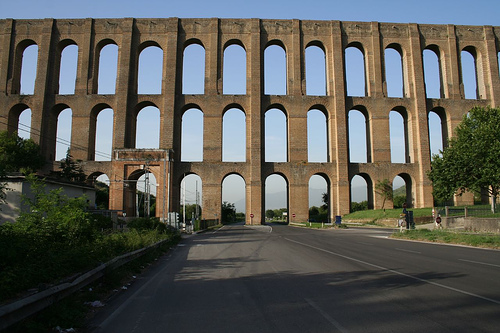
Along the route you will also find the Court Nativity Scene (Presepe di Corte), the Picture Gallery and the contemporary art collection Terrae Motus, created by Lucio Amelio after the 1980 earthquake, with works by artists such as Andy Warhol, Joseph Beuys and Keith Haring. In 1919 the Palace passed to the Italian State, and since 1997 it has been a UNESCO World Heritage Site together with the Carolino Aqueduct and San Leucio.
Getting there and when to go
The Palace stands opposite the railway station of Caserta, which can be reached by train from Naples in less than an hour; by car, leave the A1 motorway at the Caserta Sud or Caserta Nord exit. We recommend allowing at least an hour and a half for the apartments and arriving in the morning, before moving on to the park. Check opening hours and tickets on the official website before you set off.
Nearby
Once you leave the apartments, the natural next step is the park: read our guides to I Giardini Reali di Caserta and Il Giardino Inglese della Reggia di Caserta. To understand where the water for the fountains came from, continue with L’Acquedotto Carolino e i Ponti della Valle. Just a few kilometres away, Il Museo della Seta di San Leucio awaits you, the other Bourbon UNESCO site. For a complete overview of the province, start from Caserta e dintorni.
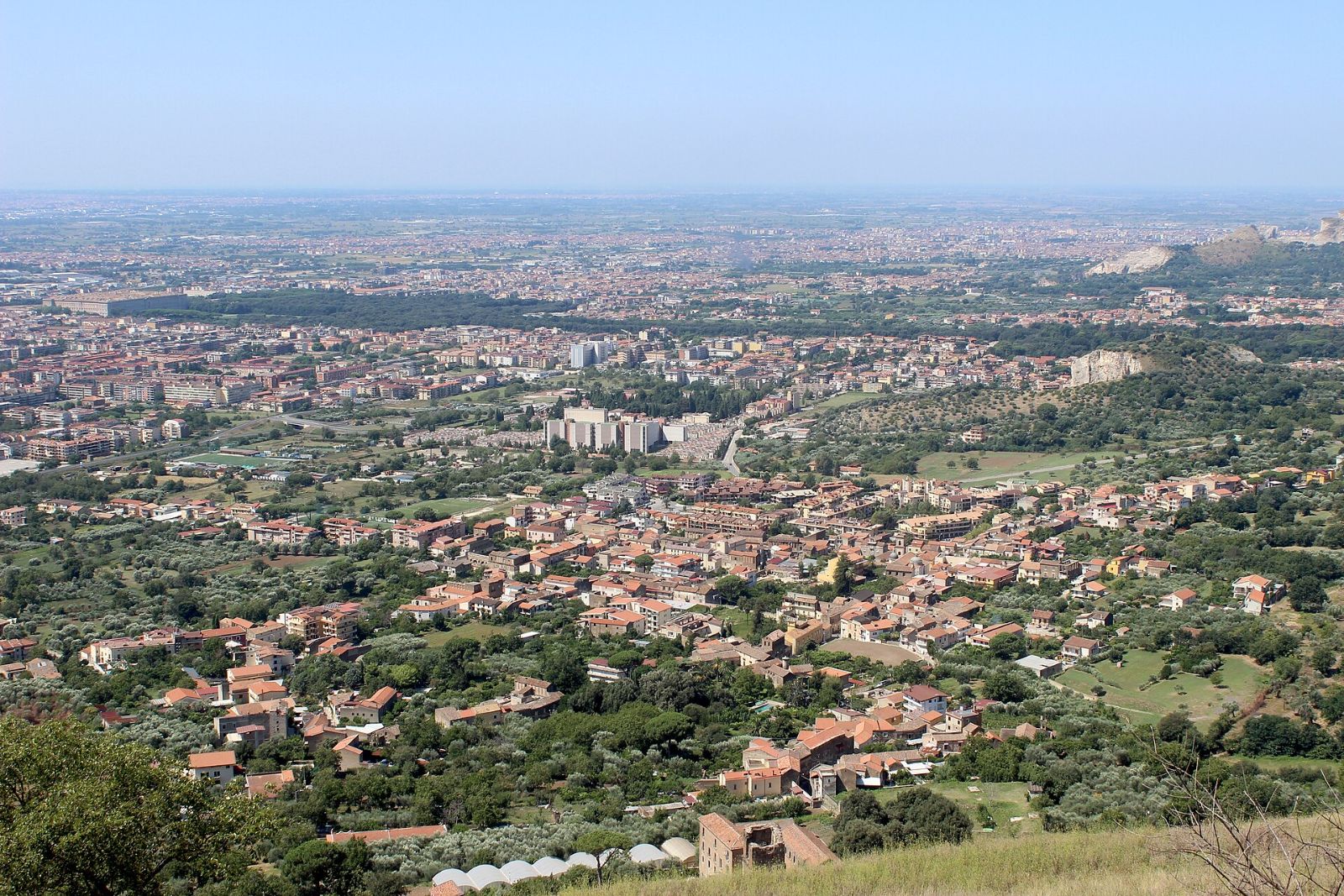
Top photo (Caserta): Miguel Hermoso Cuesta, CC BY-SA 4.0, via Wikimedia Commons.
Read also: The Aragonese Castle and the Sea Museum of Ischia