We went down into the depths of the Alburni mountains, and the first thing that surprised us was the sound of water. At the Pertosa-Auletta Caves you don’t just walk in: you go in by boat, on a river flowing beneath the mountain. Here they are as we experienced them, with everything you need to know before you go.
A river beneath the mountain
The caves open in the territory of Pertosa, on the border with Auletta, in the Tanagro valley, at the gateway to the Vallo di Diano. They are also known as the Grotta dell’Angelo (Angel’s Cave) or Cave of St Michael the Archangel, from their ancient dedication to the archangel. The complex extends for about 3,000 metres of cavities carved into the limestone of the Alburni massif, over millions of years of patient work by water.
At the heart of it all is the Negro river, the only navigable underground river in Italy open to visitors. In the early 20th century a small hydroelectric dam was built here, inaugurated in 1907: it raised the water level by about three metres and created the underground lake that is crossed by boat today.
The boat crossing
This is the moment everyone waits for, and it made an impression on us too. You board a flat-bottomed boat, without an engine, which the guides move by pulling on a cable stretched above the water. The navigable stretch is about 200 metres long and takes just a few minutes, but the silence, the darkness and the reflections of the lights on the rock make it unforgettable.
The water stays at around 10–11 degrees all year round and the air at about 15: we recommend a sweatshirt even in August. Once off the boat, the route continues on foot among stalactites, stalagmites and large chambers. The biggest is the Grande Sala (Great Hall), about twenty metres high; among the most photographed formations is the one called “the Kiss”, where a stalactite and a stalagmite almost touch.
The most beautiful chambers and the routes
The tour routes differ in length and difficulty. The classic one combines the boat ride with about a kilometre on foot; the longer versions reach the underground waterfall, the Sala del Paradiso (Paradise Hall), with its brilliant white formations, and the Sala delle Spugne (Sponge Hall), where the rock looks as porous as a sea sponge. For experienced visitors there is also a caving itinerary, with dedicated equipment and guides.
All visits are guided and routes may change with the seasons or because of works: check opening hours and tickets on the official website before you set off.
A stilt village inside the cave
What struck us most, though, is the human history of this place. As early as 1897 the scholar Paolo Carucci found fragments of pottery and bones here, and the following year the first excavations began. It turned out that in the Bronze Age, in the 2nd millennium BC, a stilt village stood at the entrance of the cave: a unique case in Europe of a settlement inside a cave.
Research continues to this day. In 2025 archaeologists identified traces of a place of worship from the Hellenistic period along the underground river, and in the same year the caves received the ACTA award as the best Italian archaeological site. The site is managed by the MIdA Foundation and is one of the geosites of the Cilento UNESCO Geopark.
The museums of Pertosa
Don’t stop at the cave. The ticket usually also includes the Foundation’s museums: the Speleo-Archaeological Museum, where you can see the finds from the stilt village, and the Soil Museum, unusual and very well suited to kids. We visited them after the cave and they helped us put in order everything we had seen underground.
Getting there and when to go
The caves are easy to reach by car: from the Polla exit of the A2 del Mediterraneo motorway (the old Salerno-Reggio Calabria) it is only a few kilometres. You can visit all year round, because the climate underground doesn’t change; in summer and on long weekends it gets busier, so we recommend booking. Wear shoes with non-slip soles and bring something warm to put on. Check opening hours and tickets on the official website before you set off.
Nearby
On the other side of the Alburni mountains you’ll find the Castelcivita Caves, perfect for comparing two different underground worlds. Heading down into the Vallo di Diano, don’t miss the Certosa di Padula and Teggiano, the town of portals, while a few kilometres away lies the ghost village of Roscigno Vecchia, the abandoned village. To plan the rest of your trip, start from our guide Cilento: what to do and what to see.
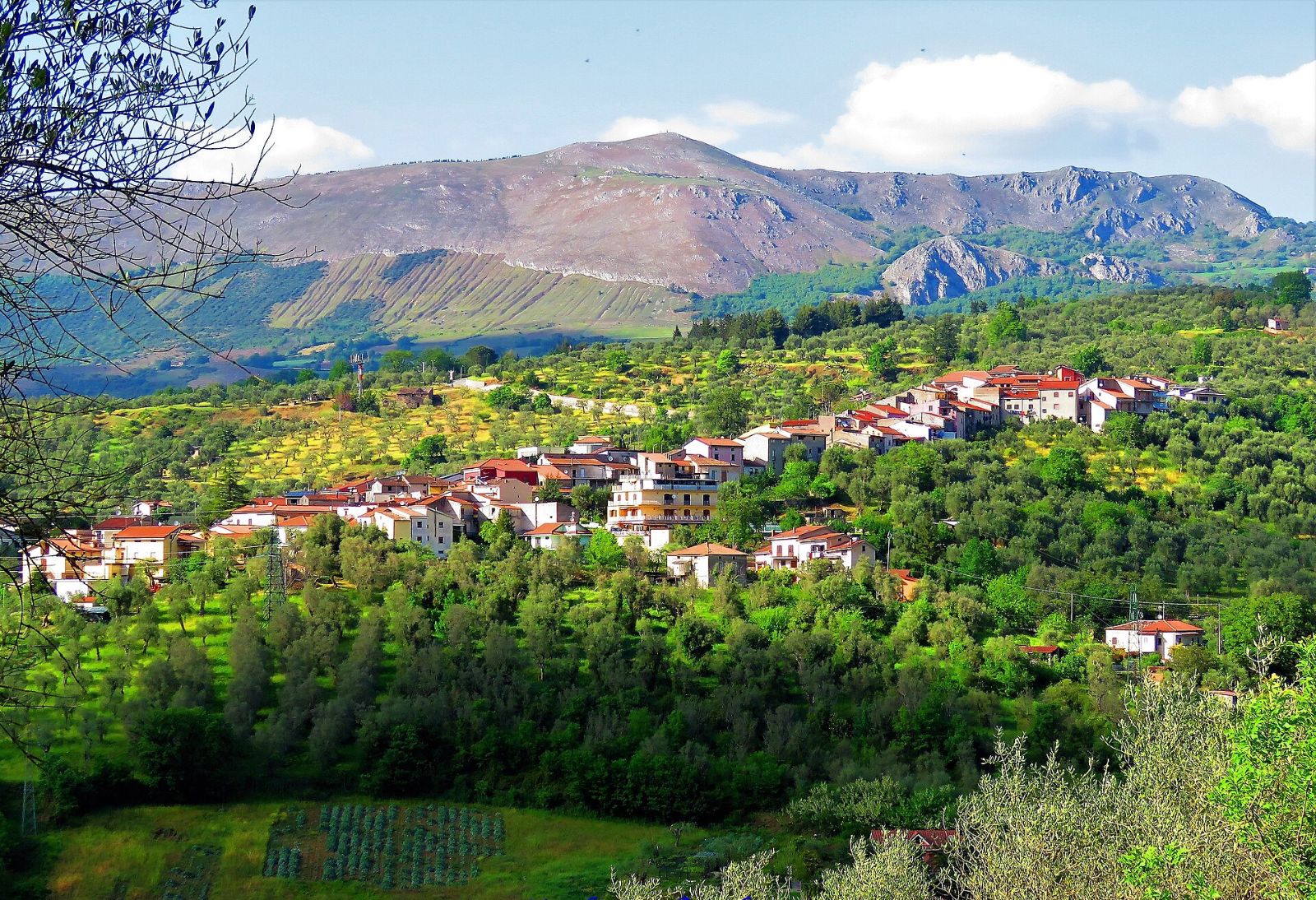
Top photo (Pertosa): Gianfranco Vitolo, CC BY 2.0, via Wikimedia Commons.
Read also: Salerno Cathedral