Just a few kilometres of road through the woods above Cava de’ Tirreni are enough to feel far away from the traffic. The Abbey of the Holy Trinity (Badia della Santissima Trinità) appears all of a sudden, nestled against the rock of a large cave. We visited it at a leisurely pace and we will tell you straight away that it is not just a church: it is a monastery that has been alive for more than a thousand years.
Saint Alferius and the Arsicia cave
It all began in 1011, when Alferio Pappacarbone, a nobleman from Salerno, withdrew to live as a hermit beneath the great Arsicia cave (grotta Arsicia), in the valley of the Selano. The first disciples gathered around him and a small monastery with a church came into being. Alferius died in 1050.
It was his nephew, Abbot Peter I, who turned the Abbey into the centre of a powerful monastic congregation, with hundreds of dependent churches and monasteries throughout southern Italy. In 1092 Pope Urban II came all the way up here and consecrated the basilica. The first four abbots, Alferius, Leo I, Peter I and Constabilis, are venerated as saints.
The basilica and the cave of Saint Alferius
The church we see today is the result of the 18th-century rebuilding: the present basilica dates from 1761, designed by the architect Giovanni del Gaizo and commissioned by Abbot Giulio De Palma. The dome, choir and transept were frescoed in the 19th century by Vincenzo Morani. Inside, we were struck by the ambo with 12th-century mosaics and by the polychrome marble of the floors and altars.
The most evocative spot, however, is the cave of Saint Alferius, where his relics are kept and where 14th-century frescoes survive. Standing there, beneath the rock where it all started, gave us a sense of just how old the story of this place is.
Cloister, Lombard cemetery and museum
The guided tour passes through spaces that tourists do not normally get to see. The small Romanesque cloister, set against the rock face, has double and quadruple lancet windows with horseshoe arches that reveal Islamic influences. You then go down into the Lombard cemetery and pass through the chapter house.
The abbey’s museum holds, among other things, a 15th-century Sienese panel painting of the Madonna, an 11th-century ivory casket, archaeological finds and coins from the Lombard and Norman mints.
An archive more than a thousand years old
The Abbey’s real treasure, though, is largely invisible to visitors: the state library of the national monument and the archive, with over 15,000 parchments, the oldest of which dates back to 792. Among the most precious manuscripts are the 9th-century Visigothic Bible and the 11th-century Codex Legum Langobardorum, which collects the laws of the Lombards. Knowing they were kept just a few metres away from us was a moving thought.
In the basilica, also look out for the two Renaissance bas-reliefs of Saint Matthew and Saint Felicity and the 17th-century altar. The oldest parchments in the archive, from 792 to 1065, have been published in the Codex Diplomaticus Cavensis, an invaluable collection for anyone studying the history of Lombard and Norman southern Italy.
Getting there and when to go
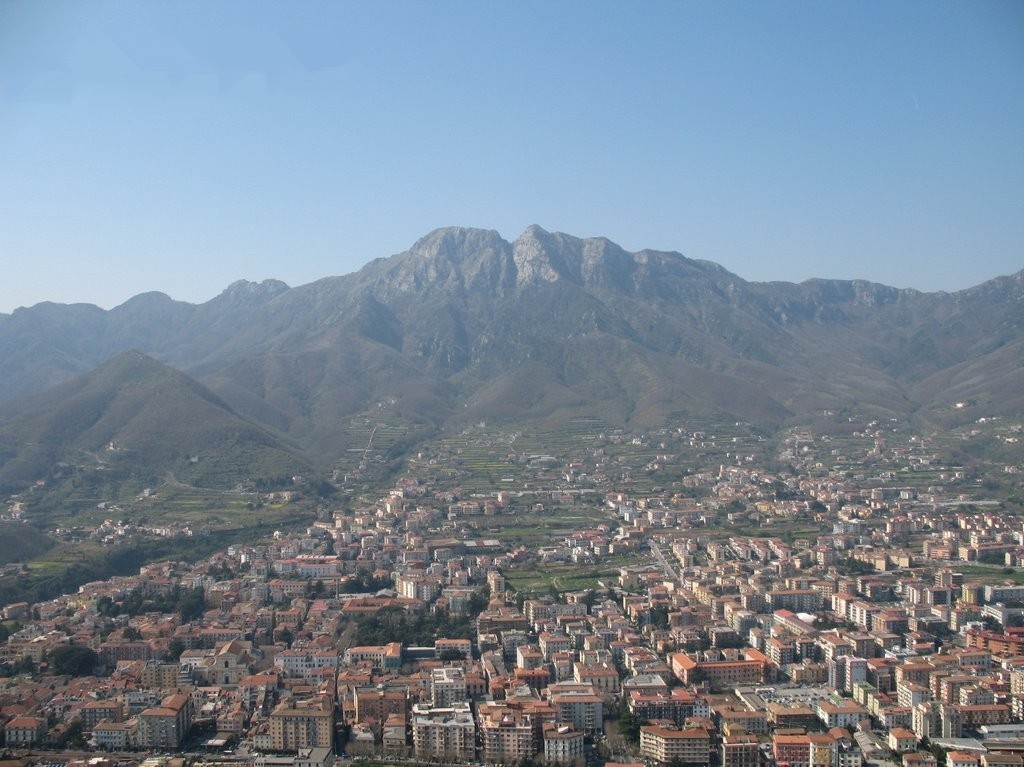
The Abbey lies about 3 kilometres from the centre of Cava de’ Tirreni, at the foot of Monte Finestra. By car, leave the motorway at the Cava de’ Tirreni exit and follow the signs; by train, get off at Cava station and continue by local transport. Visits are guided and must be booked, and remember that this is still a place of monastic life: dress appropriately and respect the silence. Spring and autumn are perfect, also for a walk in the surrounding woods. Check opening hours and tickets on the official website before you set off.
Nearby
From Cava the coast is very close: head down to Vietri sul Mare for its Ceramica Vietrese or carry on towards Amalfi: cosa fare e cosa vedere. In just a few minutes you can also be in Salerno, where Il Duomo di Salerno and San Pietro a Corte await you. All the other destinations are in Salerno e dintorni.
Top photo (Cava de’ Tirreni): Gegè Avagliano, CC BY 3.0, via Wikimedia Commons.
Read also: The Castelcivita Caves