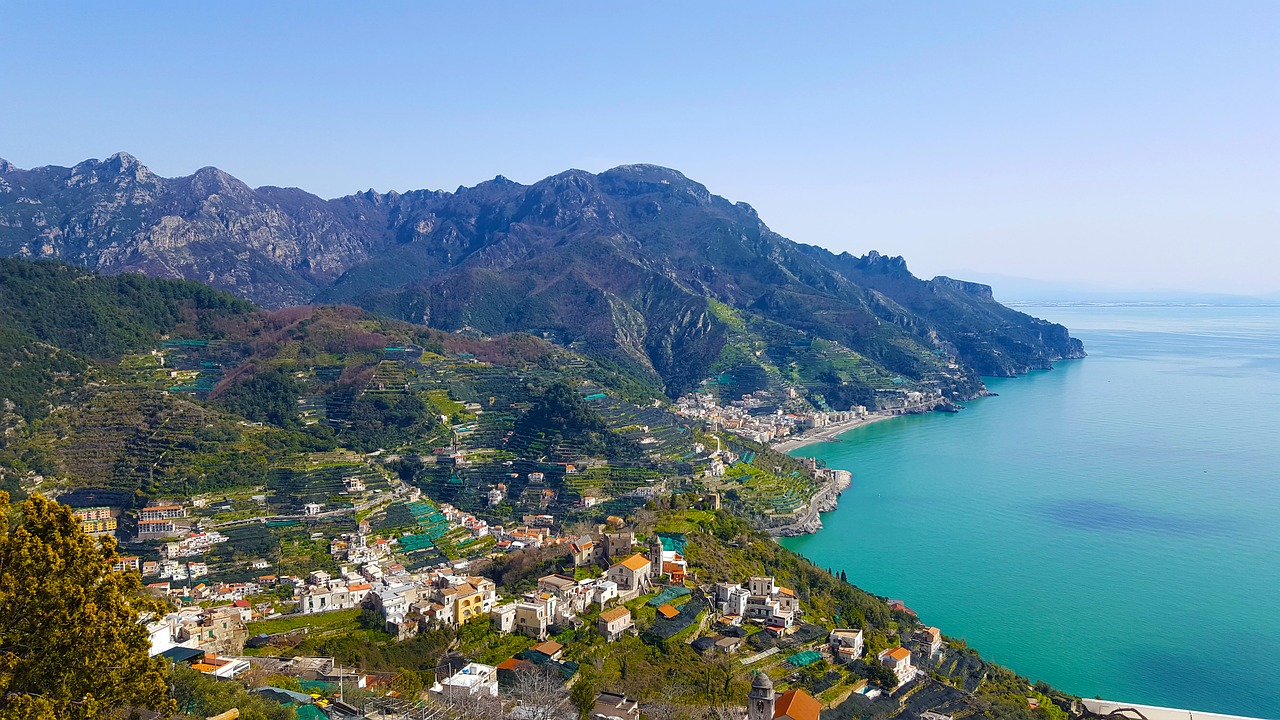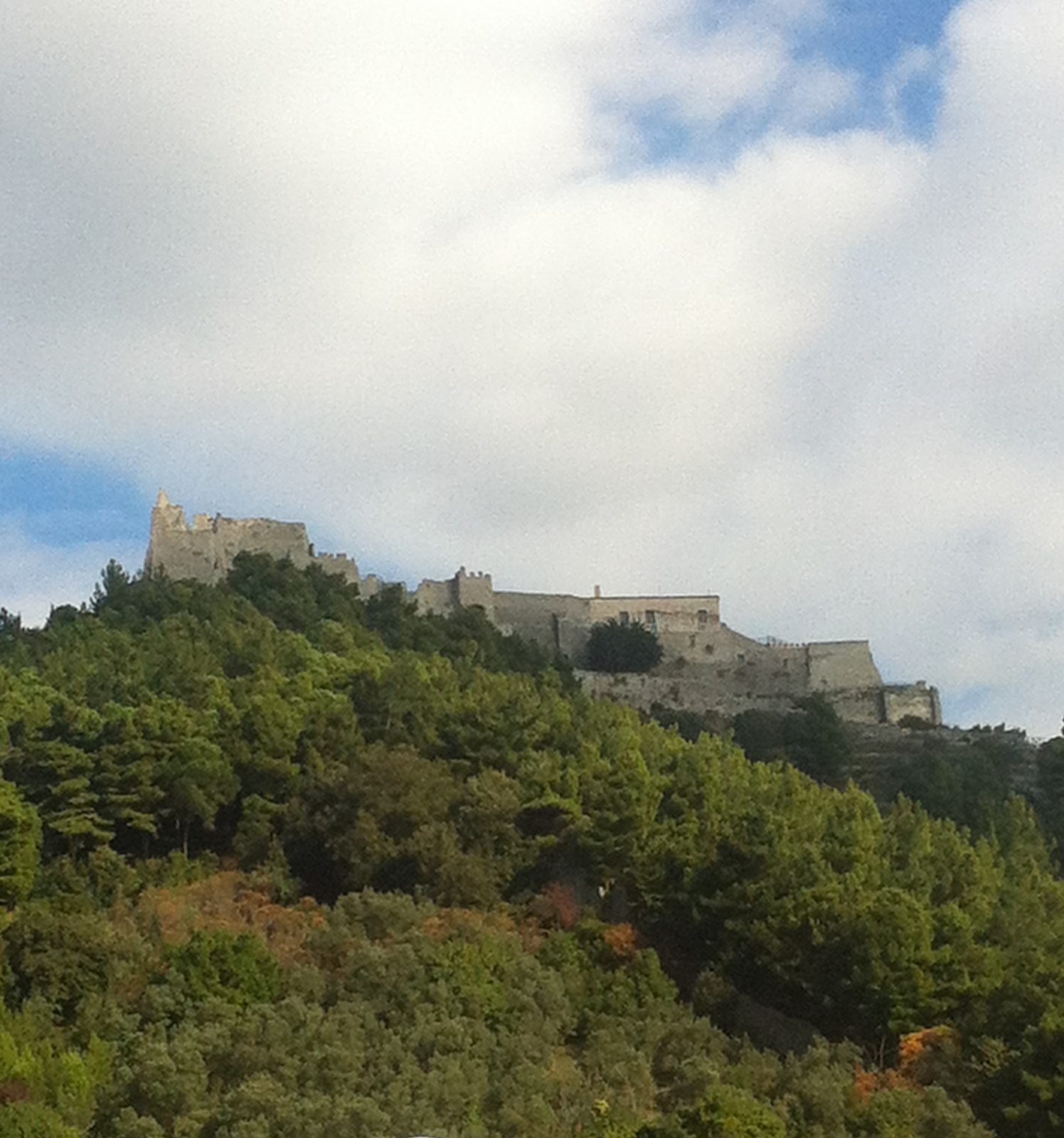
From anywhere along the seafront of Salerno you can see it up there on the hill, watching over the city. We climbed up to Arechi Castle on a clear day, and the first thing that struck us was the view: the gulf, the harbour, the Amalfi Coast on one side and the Sele plain on the other.
Where the castle is
The castle stands on Monte Bonadies, about 300 metres above sea level, behind the historic centre. Its position is no accident: from here you could control the roads into the city and the whole stretch of sea in front of it. Even today, looking down, you can make out the line of the ancient walls that ran down to the coast.
Fifteen centuries of history
The castle’s origins are Byzantine: the first fortification was built in the 6th century, during the Gothic War, and some stretches of masonry in large blocks of tuff still bear its traces.
It owes its name to the Lombard prince Arechi II, who in the 8th century fortified Salerno and made the castle the northern tip of a triangular defensive system, with walls running from the hill down to the sea. Curiously, according to scholars, his work on the castle’s structure was minimal: it was rather its place in the system of walls that made it strategic.
Under the Normans, the isolated tower known as la Bastiglia (the Bastille) was built on a rocky spur nearby, and it is still clearly visible today. At the end of the 13th century the Angevins added rooms and cisterns, and under the Aragonese the castle reached its greatest extent, with the large buildings east of the parade ground.
From neglect to restoration
Once it had lost its military role, the castle went through a long period of decline and remained in private hands. The turning point came on 19 December 1960, when the Province of Salerno bought it. Restoration work began in 1982 and continued until the early 2000s, recovering the structures and also installing a lift inside an ancient cistern, which makes the visit easier.
Today the castle is a lively place: besides visits it hosts exhibitions, cultural events and ceremonies, and its ramparts are among the viewpoints most loved by the people of Salerno.
The museum and what to see
Inside there is a small but interesting museum that brings together the finds unearthed during the excavations. There is pottery from between the 7th and 13th centuries, medieval glass, metal objects, weapons and a few small coin hoards ranging from Roman times to the Middle Ages. It is a visit we also recommend to anyone travelling with kids, because it brings daily life in a fortress to life.
Then there is the outdoor route: walkways, towers, the parade ground and above all the viewpoints. Take your time to enjoy the view: on clear days you can see across the whole gulf.
Getting there and when to go
You can reach the castle by car or taxi along the scenic road that climbs up from the city; if you are fit you can also walk up from the historic centre, but the climb is demanding, especially in summer. Check opening hours and tickets on the official website before you set off, as they vary with the seasons and during events.
The best times are spring and autumn, when the air is crystal clear. If you can, go up in the late afternoon: at sunset the gulf lights up with colour and the show makes up for all the effort.
Nearby
- Back in the centre, visit Salerno Cathedral and discover the other churches of the centre with The Churches and Cathedral of Salerno.
- Arechi II is also the prince behind San Pietro a Corte, the palatine chapel of his palace.
- For another view from above, climb up to the terraces described in The Garden of Minerva and the Salerno Medical School.
- If you are travelling with children, you’ll find more ideas in Having fun with kids in Salerno.
- You’ll find everything else in our guide Salerno and its surroundings.
Read also: Atrani, the smallest village in Italy