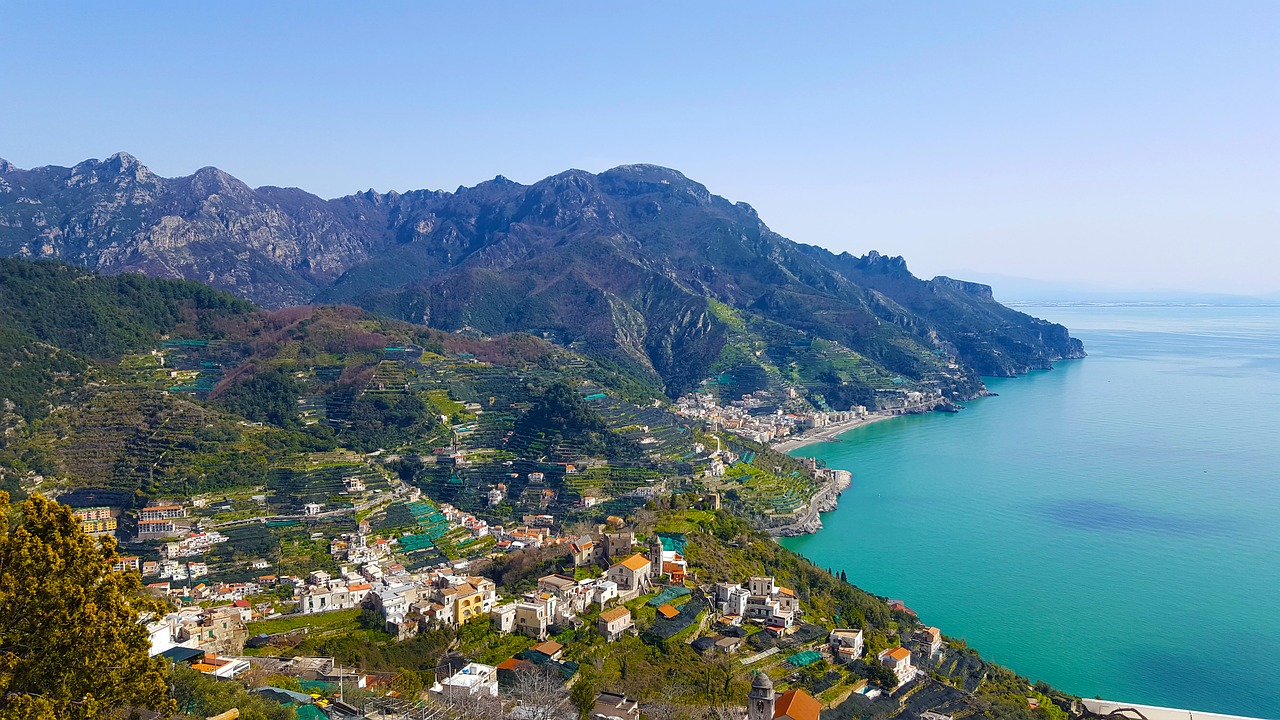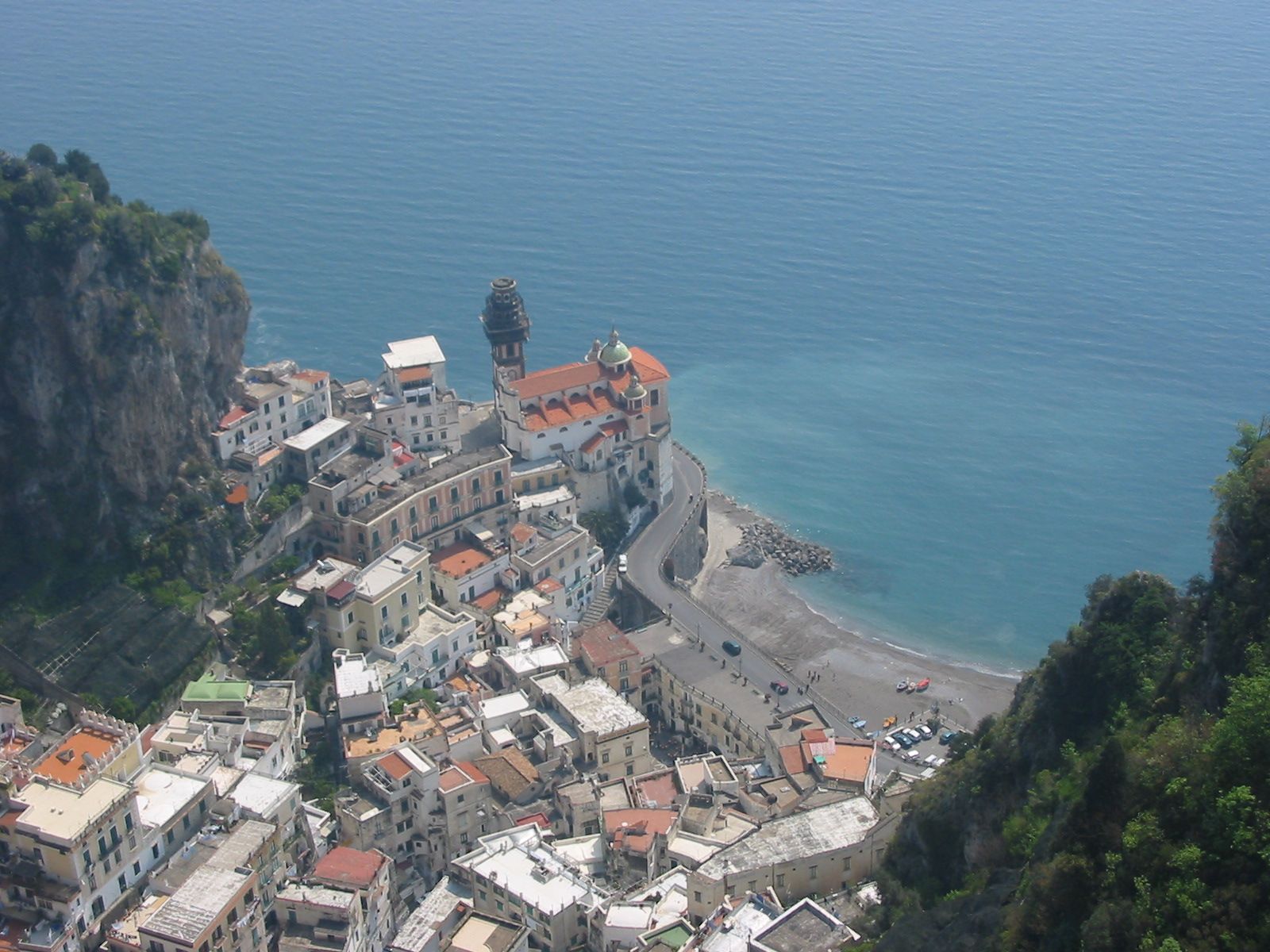
We arrived in Atrani on foot from Amalfi, and it felt like stepping into a nativity scene overlooking the sea. White houses clinging to the rock, steps climbing in every direction, an intimate little square and a tiny beach. It’s a place to visit without hurrying, and we’ll explain why.
The smallest municipality in Italy
Atrani holds a curious record: with just 0.12 km² of surface area (to be precise, 0.1206 km²) it is the smallest municipality in Italy by size. Despite its dimensions, it has a few hundred inhabitants and the highest population density in the province of Salerno. The houses are built one on top of another, linked by covered alleys, arches and stairways that climb up the valley.
The village spreads through the valley carved by the Dragone stream, between Monte Civita and Monte Aureo. Since 1997, together with the rest of the coast, it has been part of the Amalfi Coast UNESCO site.
A history tied to Amalfi
Atrani is first mentioned in a letter by Pope Gregory the Great dating from 596. In the golden centuries of the Republic of Amalfi it was the twin town of the nearby capital, chosen as a residence by many noble families. This is where the doges were crowned: the ceremony took place in the church of San Salvatore de Birecto, the palatine chapel of the duchy.
There has been no shortage of dramatic moments: from the devastation caused by the 1343 tidal wave that struck the coast, to the flood of 9 September 2010, when the swollen Dragone swept through the village. Strolling through the alleys today, you can sense how deeply this community is bound to its land.
The churches of Atrani
The church of San Salvatore de Birecto, founded in the 10th century, overlooks the square. We were struck by its bronze door, decorated with silver damascening, which came from Constantinople: tangible evidence of the ties the coast had with the East.
Looking up, you’ll see the majolica-tiled dome and bell tower of the church of Santa Maria Maddalena, dedicated to the village’s patron saint: it’s the iconic image of Atrani, the one you can glimpse from the main road too. We recommend climbing up to the churchyard to enjoy the view over the rooftops and the sea.
The square, the beach and the grotto of Masaniello
The heart of the village is the small Piazza Umberto I, enclosed on three sides by houses and connected to the beach by a passage beneath the arches of the road. Life moves slowly here, among children playing and elderly people sitting on the benches. The beach, squeezed between the rocks, is just a few steps away.
Above the village is the grotto of Masaniello: according to tradition, the famous Neapolitan popular leader who led the revolt of 1647 took refuge here. We don’t know how much is history and how much legend, but the story adds charm to the walk.
How to get there and when to go
Atrani is a few minutes’ walk from Amalfi along the coast road; alternatively you can arrive on the scheduled buses that run along the coast. Parking is very limited for cars, so we recommend leaving yours elsewhere. The best time is spring or September, when the coast is less crowded. We suggest arriving early in the morning or in the late afternoon: the low light on the white houses makes the walk even lovelier, and the square becomes a living room again for those who live there. Wear comfortable shoes, because almost everything here is reached on foot, going up and down steps.
Nearby
To discover the rest of the coast, start from our guide Salerno and surroundings. Atrani pairs perfectly with a visit to Amalfi: read Amalfi: what to do and what to see and Amalfi Cathedral and the Cloister of Paradise. From here you can also go up to Ravello, described in Villa Rufolo and Villa Cimbrone, or venture on to the Fjord of Furore.
Top photo (Atrani): Donar Reiskoffer, CC BY 3.0, via Wikimedia Commons.