We drove up to the Sanctuary of Montevergine on a clear morning, and from the road climbing up Mount Partenio we already understood why this place has drawn pilgrims for centuries. Up there, among beech trees and low clouds, the air feels different. Here is what to see and how to plan your visit.
A sanctuary at 1,270 metres
The sanctuary stands on Mount Partenio, at about 1,270 metres above sea level, in the municipality of Mercogliano. It is one of the most visited places of faith in Southern Italy and every year welcomes a huge number of visitors, from pilgrims to families and hikers. What struck us most was the contrast between the silence of the mountain and the liveliness of the square on feast days.
The complex is part of the area we described in our guide Avellino and surroundings: it is a short trip from Avellino, and a stop we recommend to anyone visiting Irpinia.
Saint William and the origins
The history of Montevergine begins with Saint William of Vercelli, a monk and hermit who in the first half of the 12th century chose this mountain for a life of prayer. A community soon gathered around him, and the first church was consecrated in 1126. From that community the Virginian Congregation was born, officially recognised by Pope Leo XIII in 1879.
William also founded other monasteries in Irpinia, including the one at Goleto, where he died in 1142: if you are interested in this figure, we also recommend reading our article on the Abbey of Goleto. His remains are kept today at Montevergine itself.
The Old Basilica and the New Basilica
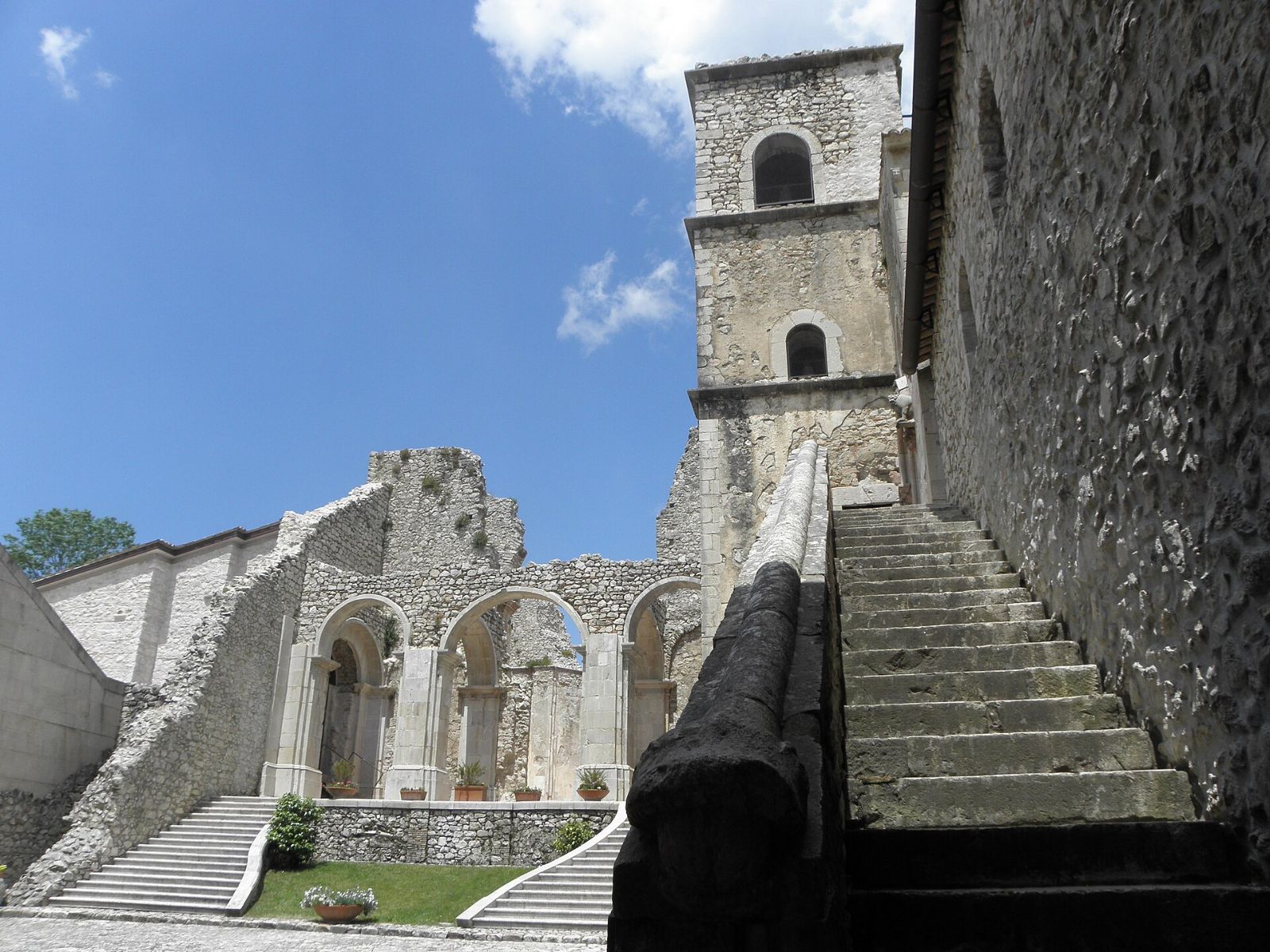
The sanctuary has changed its appearance several times over the centuries, through earthquakes, fires and collapses. The medieval church collapsed in 1629 and was rebuilt in 1645 to a design by Giacomo Conforti: this is what we now call the Old Basilica, intimate and rich in historical layers.
Next to it is the New Basilica, built between 1952 and 1961 to a design by the architect Florestano Di Fausto. It is a large, bright building, designed to welcome the great crowds of pilgrimages. We recommend visiting both: moving from one to the other gives a good idea of how much the sanctuary has grown over time.
Mamma Schiavona, the Madonna of Montevergine
The heart of devotion is the great painting of the Madonna of Montevergine, dating from the first half of the 13th century and kept in the Chapel of the Madonna. To everyone here she is Mamma Schiavona, one of the best-loved Marian icons of Southern Italy. In front of the image we noticed how many people stop in silence, even just for a few minutes: it is the most intense moment of the visit.
The bond between the sanctuary and popular culture can be seen above all at Candlemas, on 2 February, when the tradition of the “juta dei femminielli” is renewed, a pilgrimage of songs, tammurriata dances and prayers that brings together faith and Neapolitan tradition. Montevergine is also a natural stop for anyone following the theme of Religious tourism in Campania: sanctuaries and pilgrimage routes.
The museum and the story of the Shroud
The sanctuary houses an abbey museum, reorganised in 2000, with archaeological finds, paintings, vestments, precious objects and a fine section of 17th- and 18th-century Neapolitan nativity scenes. We recommend you don’t skip it, as it helps you understand how important this monastic centre has been.
Then there is a story few people know: from 1939 to 1946 Montevergine secretly kept the Shroud of Turin, brought here to protect it during the Second World War. It is a story that struck us deeply and makes the place even more special.
The Abbey Palace of Loreto
Heading down into the valley, in Mercogliano, it is worth stopping at the Abbey Palace of Loreto, the winter residence of the monastic community. Here you will find the library and a historic 18th-century pharmacy. It is the ideal complement to a visit to the sanctuary and lets you complete the picture of the life of the Virginian monks.
How to get there and when to go
From Avellino, drive up towards Mercogliano and then along the scenic Partenio road, which leads all the way to the sanctuary square. Alternatively, from Mercogliano there is the funicular, opened in 1956: the service is not always running, so check before you set off.
- Spring and summer are the most pleasant times, with cool temperatures even in August.
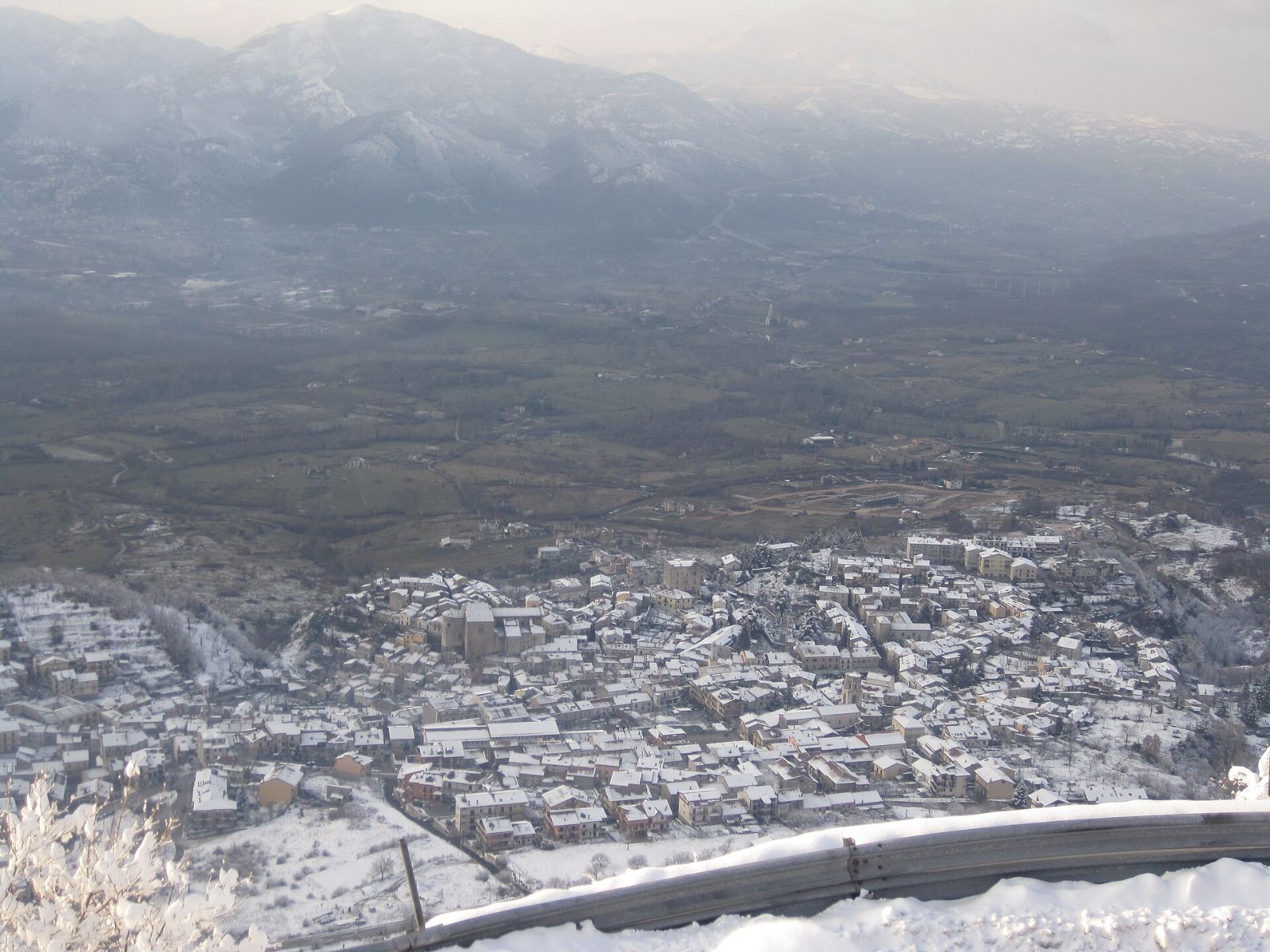
- In winter, snow can make the drive up difficult: check the weather and road conditions.
- For opening hours of the museum and times of services, check opening hours and tickets on the official website before setting off.
- Bring a jacket: at 1,270 metres it is cool even when the weather in town is pleasant.
In the surroundings
Montevergine lends itself to a multi-stop itinerary between mountain and town. Here is what we recommend:
- The medieval village of Summonte, not far away, with its panoramic tower: read the Tower of Summonte.
- In Avellino, the remains of the castle described in the Lombard Castle of Avellino.
- For a day of museums in town, the Museo Irpino and the former Bourbon Prison.
- And to round things off at the table, our tips on What to eat in Avellino.
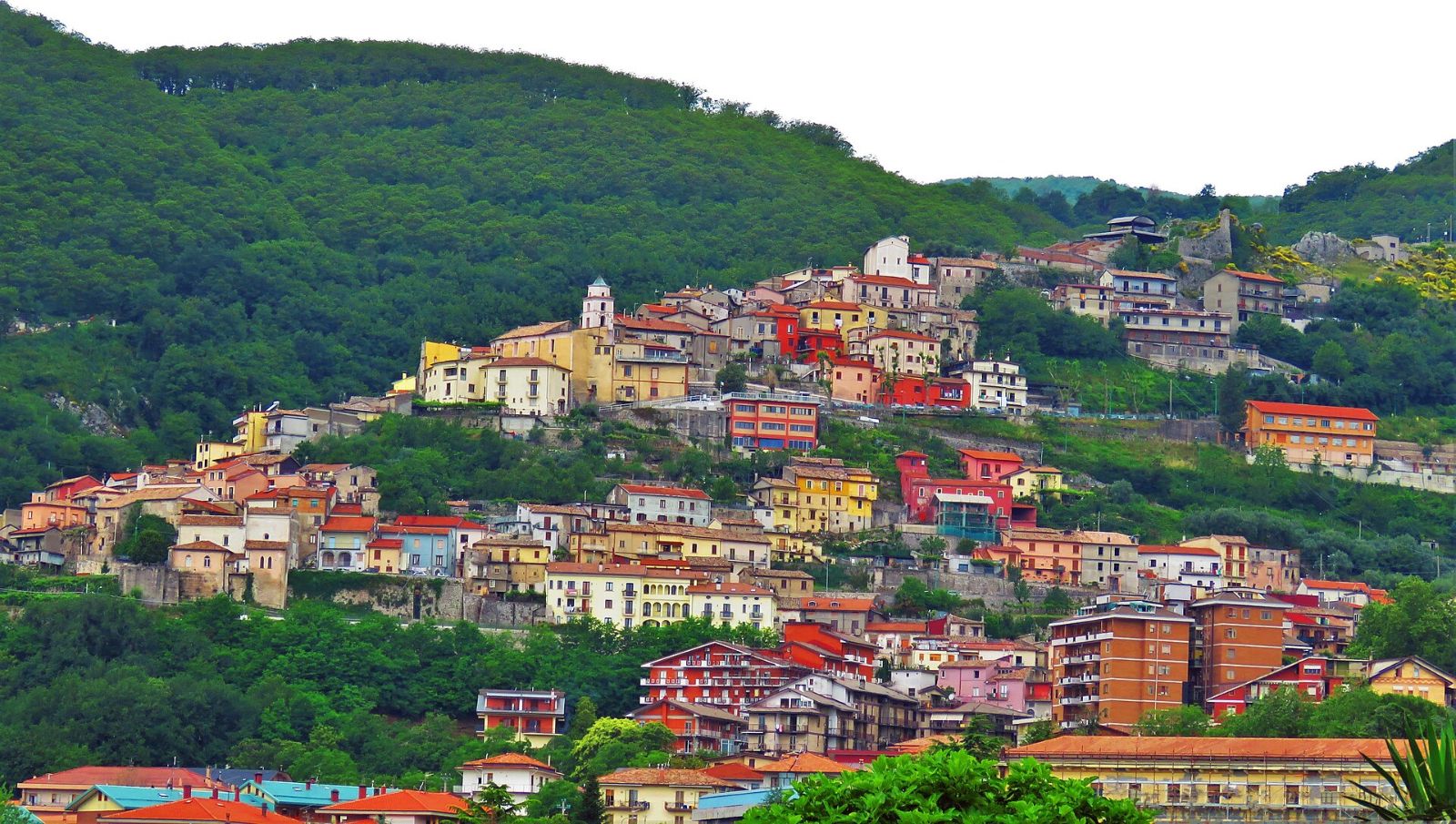
Top photo (Mercogliano): Gianfranco Vitolo from Sarno (Sa), Italia, CC BY 2.0, via Wikimedia Commons.
Read also: The Arch of Trajan