Arriving at Goleto, in the countryside of Alta Irpinia, the first thing we saw was the tower rising above the trees. Then the silence, the pale stones, the arches open to the sky. It is one of those places you visit slowly, and it stayed with us for a long time. Here we tell you its story and how to visit it.
Where it is
The Abbey of Goleto stands in open countryside in the municipality of Sant’Angelo dei Lombardi, in Alta Irpinia, in an area of hills and woods far from any town. It is precisely this isolation, which appealed to its founder, that makes it such a fascinating stop today. It is one of the places we recommend in our guide Avellino and its surroundings.
Saint William and a "double" monastery
The complex was founded in the first half of the 12th century by Saint William of Vercelli, the same monk who founded Montevergine. Here William created a double monastery: a cloistered community of nuns, which was the heart of the abbey, and a small group of monks who looked after its finances and provided spiritual care.
William died at Goleto itself in 1142. His remains stayed here until 1807, when they were moved to Montevergine: if you want to follow in the saint’s footsteps, read also The Sanctuary of Montevergine.
The Febronia Tower
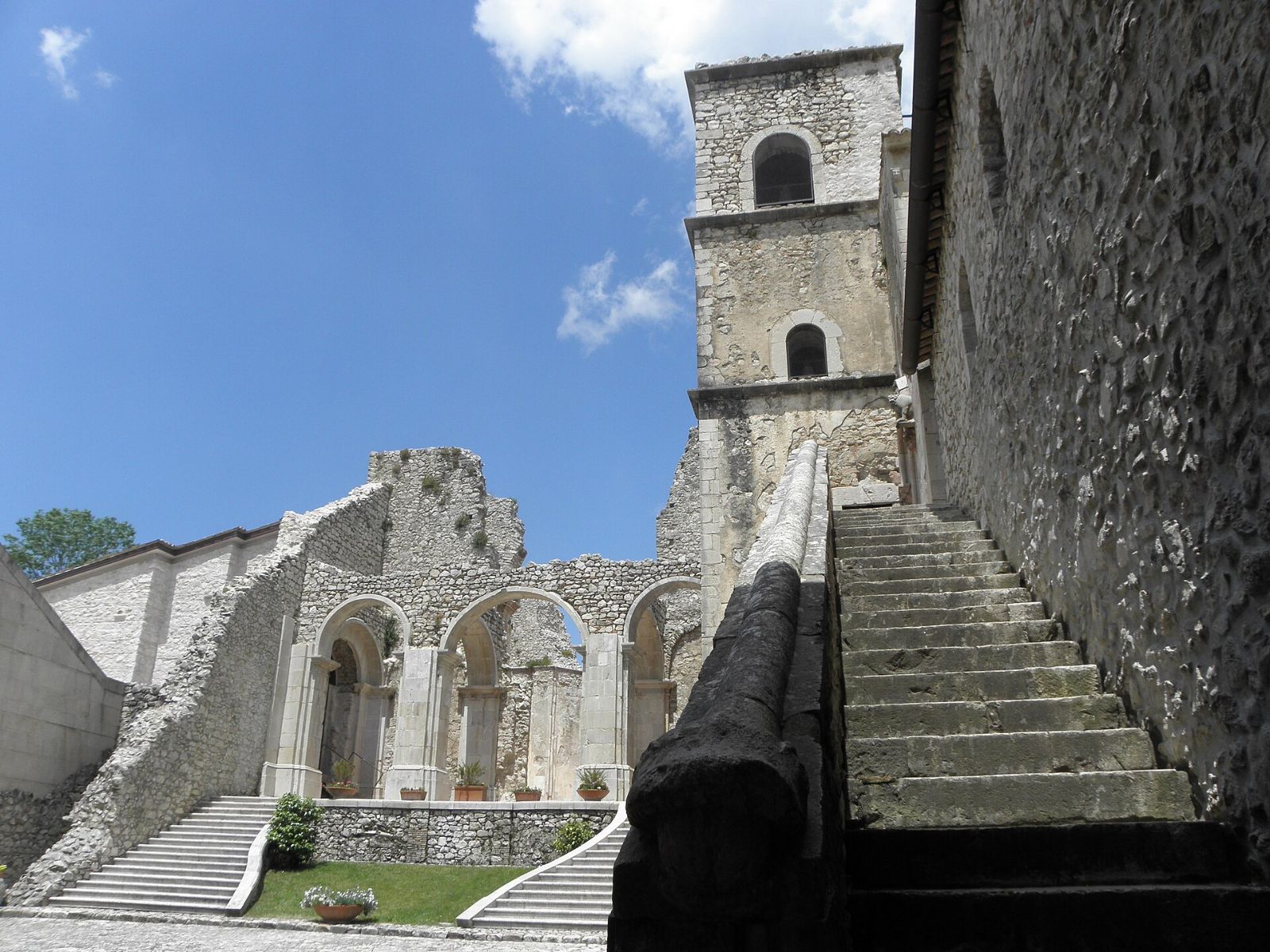
The symbol of Goleto is the Torre Febronia (Febronia Tower), commissioned in 1152 by the abbess Febronia, a key figure in the monastery’s growth. It was built in Romanesque style reusing stone blocks from a Roman mausoleum: if you look closely at the masonry you can still spot reused elements, and it is a detail we recommend looking out for.
The churches of Goleto
The complex preserves several churches, one on top of the other, telling centuries of history:
- The lower church, from the 12th century, in a Romanesque style with an Apulian flavour, with a rectangular plan and two naves.
- The Chapel of Saint Luke (Cappella di San Luca), on the upper floor, built between 1247 and 1255: Gothic inscriptions recall the abbesses Marina and Scolastica who had it built. It is brighter than the church below, and for us it is the most evocative space in the abbey.
- The large 18th-century church designed by Domenico Antonio Vaccaro in the first half of the 18th century, with its central dome.
All around lie the remains of the cloisters and the monastic buildings, which help you imagine the daily life of the community.
Decline, abandonment and rebirth
Goleto’s story is long and troubled. In 1506 Pope Julius II suppressed the convent of nuns, a measure that took effect in 1515, on the death of the last abbess. In 1807, with the Napoleonic reforms, the abbey was closed and abandoned.
Restoration only began in 1973, but a few years later the 1980 earthquake caused the arches of Vaccaro’s great church to collapse, and it still stands without a roof today. And it is precisely this church open to the sky that strikes visitors most: an image that conveys both the wound and the beauty of Irpinia. From 1989 to 2021 the complex was cared for by the community of the Little Brothers of Jesus Caritas, who made it a place of welcome and prayer.
Goleto is also an important stop for anyone following Religious tourism in Campania: sanctuaries and paths of faith.
Getting there and when to go
The abbey is reached by car: from Avellino take the road to Alta Irpinia towards Sant’Angelo dei Lombardi, and from there follow the signs for Goleto. Public transport is limited, so a car remains the most convenient option.
- Spring and early autumn are ideal: the surrounding countryside is green and the light is soft.
- Opening times and guided tours may vary: check times and tickets on the official website before you set off.
- Remember that it is a place of prayer: dress appropriately and respect the silence.
Nearby
Alta Irpinia has plenty to offer those visiting Goleto:
- The village of Nusco and other towns to discover: The most beautiful villages of Irpinia: Zungoli, Monteverde, Nusco.
- Nature along the Ofanto river: The WWF Oasis of Lake Conza.
- Sulphurous waters and ancient myth: The Valle d’Ansanto and the Mefite.
- For another chapter of Irpinia’s medieval history: The Castle of Ariano Irpino and the Museum of Norman Civilisation.
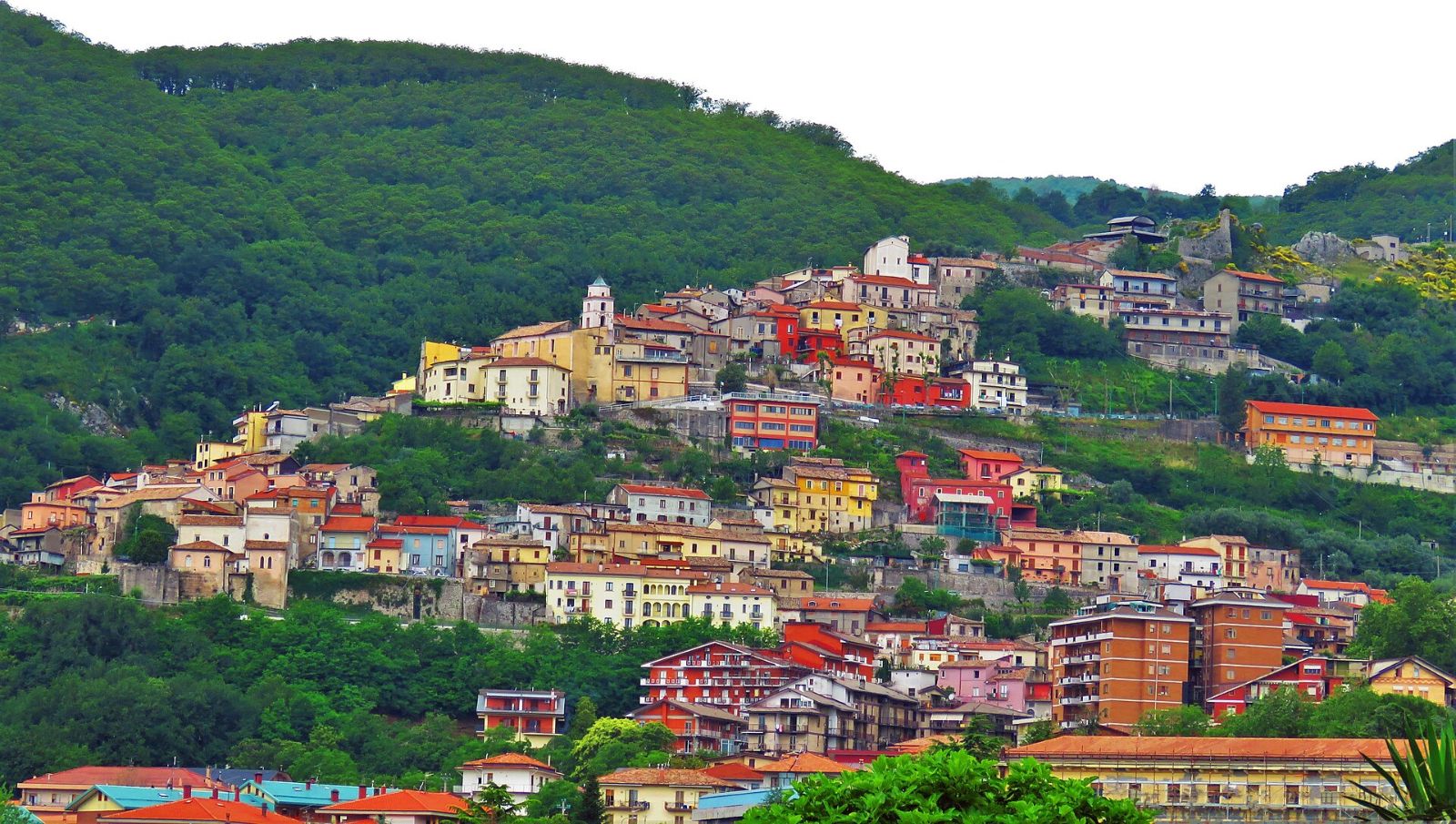
Photo at top (Sant’Angelo dei Lombardi): Citterio, CC BY-SA 3.0, via Wikimedia Commons.
Read also: Lake Laceno and its plateau