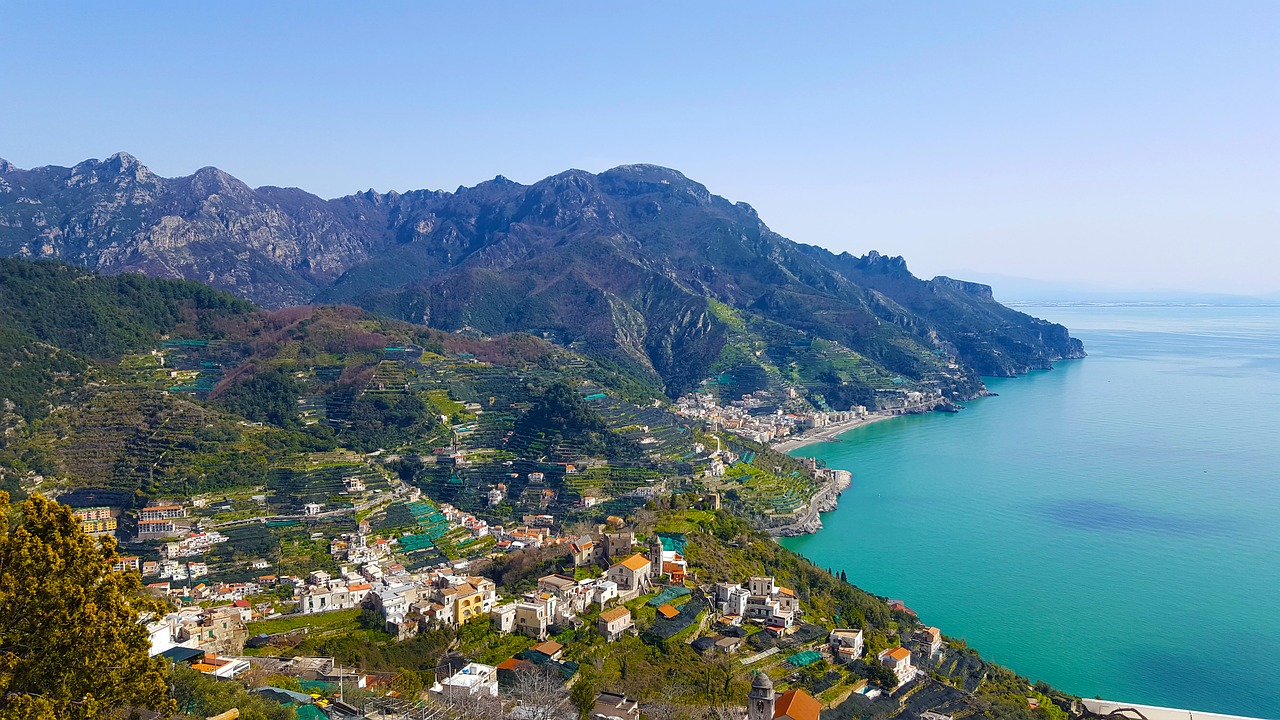
Along the Amalfi Coast road, between Praiano and Amalfi, there’s a point where the road crosses a bridge and, looking down, you see the sea slipping into a cleft in the rock. The first time we stopped here almost by chance, and since then the Fjord of Furore has been a regular stop on our trips along the Amalfi Coast. Here we tell you what it is, what to see and how to visit it.
The village that isn’t there
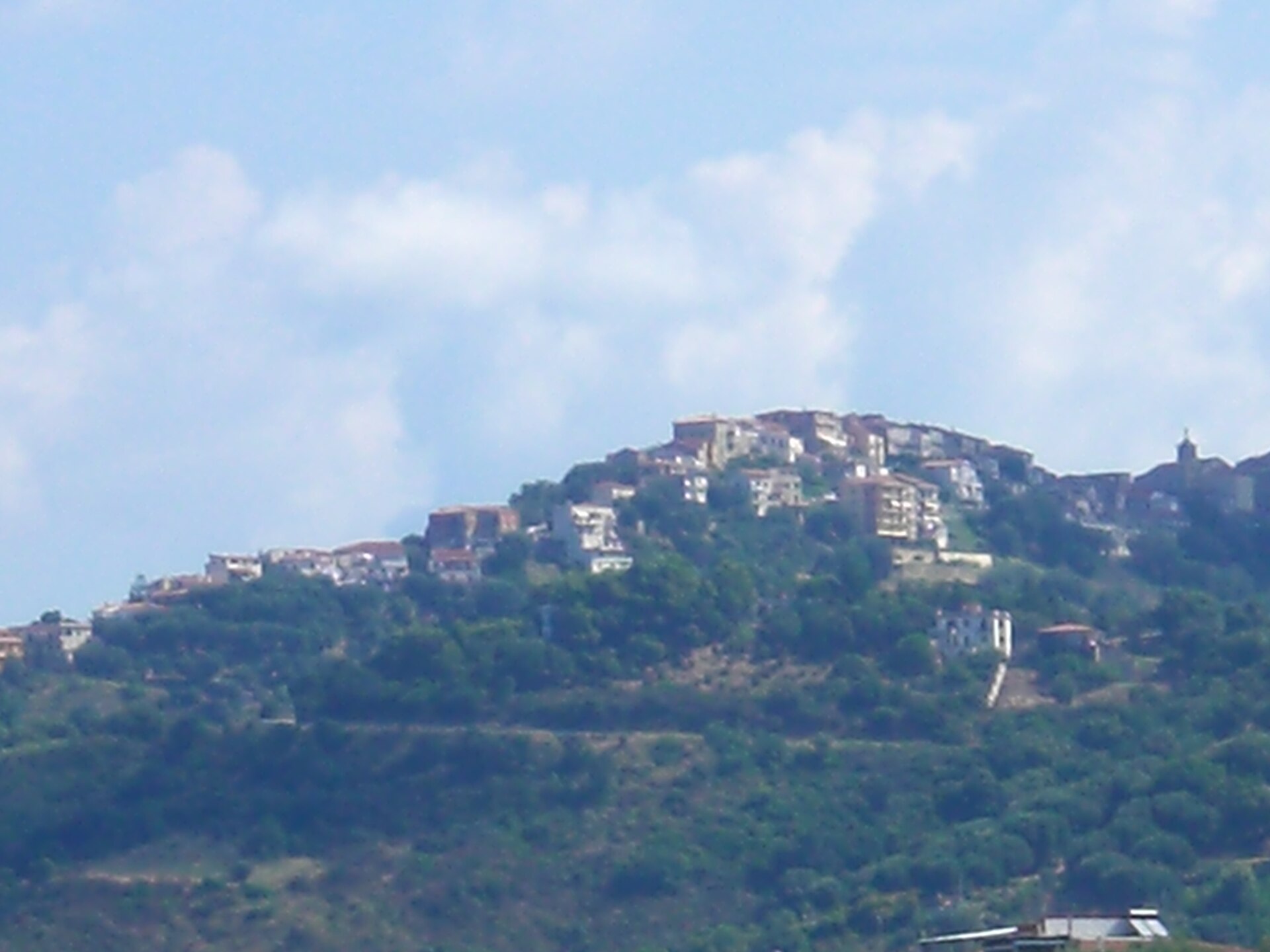
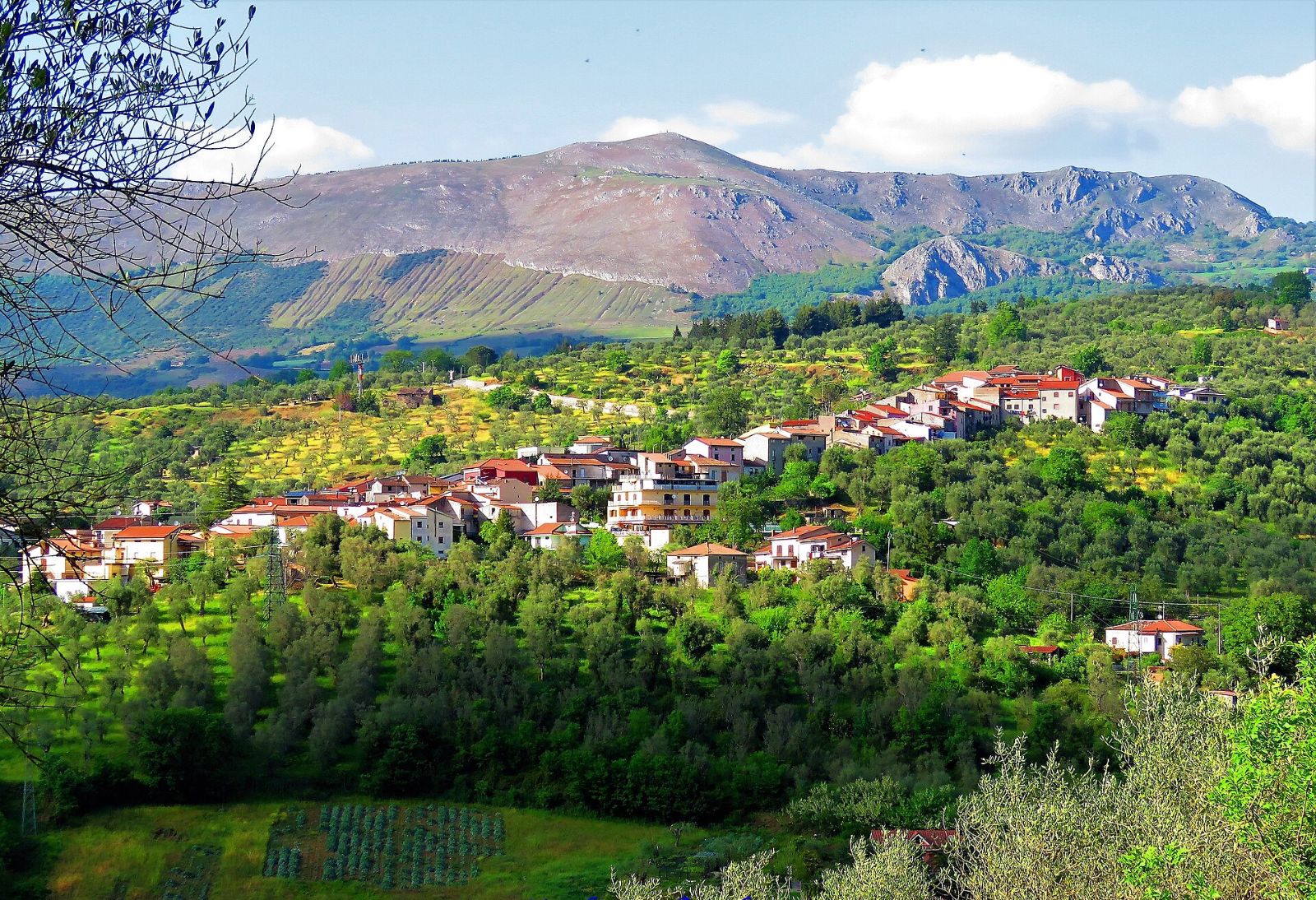
The fjord belongs to Furore, a municipality of fewer than a thousand inhabitants that has always been called “the village that isn’t there”. You understand why as soon as you arrive: it has no real square or compact centre, and its houses are scattered across the terraces between the sea and the mountains, linked by steps and footpaths. From the coast road you see very little of the village.
Furore is one of the Borghi più belli d’Italia (Most Beautiful Villages in Italy) and, like the rest of the coast, is part of the Amalfi Coast UNESCO site, inscribed in 1997. Climbing towards the upper part of the village, we had fun hunting for the murals painted on the walls of the houses: that’s why Furore is also known as the “painted village”.
A gorge carved by a stream
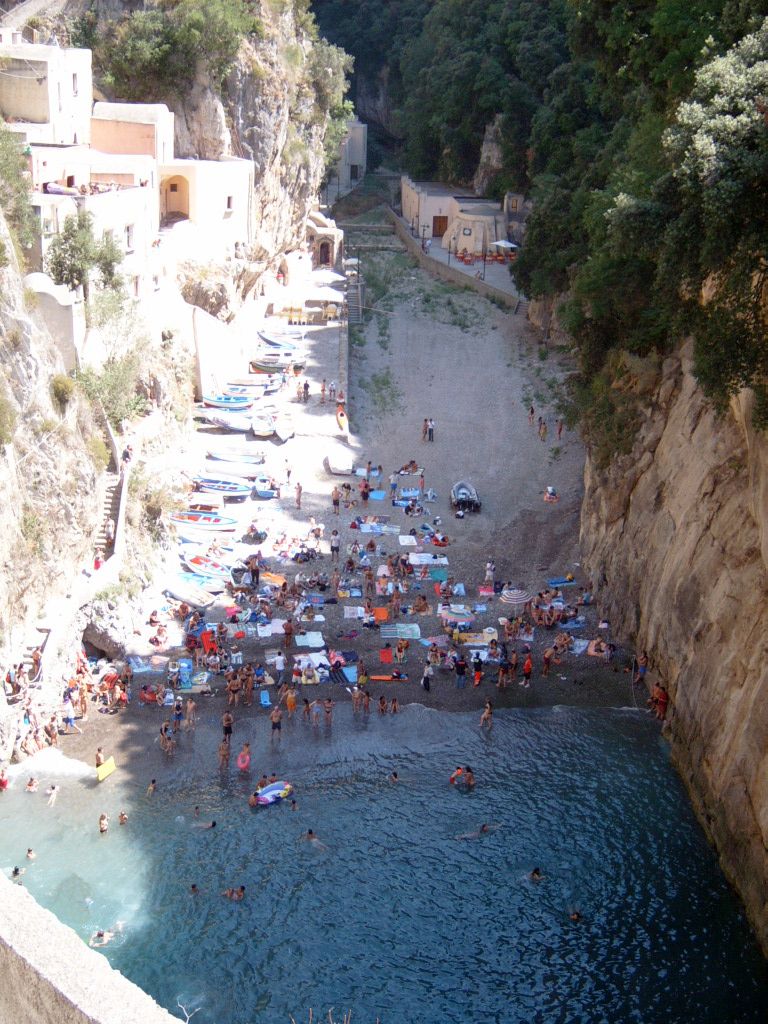
Rather than a true fjord, Furore’s is a deep gorge carved into the limestone by the Schiato stream, which flows down from the Agerola plateau. The walls are so high and narrow that in the afternoon the sun barely gets in, and even at the height of summer the air down here feels cooler.
At the bottom of the gorge is a small pebble beach, a few dozen metres wide, surrounded by the old fishermen’s houses, the monazzeni, now restored. Some of the buildings house the Ecomuseum, which tells the story of the mills, the paper mills and the work of the people who lived in this narrow corner between rock and sea.
The bridge and high diving
Above the gorge runs the bridge of the main road, about 30 metres above the water. Every summer it becomes the springboard for an international high-diving competition, the Marmeeting: watching the athletes launch themselves from up there is a breathtaking spectacle. Outside these events, of course, diving from the bridge is dangerous and should be avoided.
Rossellini and Magnani
The fjord also has a history linked to cinema. In 1948 the director Roberto Rossellini filmed the episode Il miracolo (The Miracle) here, starring Anna Magnani; during filming the two stayed in one of the monazzeni overlooking the beach. Knowing this, the natural set of the Fjord of Furore seemed even more cinematic to us.
Beach and access: what to know
You reach the beach from the main road via a staircase of about 200 steps. In recent years access has not always been guaranteed: after the 2017 fire that damaged the rock face, the beach remained closed because of the risk of falling rocks and was reopened in July 2020, once the safety works were completed. Even afterwards there have been temporary closures for safety reasons.
That’s why we recommend always checking the signs and the municipality’s ordinances before going down, and respecting any bans on access or swimming. Remember too that space is limited: on peak days the beach fills up quickly.
How to get there and when to go
The fjord lies along the SS 163 Amalfitana road, but there is no proper car park nearby: the most convenient way to get there is the scheduled bus that runs along the coast, or by boat, with excursions departing from the nearby harbours. From Agerola you can also walk down along the paths that link the plateau to the sea. The best period runs from late spring to early autumn; in the morning the light is lovelier and there are fewer people.
Nearby
Furore is also wine country: the vineyards on its terraces are part of the Costa d’Amalfi DOC. A little further west you’ll find Positano and Praiano: what to visit, while heading east, past Conca dei Marini, you reach Amalfi: read Amalfi: what to do and what to see. From the plateau above the fjord also starts the Path of the Gods. For all other destinations, start from our guide Salerno and surroundings.
Top photo (Furore): Mess, CC BY-SA 3.0, via Wikimedia Commons.
Read also: The Certosa di Padula