Every time we return to Salerno we realise that the city has a calendar all of its own, made of religious feasts, seafaring customs and household rituals. Some traditions bring thousands of people onto the streets, others survive only in the names of alleyways or in the stories of the elderly. Here are the ones that struck us most.
San Matteo, the patron saint
The most heartfelt feast is that of San Matteo (Saint Matthew), apostle and evangelist, whose relics are kept in the crypt of the Cathedral. It is celebrated on 21 September, and for the people of Salerno it is the most important day of the year: the centre fills with stalls, families and the smell of milza (spleen), the street food of the feast. In the evening the day ends with fireworks over the sea.
A legend is also linked to the saint: according to tradition, in 1544 San Matteo saved the city from pirate ships by unleashing a storm that scattered them. To discover the place that holds his relics, read Salerno Cathedral.
The paranze and the "sisters" of San Matteo
The heart of the feast is the procession. It is not only the silver statue of San Matteo that parades through the city streets, but a small cortege of saints: the three Salerno martyrs Anthes, Gaio and Fortunato, then San Gregorio VII, the pope who died in exile in Salerno in 1085, and San Giuseppe (Saint Joseph).
Although the three martyrs have male features, locals affectionately call them "the three sisters" of San Matteo. The statues are carried on the shoulders of the paranze, the groups of bearers: a role considered an honour, often handed down from father to son or earned through years of taking part. By tradition, the statue of the patron saint is entrusted to the port workers.
Along the route the procession makes several stops, including one dedicated to the sea and the fishermen, and it ends with the return to the Cathedral. We suggest watching the procession from a spot on the seafront: seeing the statues move through the crowd with the gulf behind them is an image that stays with you. All the details are in San Matteo and the procession of the paranze.
The fish stone
Salerno is a seaside city, and its old town remembers it too. Walking through the alleys of the historic centre you will come across Vicolo Pietra del Pesce, whose name preserves the memory of an old custom: according to popular tradition, the catch had to be laid out on a stone before being sold, for inspection and for the payment of taxes. In dialect it is called 'a preta d'o pesce.
Today only the name remains, but it is a good excuse to lose yourself in the old town. For a complete itinerary, read What to see in Salerno.
The Christmas log
A tradition that belongs more to homes than to squares is the Christmas log, still remembered in several villages of the province. A large log was placed in the fireplace over the Christmas days and the family gathered round the fire to pray and ask for a blessing for the new year. The way the log burned was read as an omen: a slow, long-lasting fire was considered a good sign.
Today there are few fireplaces, but the idea of gathering round the fire on feast days lives on, for example in the bonfires lit in the villages of the Cilento: we talk about them in Cilento traditions.
The winter lights
Alongside its ancient traditions, in recent years Salerno has built a new one: Luci d'Artista, the artistic light installations that transform streets, squares and gardens every winter. It has become a reason to visit the city in the cold months, and we recommend going in the evening, on foot, starting from the seafront. To find out how to plan your visit, read Luci d'Artista in Salerno.
Getting there and when to go
Salerno is served by its central railway station, with fast connections from Naples and Rome, and by the motorway. The best time to experience its traditions is September, for the patron saint's feast, or winter, for the light installations. Either way the city gets very crowded: book ahead and check the programmes on the Municipality's official website before you go.
In the surroundings
- Salerno and its surroundings: our guide to the city and the province.
- The churches and Cathedral of Salerno: the places of Salerno's faith.
- What to eat in Salerno: from San Matteo's milza to the city's sweets.
- The 5 most important food festivals in Salerno and its province: food feasts across the province.
- Cilento traditions: rituals and feasts of the Cilento.
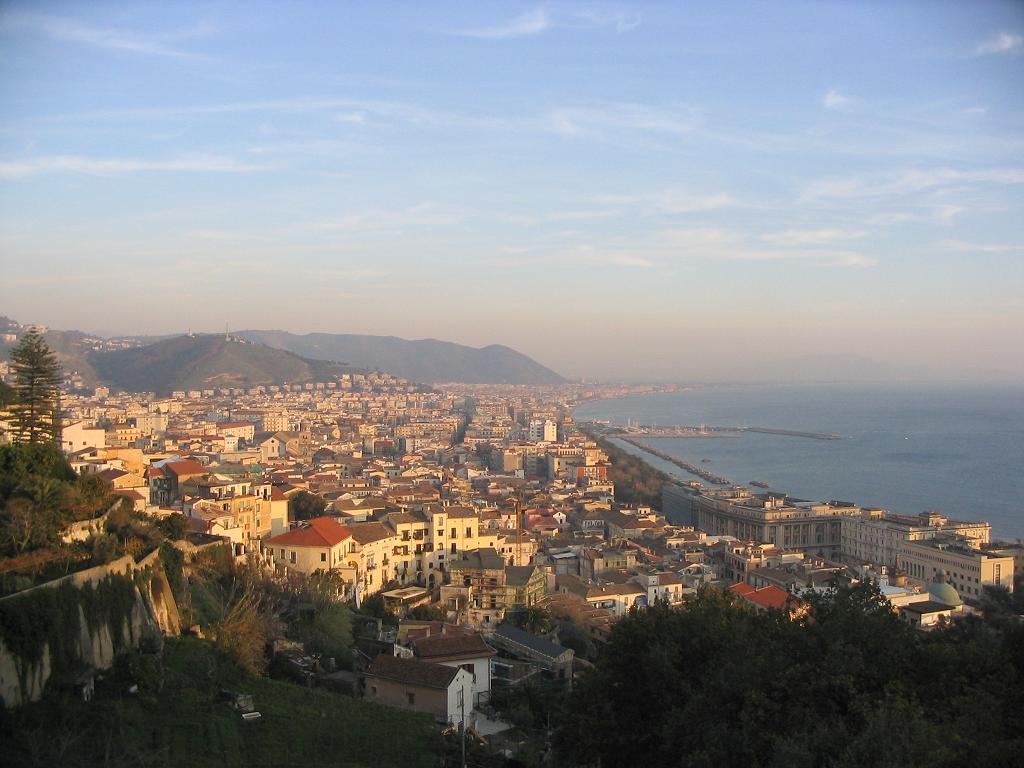
Top photo (Salerno): No machine-readable author provided. Giaros assumed (based on copyright claims)., CC BY-SA 3.0, via Wikimedia Commons.