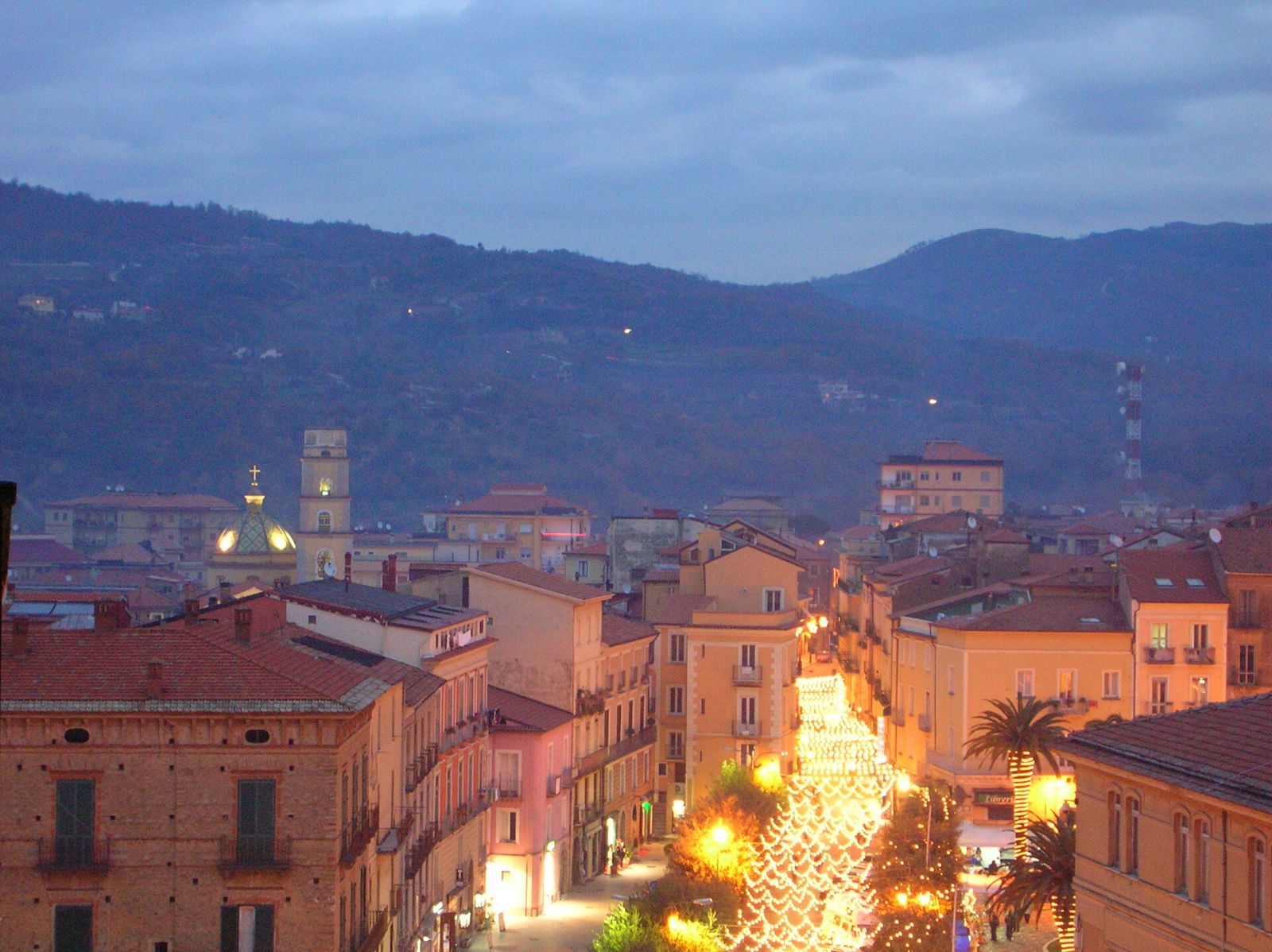
In the Cilento we have learned that traditions are not something you watch from the sidelines: you live them in the square, in the kitchen or along a mountain path. Covering them all is impossible, because every village has its own. We have chosen the ones that seem most representative to us, starting from Vallo della Lucania, the heart of the inland Cilento, and the mountains around it.
The pilgrimage to Monte Gelbison
Above Vallo della Lucania rises Monte Gelbison, also known as Monte Sacro (the Holy Mountain). At the top, at about 1,705 metres, in the municipality of Novi Velia, stands the sanctuary of the Madonna del Sacro Monte, a pilgrimage destination for centuries; the earliest documented records date back to the 14th century. In winter the summit is covered in snow and the sanctuary is closed: it is open from late May to October.
Pilgrims come from the Cilento, but also from Basilicata and Calabria, and many walk the last stretch on foot. Along the climb there is a large heap of stones: by tradition, everyone brings one and adds it to the pile. We went up on a clear summer day, and from the top we could see the Gulf of Salerno, the Vallo di Diano and the mountains of the Cilento all around. Check the opening days before you set off.
Winter feasts: Christmas and San Biagio
On Christmas nights, some Cilento villages light great bonfires in the square, where the community gathers after Mass. Fire is an element that often returns in winter festivities across southern Italy, and here it accompanies the coldest days of the year.
On 3 February the feast of San Biagio (Saint Blaise), protector of the throat, is celebrated. As in many parts of Italy, the blessing of throats is renewed in church with two crossed candles, and in several villages the feast comes with market stalls and processions.
Easter and 1 May: traditions in the kitchen
Many Cilento traditions pass through the table. At Easter families make pizza chiena, a savoury pie filled with goat's cheese, eggs, soppressata and sausage, prepared the day before and also taken along on Easter Monday outings. The right cheese is often the Cacioricotta caprino del Cilento, and the cured meat is the soppressata di Gioi.
On 1 May, several villages cook ciccimmaretati: a soup of mixed pulses and grains cooked together, made as a wish for a bountiful year. It is a humble dish that tells the story of Cilento cooking well, the cuisine that made the Mediterranean diet famous: we talk about it in Pioppi and the Mediterranean diet.
Age-old fairs: the Frecagnola of Cannalonga
Every year Cannalonga hosts the Fiera della Frecagnola, one of the oldest fairs in the Cilento: its origins go back to the mid-15th century. It used to be held in December, but has now been moved to September. The name comes from frecagnola, goat meat cooked in tomato sauce, which is still the signature dish of the fair.
Fairs like this were where farmers, shepherds and craftsmen met, and where the travelling vendors who went from village to village also passed through. We tell their story in Travelling trades in the Cilento.
Getting there and when to go
Vallo della Lucania can be reached by car via the Cilentana, the road that runs from Paestum down to the south of the province, or by train to Vallo della Lucania-Castelnuovo station on the Tyrrhenian line. The best time depends on what you want to experience: summer for the pilgrimage to the Gelbison, September for the Frecagnola, winter for the bonfires. Check the programmes on the municipal websites before you go.
In the surroundings
- Salerno and its surroundings: our guide to the province.
- The Cilento: what to do and see: our guide to the Cilento.
- Traditions in Salerno: the feasts and customs of the provincial capital.
- The 5 most important food festivals in Salerno and its province: the food feasts, many of them in the Cilento.
- The Velia Archaeological Park: a short distance from Vallo, the ancient city of Elea.
Top photo (Vallo della Lucania): Miki.mod at Italian Wikipedia (Original text: Michele Modica), Public domain, via Wikimedia Commons.