Every winter Salerno lights up. The streets of the centre, the gardens and the seafront fill with light installations that turn the city into a great open-air museum. We strolled among the Luci d'Artista ("Artists' Lights") on a cold, clear evening, and here is how to enjoy them at their best.
An idea born in Turin
Luci d'Artista began in Turin in the late 1990s, as an alternative to traditional Christmas lights: not simple decorations, but true works of art made of light. Salerno adopted the model in 2006, becoming the first city to follow Turin's example.
Since then the event has been held every year, usually from November to January, and it has changed the city's winter face. The installations are renewed from one edition to the next, often following a theme: over the years there have been enchanted gardens, underwater worlds, animals, flowers and fairy-tale characters.
Where to see them
The lights are spread along a route that crosses much of the centre. Places usually involved include the Villa Comunale, whose avenues and fountains make it one of the most spectacular spots, Corso Vittorio Emanuele, the main shopping street, Piazza Flavio Gioia, Lungomare Trieste and the Giardino della Minerva.
The route changes a little every year, so we recommend checking the official map before you set off. The beauty of it is walking without hurrying, letting yourself be led from one light to the next: in a couple of hours you can see most of the installations.
The works are very different from one another: some are large structures you walk through, like tunnels or arches of light, others are figures suspended between buildings, and others still fill the flowerbeds of the gardens. We suggest looking up often, because many installations can only be appreciated from below, and not forgetting a charged phone: you will want to take lots of photos.
The atmosphere in town
During Luci d'Artista Salerno fills with visitors, especially at weekends and during the holidays. Alongside the installations there are often Christmas markets, nativity scenes and attractions such as the Ferris wheel, which in some editions has offered a view from above of the illuminated city and the gulf. We were struck by the variety of people: families with children, groups of friends, couples, tourists arriving by coach from all over Italy.
We suggest combining the walk with a visit to the old town. Before it gets dark, go up to see the Cathedral and the alleys of the old city; then, when the lights come on, head down towards the Corso and the seafront.
Practical tips
If possible, avoid Saturday evenings and public holidays, when the streets of the centre are very crowded. Weekdays are quieter and let you enjoy the installations better. Dress in layers and wear comfortable shoes: you will walk a lot. Start and end dates, as well as any dedicated shuttles and car parks, change every year: always check the official website of the Municipality before you go.
Getting there and when to go
The easiest way to reach Salerno during Luci d'Artista is by train: the station is a short walk from Corso Vittorio Emanuele, so you avoid the weekend traffic. By car you arrive via the A2 motorway and the ring road. The best time to visit is late afternoon, to see the lights switch on at sunset.
Nearby
To plan your stay, start from our guide Salerno and its surroundings and from our tips on what to do in Salerno. If you are staying longer, read our two-day Salerno itinerary; by day don't miss Salerno Cathedral and the Giardino della Minerva with the Schola Medica Salernitana.
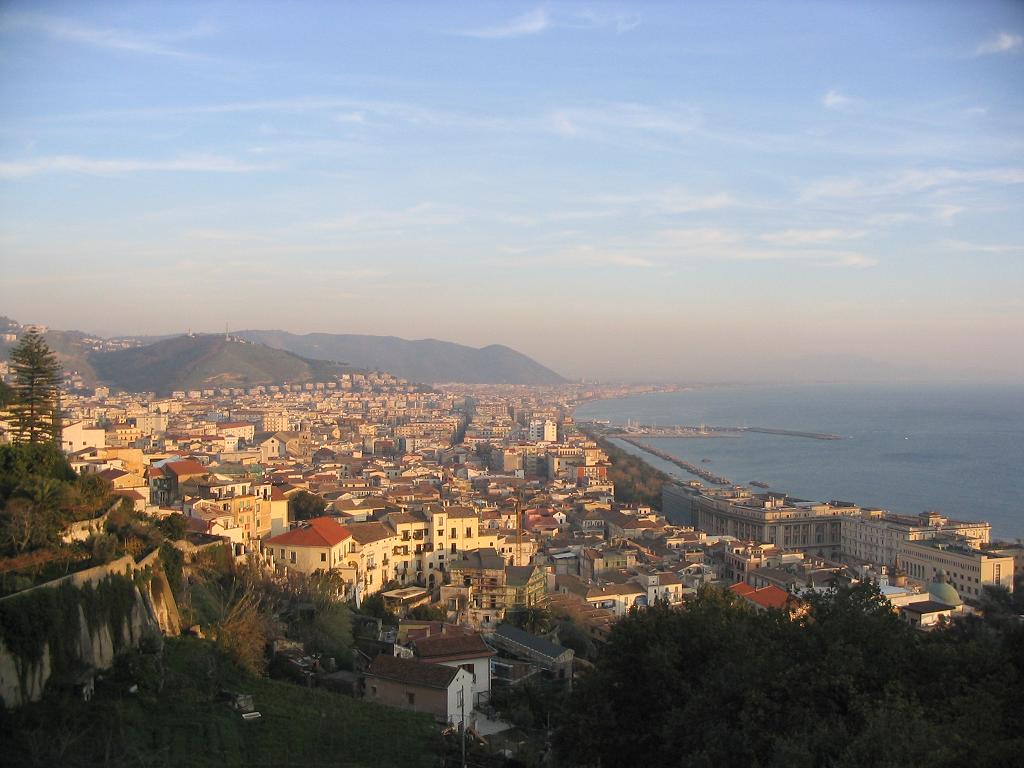
Top photo (Salerno): No machine-readable author provided. Giaros assumed (based on copyright claims)., CC BY-SA 3.0, via Wikimedia Commons.