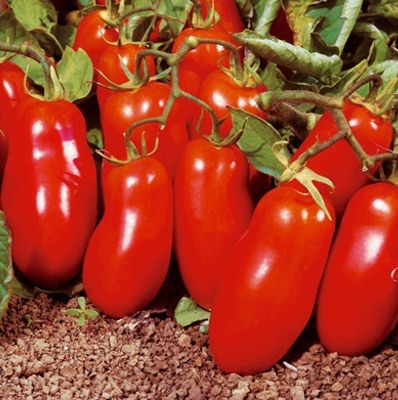
If there is one tomato everyone knows, even outside Italy, it is the San Marzano. We went to see it in the fields of the Agro Sarnese-Nocerino, where the plants grow upright along rows of poles. Here is the story of the Pomodoro San Marzano dell'Agro Sarnese-Nocerino DOP.
A name that comes from a town
The tomato takes its name from San Marzano sul Sarno, the town where growing it became most widespread. Its origins lie in crosses and selections of local varieties in the early twentieth century, while the production of peeled tomatoes became, over the course of the century, one of the most important industries in the area.
DOP recognition
It has been a Protected Designation of Origin since 1996. The production area stretches across the province of Salerno (with towns such as San Marzano sul Sarno, Scafati and San Valentino Torio), the province of Naples (including Pompeii, Sant'Antonio Abate and Striano) and part of the municipality of Montoro, in the province of Avellino.
Varieties and cultivation
The product specification allows the S. Marzano 2 and Kiros (formerly Selezione Cirio 3) varieties, as well as improved lines derived from them. The plants are trained upright on wooden stakes and wires, so that the fruit does not touch the ground. Harvesting is by hand, in several passes, when fully ripe, between 15 July and 15 October.
How to recognise it
The fruit is elongated, 60 to 80 millimetres long, cylindrical or box-shaped and a deep red colour. The skin comes away easily, the flesh is firm and the flavour bittersweet. The DOP protects the processed product: whole peeled tomatoes or peeled tomato fillets, in glass jars or tins.
In the kitchen
San Marzano is the tomato for sauces: we use it for a simple sauce with garlic, olive oil and basil, which lets its full flavour come through. It is also the traditional tomato for ragù and pizza. We recommend crushing it by hand rather than blending it.
Where to taste it and what is nearby
The production area is just a few kilometres from Herculaneum and Pompeii: what to see, perfect for combining archaeology and food. The same area grows the Cipollotto Nocerino DOP, while on Vesuvius you will find the Pomodorino del Piennolo del Vesuvio DOP. To make the most of it, read Neapolitan ragù and genovese and Neapolitan pizza. All the designations are in Campania's DOP and IGP products, and the province in Salerno and its surroundings.
Sources: Product specification (MIPAAFT decree of 4/9/2019); European Commission – eAmbrosia; Protection consortium.
Photo at top (San Marzano sul Sarno): René Haas, CC BY-SA 4.0, via Wikimedia Commons.