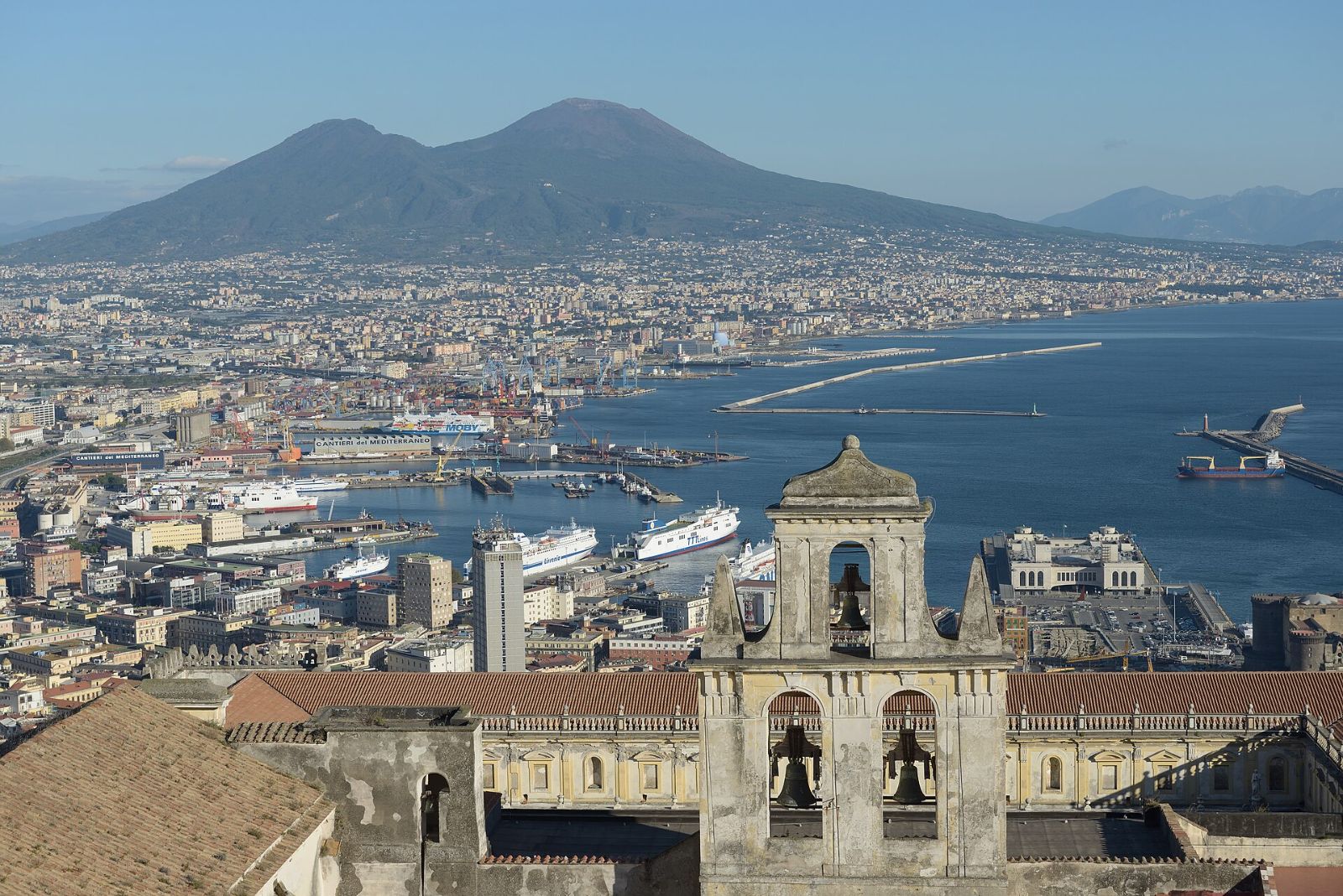
In Naples, Sunday starts early, with a pot bubbling away on the stove long before lunch. Inside there might be ragù, red and thick, or genovese, golden and fragrant with onion. We tasted both and couldn't choose between them: that's why we're telling you about them together.
Ragù, the Sunday dish
The name comes from the French ragoût, a stew of meat and vegetables. Neapolitan ragù doesn't use minced meat but whole pieces: beef shin, rolled and stuffed braciole, sometimes pork rind and tracchie (pork ribs), slow-cooked in tomato.
The secret is patience. The sauce must barely simmer, or "pippiare" as they say in the city, for at least three hours and often much longer. Traditionally it was the one-pot Sunday meal: the sauce dressed the pasta, and the meat became the main course.
Ragù has made its way into the theatre too. Eduardo De Filippo dedicated the poem 'O rraù to it, and in the 1959 comedy Sabato, domenica e lunedì (Saturday, Sunday and Monday) Rosa Priore's preparation of the ragù runs through the story of a family and its tensions.
Genovese, the white ragù
Genovese, despite its name, is a Neapolitan dish. Its base is a huge quantity of onions, often more than the meat, cooked for a long time with a piece of beef or veal and a soffritto of carrot and celery, without tomato. The onions melt into an amber cream and the meat falls apart under your fork.
There are several theories about the name: some link it to the Genoese merchants who frequented the port in the 15th century, others to a cook nicknamed "'o Genovese". Scholars also point out that in 19th-century recipe books the expression "alla genovese" was just one of many style labels, like "alla bolognese" or "alla napoletana".
The right pasta
For ragù we recommend sturdy pasta shapes, able to stand up to such a rich sauce. Genovese is classically served with ziti, long tubes broken by hand before cooking, or with candele, which hold the onion cream well. If you want to do things properly, choose a bronze-die pasta: we talk about it in Pasta di Gragnano PGI.
Our advice is to finish the dish with a sprinkling of grated cheese and not to skip the bread: in Naples, leaving sauce on your plate would be a sin.
Nearby
To discover the city's other dishes, read Typical Neapolitan dishes and What to eat in Naples. After the pasta, round off lunch with The Neapolitan babà and Neapolitan coffee and the caffè sospeso. Our complete guide is in Naples and its surroundings.
Photo at top (Naples): This Photo was taken by Wolfgang Moroder. Feel free to use my photos, but please mention me as the author and send me a message. This image is not in the public domain. Please respect the copyright protection. It may only be used according to the rules mentioned here. This specifically excludes use in social media, if applicable terms of the licenses listed here not appropriate. Please do not upload an updated image here without consultation with the Author. The author would like to make corrections only at his own source. This ensures that the changes are preserved.Please if you think that any changes should be required, please inform the author.Otherwise you can upload a new image with a new name. Please use one of the templates derivative or extract., CC BY-SA 3.0, via Wikimedia Commons.