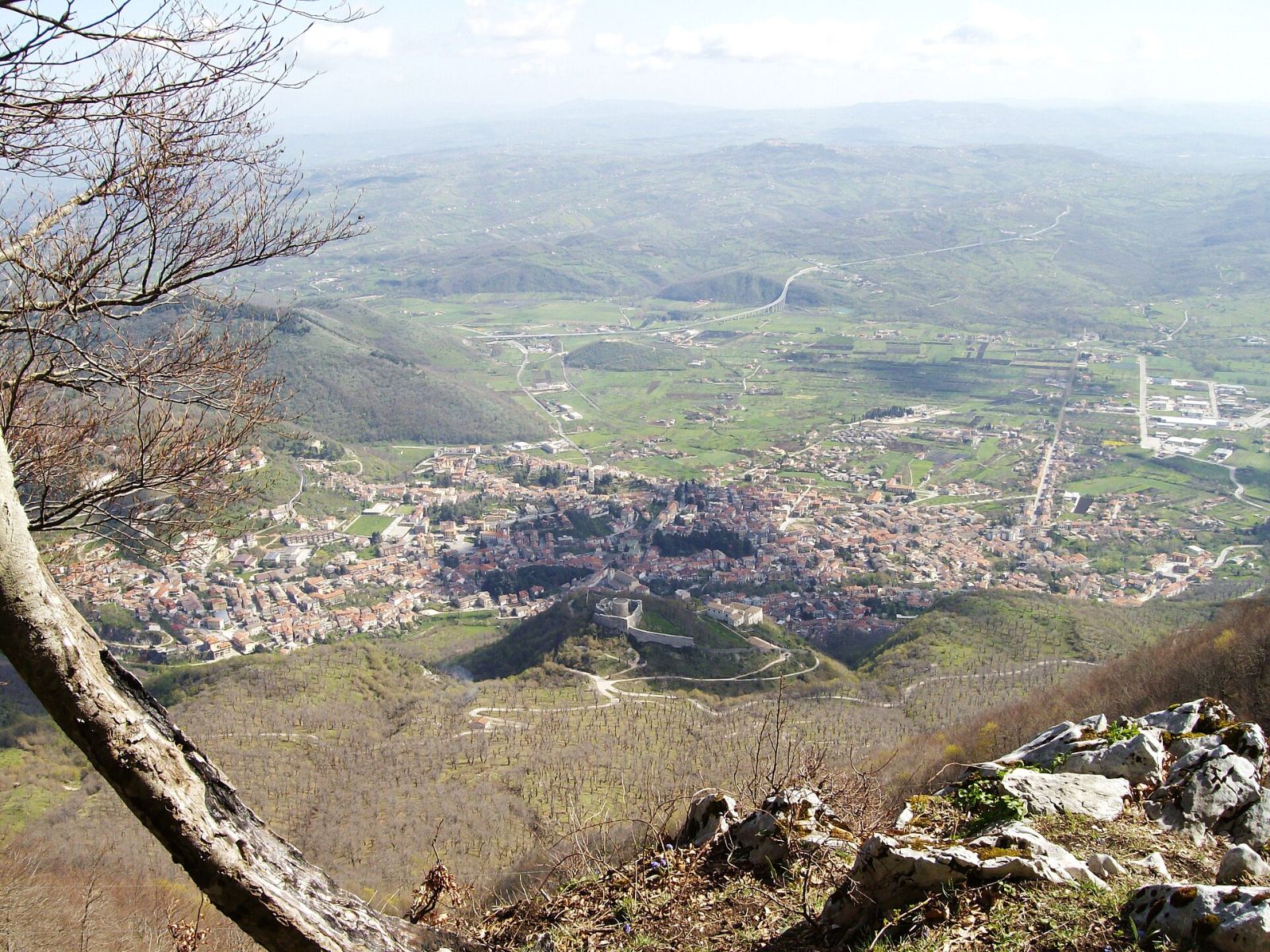
Between October and November the woods around Montella change colour and the air smells of roast chestnuts. We went there at the height of the harvest and were struck by how much the chestnut is part of everyone's life here. Here is the story of the fruit that made this corner of Irpinia famous.
An Irpinian first
The Montella chestnut was the first Italian fruit or vegetable product to obtain a Designation of Origin, in 1987. In 1996 it received European recognition as an IGP (Protected Geographical Indication), which protects its name and its bond with the land.
The production area is centred on Montella and includes a few neighbouring towns, among them Bagnoli Irpino, Cassano Irpino, Nusco, Volturara Irpina and part of Montemarano. The chestnut groves grow on the slopes of the Monti Picentini, between 500 and 1,000 metres above sea level. You will find this area among the destinations in our guide Avellino and its surroundings.
Palummina, the queen variety
The main variety is Palummina, which accounts for at least 90% of production; the rest is made up of other local varieties, such as Verdole. These are medium or medium-small chestnuts, between 75 and 90 nuts per kilo, roundish with a flat base.
The skin is thin and a deep brown, the flesh is white, floury and delicately sweet. It is precisely these qualities that make them suitable both for eating fresh and for processing.
Fresh, dried and "del prete"
The Montella chestnut comes in many forms:
- fresh, during the harvest season, for roasting or boiling;
- dried, shelled or in their skins, for soups and broths;
- as castagne del prete ("priest's chestnuts"), a speciality made by drying and toasting the nuts, with a slightly smoky flavour;
- turned into flour, spreads and sweets.
We suggest taking home a bag of castagne del prete: they keep for a long time and are one of the most authentic souvenirs of a trip to Irpinia.
The festival and the season
The harvest takes place in autumn, between October and November. Every year, at the beginning of November, Montella celebrates its product with the Sagra della Castagna (Chestnut Festival), a recurring event that brings producers, food stalls and visitors from all over the region to town. The dates change from year to year: check them on the Municipality's website before you set off.
It is also the best time to combine your visit with a walk through the chestnut groves and a stop in nearby Bagnoli Irpino, which celebrates its black truffle in the same months.
Nearby
- The area's other autumn treasure: The black truffle of Bagnoli Irpino.
- The mountain above Bagnoli: Lake Laceno and its plateau.
- The other flavours of the province: what to eat in Avellino.
- A village in the club among the chestnut towns: The most beautiful villages of Irpinia: Zungoli, Monteverde, Nusco.
Photo at the top (Montella): Mies me at Italian Wikipedia, Public domain, via Wikimedia Commons.