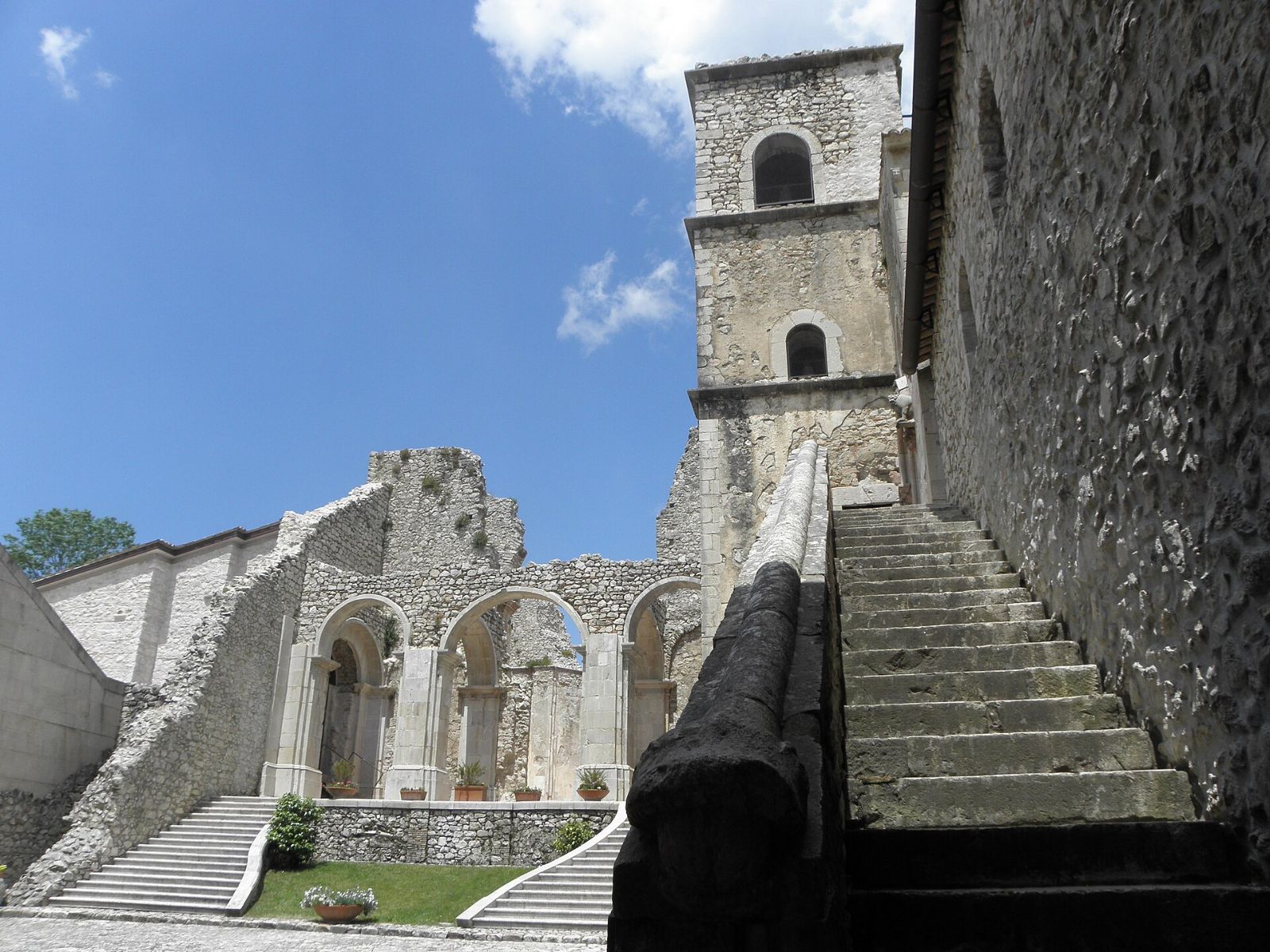
When the coast fills up in summer, we often head in the opposite direction and climb into the Monti Picentini. This is the mountain range that separates Irpinia from the Sele plain, a world of beech forests, karst plateaus and springs that feels a world away from the sea, yet is little more than an hour from Naples and Salerno. Since 1995 much of these mountains has been protected by the Monti Picentini Regional Park, headquartered in Nusco. On this page we tell you about the Irpinian side, the part in the province of Avellino.
The highest mountains of inland Campania
The Picentini are a limestone and dolomite massif with some of the highest peaks in the region. The highest is Monte Cervialto, 1,810 metres, which towers over the Laceno plateau; almost as high is Monte Terminio, 1,806 metres, between Serino, Volturara and Montella. On the Salerno side rise Polveracchio and Accellica, while further north the Montagnone di Nusco closes the range towards the Ofanto.
The forests are the park's true treasure: beech woods at altitude, then Turkey oaks, maples and alders and, lower down, the great chestnut groves that shape the economy of many villages. In some areas there are also plantations of black pine.
Southern Italy's great water reservoir
What makes the Picentini unique is water. The limestone rock soaks up rain and snow like a sponge and releases them downstream through dozens of springs: this is why the massif is considered the largest water reserve in southern Italy. Rivers rise here that flow in opposite directions: the Sele, the Tusciano and the Picentino towards the Tyrrhenian; the Calore and its tributary the Sabato towards the Volturno; and the Ofanto towards the Adriatic.
Two places capture this bond perfectly. In Caposele the springs of the Sele gush out, the starting point of the Apulian Aqueduct: the village has a museum devoted to water and a river park for walks. In Serino, meanwhile, rose the waters that were carried towards the Gulf of Naples by a long aqueduct as early as Roman times.
Laceno, the heart of hiking
The best-known starting point is the Laceno plateau, above Bagnoli Irpino, with its karst lake surrounded by beech trees. In summer it is the base for hikes and walks; in winter it becomes a small ski resort. We tell you all about it in Lake Laceno and its plateau and, for the cold season, in our winter itinerary with snow at Laceno and spas.
Several trails lead from Laceno towards Cervialto and the surrounding ridges. Before setting off, check the condition of the routes with the park or the local CAI (Italian Alpine Club) sections: some stretches are demanding and the waymarking is not always continuous.
Mountain flavours
The park is also a landscape to taste. The chestnut groves of Montella produce a chestnut protected by PGI status, the star of the autumn festivals: read our article on the Montella PGI chestnut. In the woods around Bagnoli people hunt for the black truffle, which we describe in our article on the black truffle of Bagnoli Irpino. And the high pastures produce mountain cheeses and caciocavallo that are well worth tasting in the villages.
Villages on the Irpinian side
The park takes in many municipalities in the province of Avellino. Among those we like to recommend as a base:
- Bagnoli Irpino, with its stone-built old town and access to Laceno;
- Montella, chestnut country, with its sanctuary on the mountain;
- Nusco, a panoramic village and the park's headquarters;
- Caposele, for the springs of the Sele;
- Serino and the Terminio area, for those arriving from Avellino.
Our tips
- Even in summer, temperatures drop at altitude and the weather changes quickly: always bring a jacket and enough water.
- For long hikes, use up-to-date maps or rely on qualified hiking guides.
- Respect the wildlife and plants: picking mushrooms, truffles or plants is governed by specific rules.
Getting there and when to go
You need a car. From Avellino you can quickly reach Serino and Terminio, while for Montella, Bagnoli and Laceno you take the Ofantina road; Caposele and Nusco are on the eastern side. The most beautiful seasons are late spring, with meadows in flower, and autumn, with the colours of the beech trees and the chestnut season. In winter the mountain roads may be covered in snow. Check information on the park's official website before you set off.
Nearby
On the Salerno side of the massif, the WWF oases of Monte Polveracchio and Valle della Caccia await you. For more ideas on nature in Campania, read Nature and countryside in Campania: parks, forests and rural villages and, for the whole province, Avellino and its surroundings.