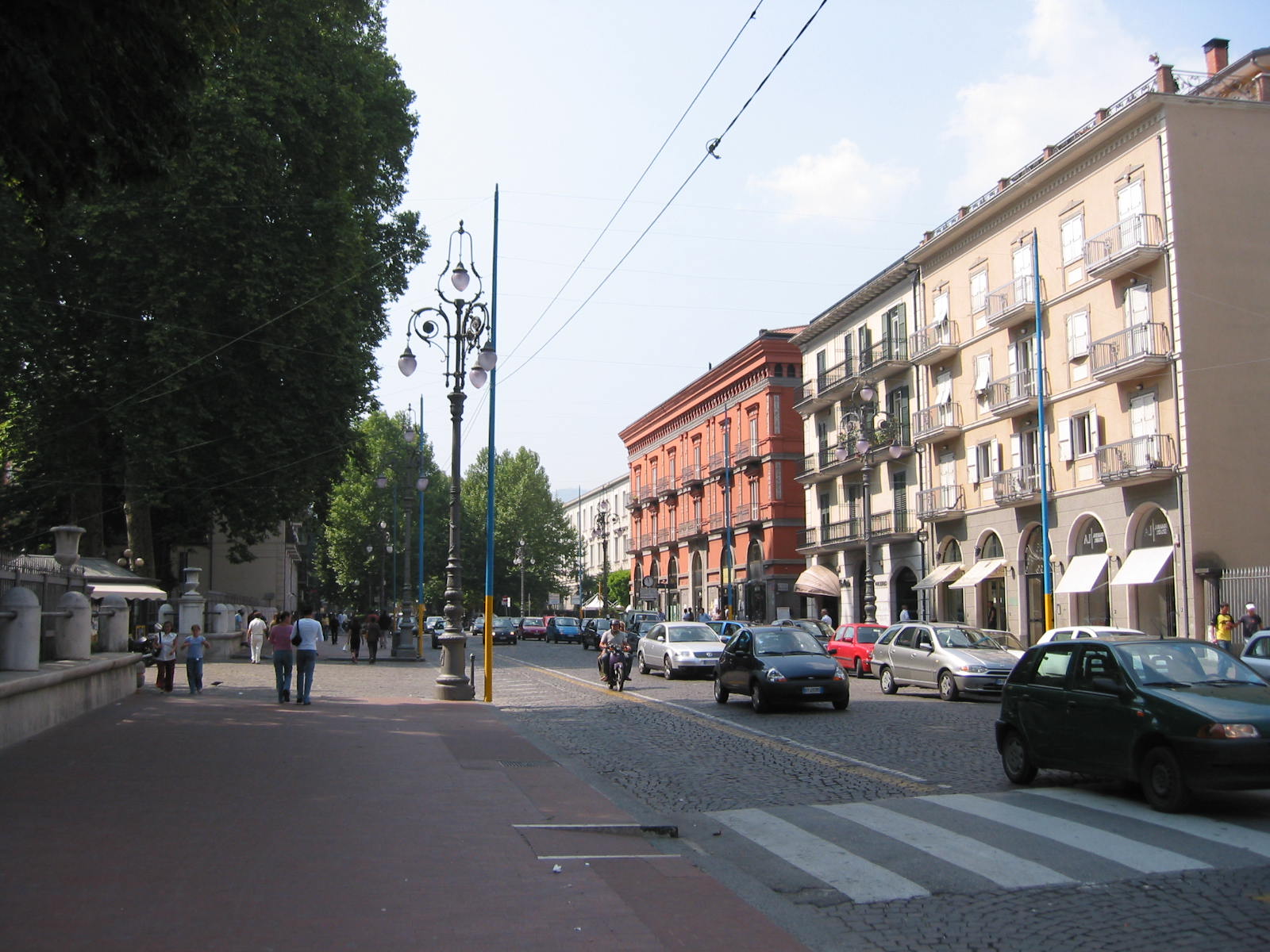
We decided to cross Avellino on foot, from its oldest part to the Corso, to understand how the city has shifted over the centuries. The result is a one-day itinerary that we offer you just as we walked it, with the lesser-known stops alongside the best-known landmarks.
The starting point: the Collina della Terra and the cathedral
We set off from the Collina della Terra, the oldest part of the city. Here stands the Cathedral of Santa Maria Assunta, with a nineteenth-century façade that hides a much older building: going down into the crypt feels like entering the deepest layers of the city's history. Inside is the chapel dedicated to San Modestino, Avellino's patron saint, while the wooden statue of the Madonna Assunta, an eighteenth-century work by Nicola Fumo, is carried in procession every year on Ferragosto (15 August).
We were struck to learn that today's city did not grow up here by chance: Roman Abellinum lay a few kilometres away, in what is now Atripalda, and it was on this hill that the inhabitants gathered in the Middle Ages.
The remains of the Castle and the story of the Caracciolo family
A few steps further down you come across the ruins of the Castle, built in the Lombard era as a defensive stronghold. Over the centuries it was enlarged and turned into a noble residence, inhabited by the families who succeeded one another in ruling the city: the Filangieri, the de Cardona and finally the Caracciolo. In the early eighteenth century the Caracciolo abandoned it to move to their new palace in Piazza Libertà, today's Palazzo Caracciolo.
Today only walls and fragments remain, but the walk is worthwhile: it helps you picture the medieval city. If you want to find out more, see The Lombard Castle of Avellino.
Piazza Amendola: the Tower, the Dogana and the "bronze king"
Heading down to Piazza Amendola you reach Avellino's Baroque heart, linked to the name of the architect Cosimo Fanzago. Here rises the Clock Tower, about 36 metres high, which we have written about in our article on what to see in Avellino. Next to it is the façade of the Dogana dei Grani (Grain Customs House), remodelled by Fanzago after the plague of 1656.
The surprise for us was the Obelisk of Charles II of Habsburg, erected in 1668 to a design by Fanzago and commissioned by Prince Francesco Marino Caracciolo as a tribute to the King of Spain, who came to the throne as a child. At the top is a small bronze statue of the young sovereign, which locals affectionately call "Carlucciello". You will find its full story in The Obelisk of Charles II and Palazzo De Conciliis.
Along the Corso: Palazzo De Conciliis and Victor Hugo
Turning onto Corso Vittorio Emanuele II, now pedestrianised, you pass Palazzo De Conciliis, built in the second half of the eighteenth century by the family of the same name. It is an address that literature lovers adore: between January and July 1808 an eight-year-old Victor Hugo stayed here, following his father, who had been appointed governor of the city by Joseph Bonaparte.
After the restoration that followed the 1980 earthquake, the palace houses the "Guido Dorso" Research Centre and the Municipal Historical Archive. Further along the Corso we recommend a stop at the Church of the Santissimo Rosario and then at the Villa Comunale, created in the nineteenth century as a botanical garden: it is the right place for a break in the shade, especially if you are travelling with children.
Santa Maria di Costantinopoli and the former Bourbon Prison
Another stop that is often skipped is the Church of Santa Maria di Costantinopoli, built at the end of the sixteenth century to house a venerated fresco of the Madonna from an old chapel in the area. Inside we noticed the altar in polychrome marble with two angels attributed to Fanzago's school, and a seventeenth-century Deposition, precious because it is a rare example of local painting from that century.
We ended the itinerary at the former Bourbon Prison, in use until 1987 and now home to museum spaces, including sections of the Museo Irpino. We tell you all about it in The Museo Irpino and the former Bourbon Prison. Check opening times and tickets on the official website before you set off.
How to get there and when to go
Avellino can be reached by car on the A16 Naples–Canosa motorway, exiting at Avellino Ovest or Avellino Est, or by bus from the main towns in Campania. The centre is easy to explore on foot: we recommend comfortable shoes, because the route from the Collina della Terra to the Corso alternates ups and downs. Spring and early autumn are the most pleasant times; in summer it is best to walk early in the morning or late in the afternoon.
In the surroundings
To look beyond the city, start from our guide Avellino and its surroundings. If you are short on time, we have selected 5 must-see places in Avellino in the province, while those who love slightly darker stories will find plenty to enjoy in Things to do in Avellino: mysterious and fascinating places. And after all that walking, don't miss What to eat in Avellino.
Top photo (Avellino): unknown author, CC BY-SA 3.0, via Wikimedia Commons.