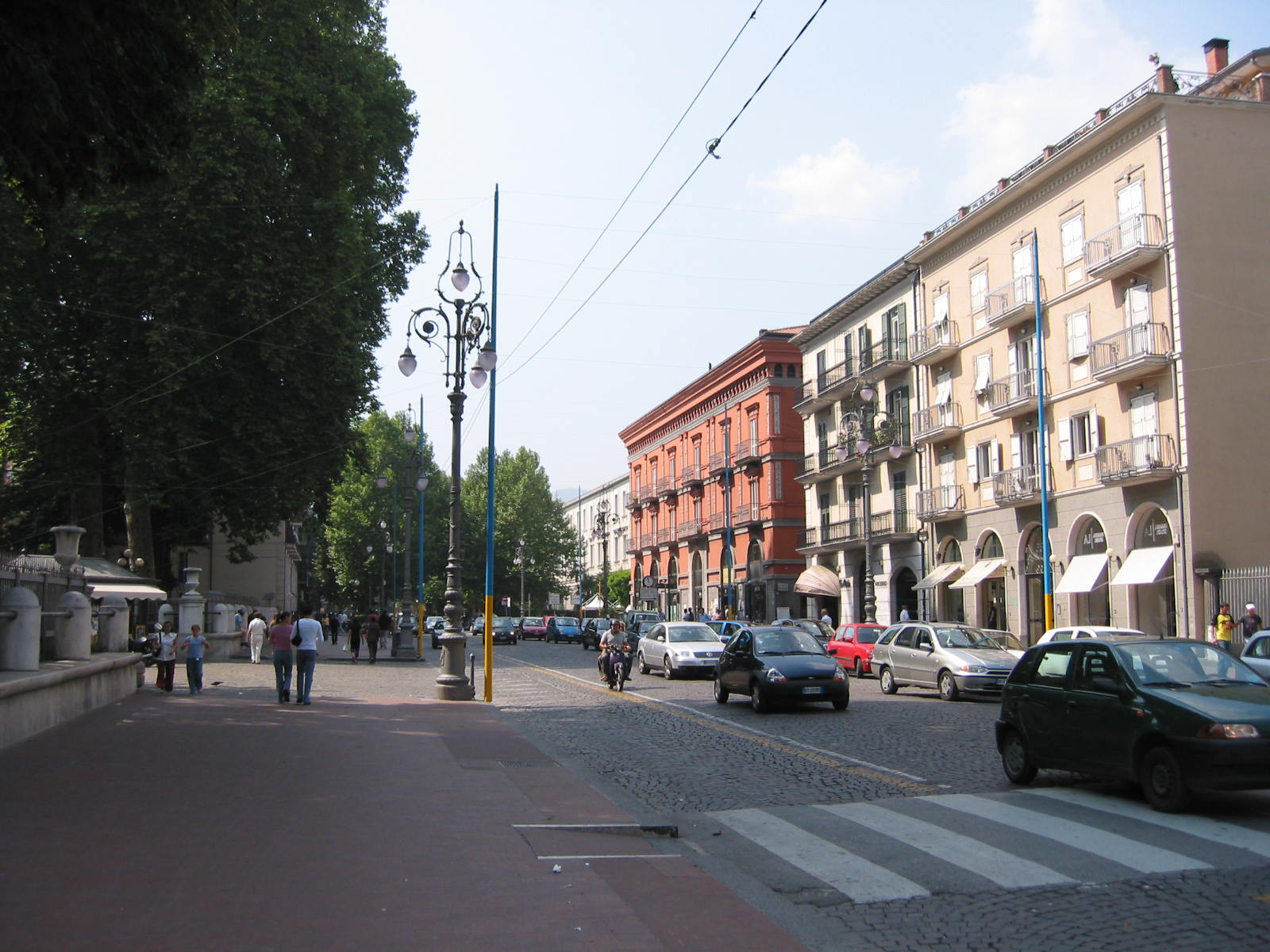
If there is one place in Avellino where you can grasp the history of Irpinia in just a few hours, for us it is the Museo Irpino. We visited it in two stages, between the Palazzo della Cultura and the former Bourbon Prison, and came away feeling we had travelled through millennia. Here is how to plan your visit.
One museum, two venues
The Museo Irpino is one of the main museums in the province and is part of the Sistema Museale Irpino, the Irpinian museum network. Its collections are spread across two buildings in the centre of Avellino: the Palazzo della Cultura on Corso Europa and the complex of the former Bourbon Prison.
We recommend setting aside at least half a day for both venues, perhaps fitting them into the route of our guide Avellino and its surroundings.
The Palazzo della Cultura
The Palazzo della Cultura is a Rationalist-style building designed by Francesco Fariello and opened in December 1966. The ground floor houses the museum's archaeological section, while the upper floors hold the Provincial Library, the media library and the newspaper archive. From the outside it may look like an ordinary public building, but inside it keeps some of the most important finds of inland Campania.
The archaeological section and Mefitis
The archaeological section covers about 2,000 square metres and is arranged in nine rooms, organised according to where the material was found. The route runs from prehistory to late Roman times: what we liked most was the thread linking the different areas of Irpinia, valley by valley.
The piece that struck us most is in the collection devoted to Mefitis (Mefite), the ancient Italic goddess worshipped in the Valle d'Ansanto, in the territory of Rocca San Felice. On display here is the xoanon, the wooden body of the goddess, found in the stream near the sanctuary. Standing in front of such an ancient wooden sculpture is a special feeling. If you would also like to visit the place it comes from, read our article on The Valle d'Ansanto and Mefitis.
The museum also includes the Salomone Collection, a set of eighteenth-century Chinese and Japanese porcelain donated in 1935: a little dip into the East that you would not expect in Irpinia.
The former Bourbon Prison
The second venue is a building with a very particular history. The former Bourbon Prison was designed by the engineer Giuliano De Fazio: work began in 1826 and ended in 1830. Its most striking feature is its hexagonal plan, conceived to make it easy to keep watch over the cell blocks.
The prison remained in use until the 1980 earthquake. Today the restored complex houses the offices of the Soprintendenza, the State Archive of Avellino and some sections of the Museo Irpino. Walking through the courtyards and along the corridors where the cells once were is quite an experience, and for us it is an integral part of the visit.
Picture gallery and Museum of the Risorgimento
The former prison is home to the Provincial Picture Gallery, devoted to Campanian painting of the nineteenth and twentieth centuries and divided into four sections, with works by Irpinian and Neapolitan artists.
It also houses the Museum of the Risorgimento, founded in 1970 by Professor Fausto Grimaldi and moved to the former prison in 2011. It brings together uniforms, weapons and objects from the Risorgimento period: a visit we especially recommend if you are travelling with young history enthusiasts.
How to get there and when to go
Both venues are in the centre of Avellino, within walking distance of each other. The Palazzo della Cultura is on Corso Europa; the former Bourbon Prison is right in the city centre.
- The museum is a good idea in any season, and perfect on a rainy day.
- Opening times of the different sections may vary: check times and tickets on the official website before you set off.
- Allow at least a couple of hours for the archaeological section alone.
Nearby
After the museum, here are a few ideas for the rest of the day:
- A stroll among the monuments of the centre: The Obelisk of Charles II and Palazzo De Conciliis.
- The medieval ruins of The Lombard Castle of Avellino.
- Outside the city, the faith and views of Partenio: The Sanctuary of Montevergine.
- To complete the picture, explore the other sights worth visiting in Avellino.
Photo at the top (Avellino): unknown author, CC BY-SA 3.0, via Wikimedia Commons.