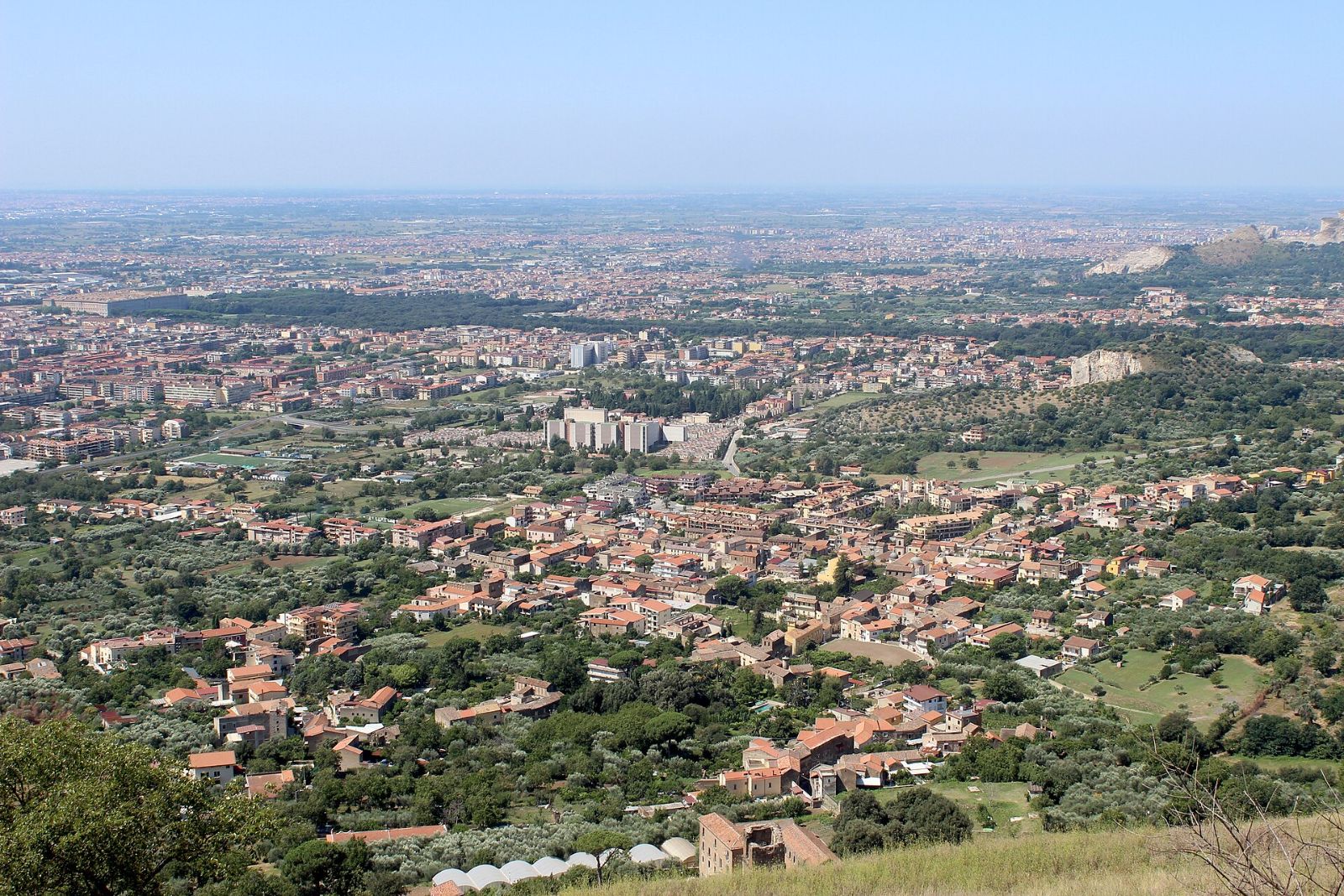
We went up to the Belvedere of San Leucio expecting to find another royal residence, and instead we discovered a factory. A silk factory commissioned by a king, with the looms still in place, the royal apartments upstairs and a workers' village all around. It's a story we recommend you get to know, because it tells of an 18th century quite different from the splendour of the Reggia.
From hunting lodge to silk colony
The lands of San Leucio were bought by Charles of Bourbon in 1750 from the Caetani family. But it was his son Ferdinand IV who transformed them: in 1773 he had a hunting lodge built and, between 1776 and 1778, the architect Francesco Collecini, a collaborator of Vanvitelli, remodelled the Casino del Belvedere.
In 1778 the king decided to devote the building to silk production. Thus was born the Royal Colony of San Leucio, with its spinning mills, workers' houses and schools: a true industrial village, today a district of Caserta.
The Leucian laws of 1789
The part that struck us most is the social one. In 1789 the colony received its own statute, the so-called Leucian laws, with rules that were surprising for the time: equal rights for men and women, the abolition of dowries, compulsory schooling, the same clothes for everyone.
The project was meant to grow further: Collecini designed Ferdinandopoli, a city with a circular plan around the manufactory. The arrival of the French at the end of the 18th century put a stop to everything, and the ideal city remained on paper. What survives of the grand design is the Belvedere, the village and, not far away, the Vaccheria district with the church of Santa Maria delle Grazie.
The Silk Museum: looms and throwing machines
The heart of the visit is the Silk Museum, set up in the rooms of the old manufactory. Here you can see the hand looms and the large wooden throwing machines, which twisted the thread before weaving, recently restored.
We liked the fact that it isn't a "glass-case" museum: the looms work, and you get a clear idea of how the silk workers did their job. The Weaver's House is also very helpful, telling the story of the everyday life of the colony's families.
The tradition, after all, has never stopped: in the village and the surrounding area there are still workshops and companies producing silk fabrics.
The royal apartments and Maria Carolina's Bath
On the main floor you can visit the royal apartments, more intimate than those of the Reggia. The rooms preserve frescoes by Fedele Fischetti and Giuseppe Cammarano.
The room we remember best is the Great Bath, known as Maria Carolina's Bath, decorated in 1792 by the court painter Jacob Philipp Hackert. Outside, the terraced gardens descend the hillside and offer a lovely view over the plain as far as Caserta.
The Belvedere has been a UNESCO World Heritage Site since 1997, together with the Reggia and the Carolino Aqueduct, as an example of the enlightened reformism of the Bourbons.
Getting there and when to go
San Leucio is a few kilometres north-west of the centre of Caserta and can be reached by car in a few minutes from the Reggia. The complex is run by the City of Caserta and visits usually take place as guided tours at set times: check opening times and tickets on the official website before you go.
Allow at least an hour for the Belvedere and the museum, a little more if you add the Weaver's House. The complex is worth visiting all year round; on clear days the view from the gardens is worth the climb.
Nearby
If you want to delve deeper into the history of the manufactory, read San Leucio silk, a Bourbon tradition and our article on The Belvedere of San Leucio. From here the Reggia is very close: don't miss The Royal Apartments of the Reggia di Caserta. On the hills above the city, Casertavecchia awaits you. The rest of the province is covered in Caserta and its surroundings.
Photo at top (Caserta): Miguel Hermoso Cuesta, CC BY-SA 4.0, via Wikimedia Commons.