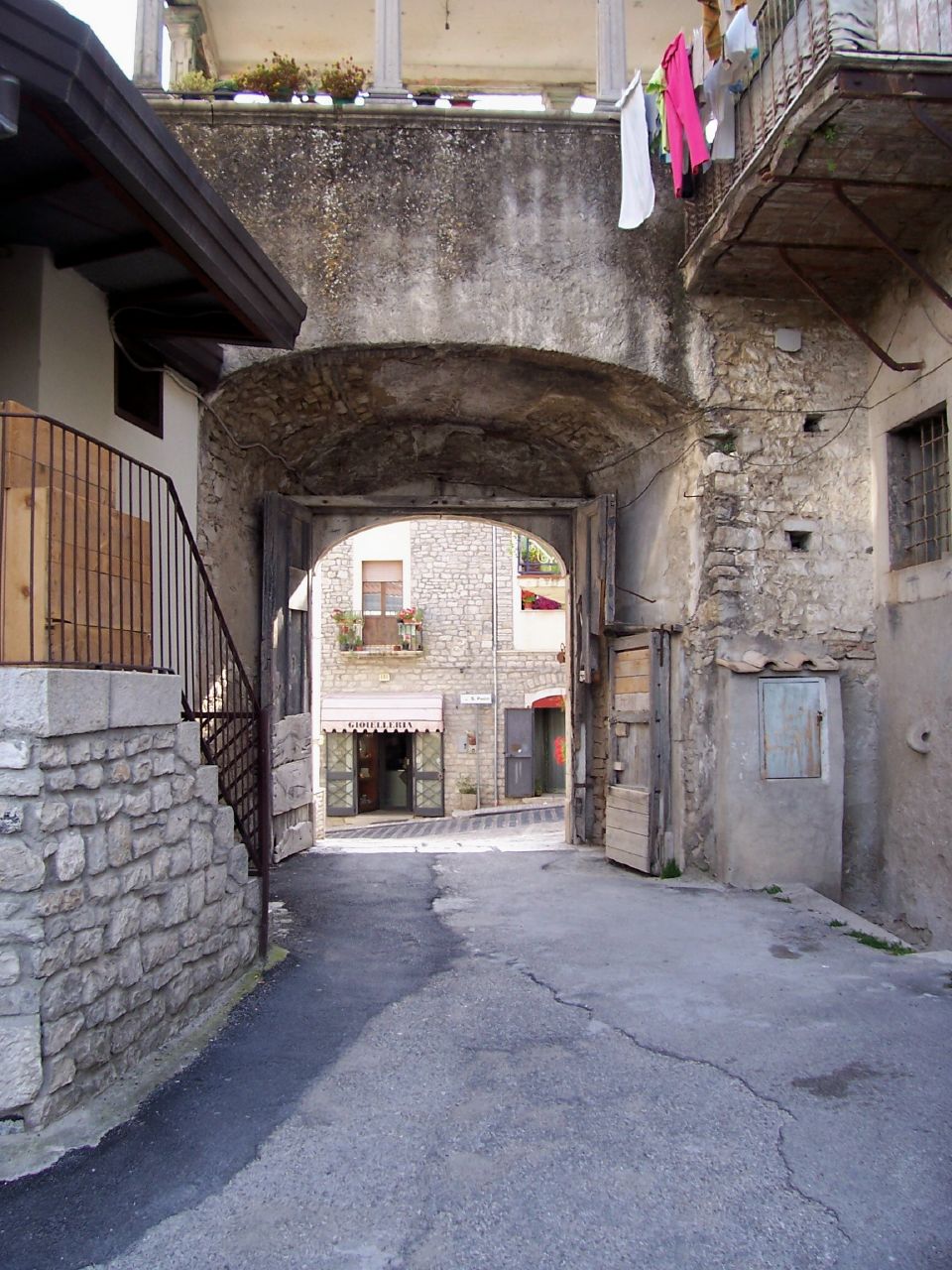
North-west of Benevento, where the hills of the Valle Telesina begin to climb towards the Matese massif, lies a corner of Sannio that we love to recommend to anyone looking for authentic, uncrowded villages. Following the course of the Titerno stream you come across, just a few kilometres apart, a town rebuilt to a plan after an earthquake, a village of potters, a medieval village famous for its rites and a mountain village where one of the most important dinosaur fossils in the world was found. Here is how we combine them over one or two days.
Cerreto Sannita, the town reborn in the 17th century
We start with Cerreto Sannita, which has a unique history. On 5 June 1688 an earthquake destroyed the old village, perched on the mountain. The feudal lords, the Carafa family, decided to rebuild it lower down, on more stable ground, following a regular plan: wide, straight streets crossing at right angles, spacious squares and orderly blocks. A 19th-century Bourbon official compared it to a "little Turin", and as you walk through the centre you will see why.
But Cerreto is above all the town of ceramics. The tradition flourished right after the rebuilding, when the workshops produced pharmacy jars, jugs, holy water stoups and tiles decorated in the typical colours: yellow, green, orange and Cerreto blue. The Civic Museum and Museum of Cerreto Ceramics, in Palazzo Sant'Antonio, tells this story with sections devoted to historic and contemporary production. Don't miss the Cathedral, built between 1689 and 1736, and the collegiate church of San Martino. We tell you all about it in our article on Cerreto Sannita and its ceramics.
Before you leave, look for the Ponte di Annibale (Hannibal's Bridge), a single-arched stone bridge over the Titerno: legend has it that the Carthaginian general crossed it with his army.
San Lorenzello, the village of potters
You only need to cross the stream to reach San Lorenzello, which has shared the art of ceramics with Cerreto for centuries. Along the banks of the Titerno there are traces of the old structures for working clay and of a mill, and majolica is everywhere in the churches. The richest is the church of the Congregazione della Sanità, with a majolica tympanum attributed to Antonio Giustiniani, founder of a family of ceramicists who were also famous in Naples. We suggest wandering at a leisurely pace, looking out for votive shrines and ceramic decorations on the façades.
The village lies at the foot of Monte Erbano: walkers can climb towards the Valle Santa area, which opens onto a view over the Telesina and Titerno valleys.
Guardia Sanframondi, the village of rites
From the valley you climb up to Guardia Sanframondi, a medieval village that grew up around its castle, which sources date back to the Norman Raone di Sanframondo in the 12th century. Today the castle hosts cultural events and its terrace overlooks the whole valley. The old town, once enclosed by walls with four gates, preserves lanes, Baroque churches, 17th- and 18th-century palazzi and many fountains.
Guardia is known throughout Italy for its seven-yearly Rites of Penance in honour of Our Lady of the Assumption, held every seven years in the week after Ferragosto (15 August). The village's four districts stage processions with hundreds of participants portraying biblical scenes, known as mysteries, and on the Sunday the penitents dressed in white file past. The Sanctuary of the Assumption, a Baroque basilica with three naves, holds the wooden statue of the Madonna. It is also wine country: the surrounding hills are covered with vineyards, especially Falanghina. Read our guide to Falanghina del Sannio DOC.
Pietraroja and Ciro the dinosaur
The last stop is the most surprising. You climb through woods and hairpin bends to Pietraroja, in the heart of the Matese, where in an old quarry they found Scipionyx samniticus, the baby dinosaur everyone calls Ciro. It lived in the Early Cretaceous, more than 100 million years ago, and is famous because it preserves traces of internal organs, muscles and blood vessels, an extremely rare case worldwide. The study published in the journal Nature in 1998 made it famous.
The original is on display in Benevento, while in Pietraroja, at the Paleolab, you can see a cast right where it was discovered, along with a route devoted to the local fossils. It is a perfect stop for anyone travelling with children. Find out more in our article on Pietraroja and the Paleolab, the land of Ciro.
How to plan the itinerary
- In one day: Cerreto and San Lorenzello in the morning, Guardia Sanframondi in the afternoon, with a sunset from the castle terrace.
- In two days: add Pietraroja and, if you have time, the nearby village of Cusano Mutri.
- Museums, castles and the Paleolab have varying opening times: check times and tickets on the official and municipal websites before you set off.
Getting there and when to go
You need a car. From Benevento and Caserta you can reach the Valle Telesina, and from Telese Terme the Titerno villages are just a few minutes' drive away; for Pietraroja the road climbs into the mountains and is slower. Spring and autumn are the best seasons; in summer Pietraroja and the Matese offer some cool relief, while in winter it can snow at altitude.
Nearby
To extend your trip to the whole province, see our guide Benevento and its surroundings. If you want to combine Sannio and Irpinia in one weekend, you will find an itinerary in our article on Irpinia and Sannio in a weekend.