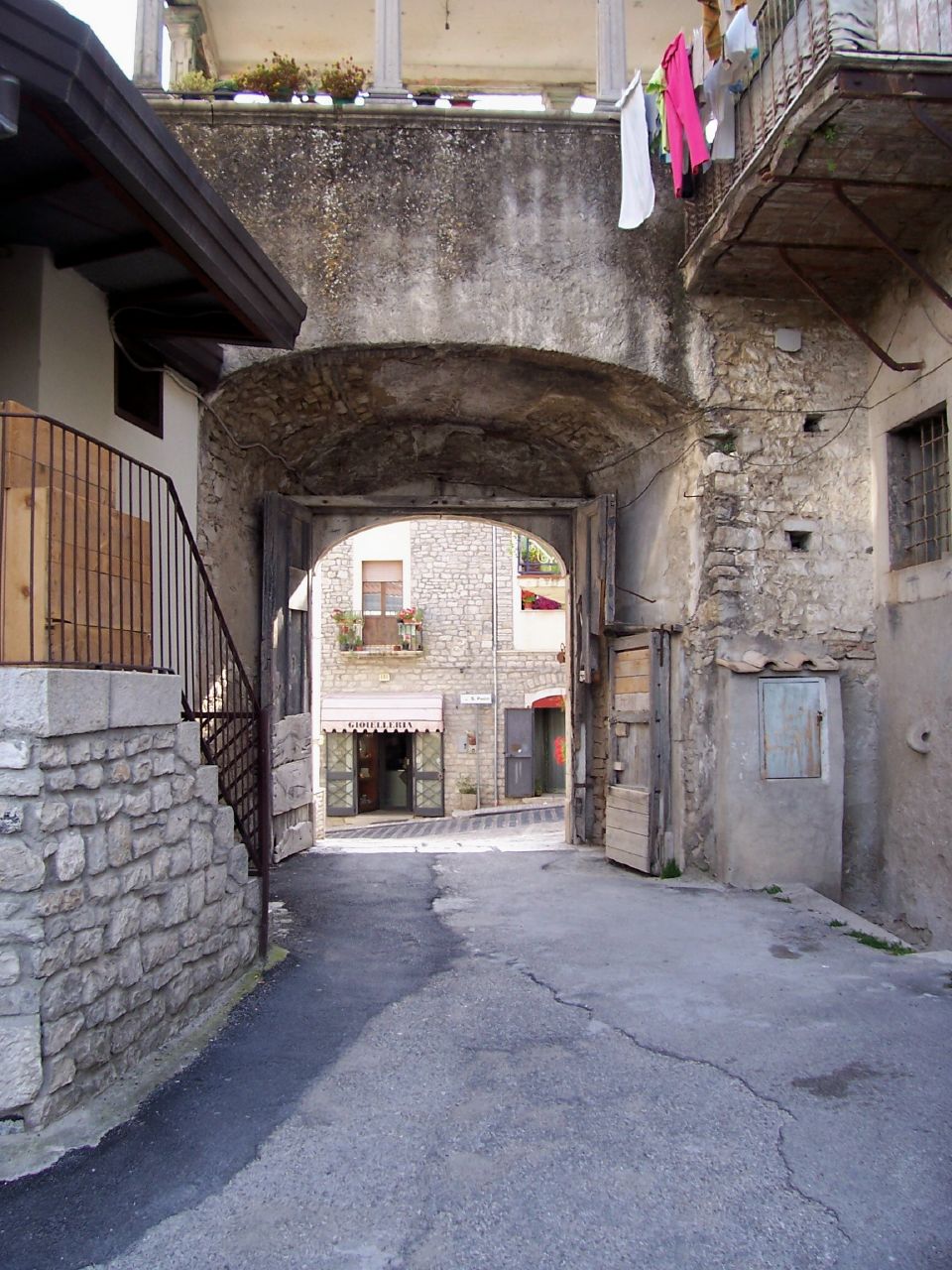
There is a side of Campania that looks out neither on the sea nor on the great art cities: it is the Fortore, in the far north-east of the province of Benevento, where the region borders Molise and Apulia. Here the hills become broad and rolling, the villages sit on hilltops and wheat fields alternate with woods and pastures. We first came here out of curiosity and came back for the silence. If you are looking for a slow journey, far from the beaten track, this is an area worth discovering.
Where the Fortore rises
The area takes its name from the Fortore river, which rises in the Campanian Apennines on the slopes of Monte Altieri. About 86 kilometres long, it is formed by the union of four streams flowing down from the villages of the area, and the confluence lies a few kilometres from San Bartolomeo in Galdo. After about 22 kilometres it leaves the province of Benevento, in the territory of Castelvetere in Val Fortore, and continues northwards to the Adriatic. The river was already known to ancient writers, who mention it among the waterways of southern Italy.
Following the Fortore means passing through a handful of municipalities that bear its name: as well as Castelvetere, there are Foiano di Val Fortore and Montefalcone di Val Fortore, where two of the streams that form the river have their source. They are small villages, where life still follows the rhythm of the fields.
San Bartolomeo in Galdo, the village founded by an abbot
The largest town in the area is San Bartolomeo in Galdo, at about 600 metres above sea level, on a hill covered with vineyards, olive groves and vegetable gardens. Its history begins in the 14th century: it was the abbot of the Benedictine monastery of Santa Maria a Mazzocca who decided to found the village, with the consent of the King of Naples, Robert of Anjou, and construction began in 1327.
The main monument is the mother church dedicated to Saint Bartholomew the Apostle, which was the cathedral of the ancient diocese of Vulturara. It was enlarged and reconsecrated in 1703 and preserves a 15th-century portal. Next to it, the bell tower is the true symbol of the village: you will see it from afar as you approach. In the old town, take a look at the bishop's palace, the neoclassical Palazzo Catalano and the Renaissance Palazzo Martini, while a restored historic palazzo houses the civic museum.
The most colourful surprise, however, is the murals: since the 1970s artists and residents have painted the village walls, and for some time now the tradition has been renewed with a summer event that adds new works. Walking the streets in search of the murals is the best way to get to know San Bartolomeo.
Baselice and Palazzo Lembo
Opposite San Bartolomeo, on the left bank of the Fortore, stands Baselice, at about 620 metres. The village has a border history that can be read in the documents: it belonged to the Apulian Capitanata until 1811, then to Molise, and joined the province of Benevento in 1861. In 1727 a landslide buried it almost entirely, and the village we see today is largely the result of rebuilding.
The most important monument is the Castello-Palazzo Lembo, a fortified residence that also houses the municipal library. The church of the Madonna delle Grazie, home to the tomb of the feudal lord Ottavio Carafa, is also worth a visit, and the village has a small palaeontology museum, an interesting stop for those travelling with children.
A landscape to cross slowly
Part of the beauty of the Fortore lies in the journey from one village to the next. The roads run along the ridges, with views that turn golden with wheat in summer and an intense green in spring. It is an area for those who love:
- slow driving on quiet roads, with stops at viewpoints;
- strolls through the old centres, among churches, stone portals and small palazzi;
- country cooking, made of homemade pasta, pulses, cheeses and cured meats;
- religious and patron saint festivals, which bring together the communities and those who emigrated.
Precisely because of the heavy emigration of the past, many visitors come here in search of their ancestors: if that is your case, read Roots tourism in Campania: returning to your ancestors' village.
Getting there and when to go
The Fortore can only be reached by car: from Benevento you head north-east through the hills of Sannio, a journey of about an hour. The roads are winding, so allow plenty of time. The best seasons are late spring and early autumn; in winter, at these altitudes, there may be snow and ice. Churches, museums and palazzi have varying opening times: check the official municipal websites before you set off.
Nearby
To link the Fortore with the rest of the province, start from our guide Benevento and its surroundings. If you want to combine it with another little-known inland area, eastern Irpinia is close by: read our article on the most beautiful villages of Irpinia, Zungoli, Monteverde and Nusco.