The first time we stepped out of the palace and looked out over the park, the view seemed endless: pools, lawns and fountains lined up all the way to a very distant waterfall. The Royal Gardens of the Reggia di Caserta are a work of art in their own right, and in this article we tell you how they came about and what not to miss.
A park designed for a king
The park was born together with the palace, in the project that Luigi Vanvitelli drew up for Charles of Bourbon from 1752. When the architect died in 1773, the work was continued by his son Carlo Vanvitelli, who completed the great waterway. Today the Royal Park covers more than 120 hectares, and its central vista runs for about 3 kilometres.
All this water comes from the Carolino Aqueduct, built precisely to feed the fountains and waterfalls: without it the park would not exist. We tell you about it in The Carolino Aqueduct and the Ponti della Valle. Since 1997 the park, palace and aqueduct have together been a UNESCO World Heritage Site.
The waterway and its fountains
The best way to understand the park is to follow the waterway from the palace up towards the hill. We did it on foot, stopping at every fountain. In sequence you come to the Fountain of Margherita, the Fountain of the Dolphins, the Fountain of Aeolus, the Fountain of Ceres and the Fountain of Venus and Adonis, on which the sculptor Gaetano Salomone worked for a long time.
At the end comes the most eagerly awaited sight: the Great Waterfall, about 78 metres high, cascading down the hill into the basin of the Fountain of Diana and Actaeon. The two sculptural groups tell the myth of the hunter turned into a stag for surprising the goddess while she was bathing; the sculptors include Paolo Persico, Angelo Maria Brunelli and the Solari. We spent a long time looking at the scene, because the details change depending on which side you view it from.
The Bosco Vecchio
If you're looking for a little shade and silence, head off towards the Bosco Vecchio (Old Wood), the oldest green area, away from the main flow of visitors. Here the park loses its geometry and becomes more intimate: it's where we took our break during the visit.
Maria Carolina's English Garden
Next to the Great Waterfall you enter a completely different world. The English Garden was commissioned by Queen Maria Carolina of Austria, wife of Ferdinand IV, at the suggestion of the British ambassador William Hamilton. Work began in the mid-1780s under the direction of the English gardener and botanist John Andrew Graefer, and the garden covers about 23 hectares.
Everything here looks natural, but nothing is: ponds, hillocks, winding paths and fake ruins were all designed to surprise. At the Bath of Venus the statue of the goddess is reflected in a small lake, while the Cryptoporticus, built to look like a Roman ruin, holds statues from the excavations of Herculaneum and the Farnese collection. There's also the Aperia, originally a water reservoir and turned into a greenhouse in the 19th century, and the house where Graefer lived. We describe it in detail in The English Garden of the Reggia di Caserta.
Getting there and when to go
The park is opposite Caserta railway station. Allow at least half a day to see all of it; if you don't want to walk the whole way, there's an internal shuttle bus and bicycles in the park. Spring and autumn are the ideal seasons; in summer, go in early in the morning. Check opening times and tickets on the official website before you go.
Nearby
Complete your visit with What to see in Caserta and The Royal Apartments of the Reggia di Caserta. For more open-air ideas read What to do in Caserta, while for an itinerary across the whole province there's our guide Caserta and its surroundings.
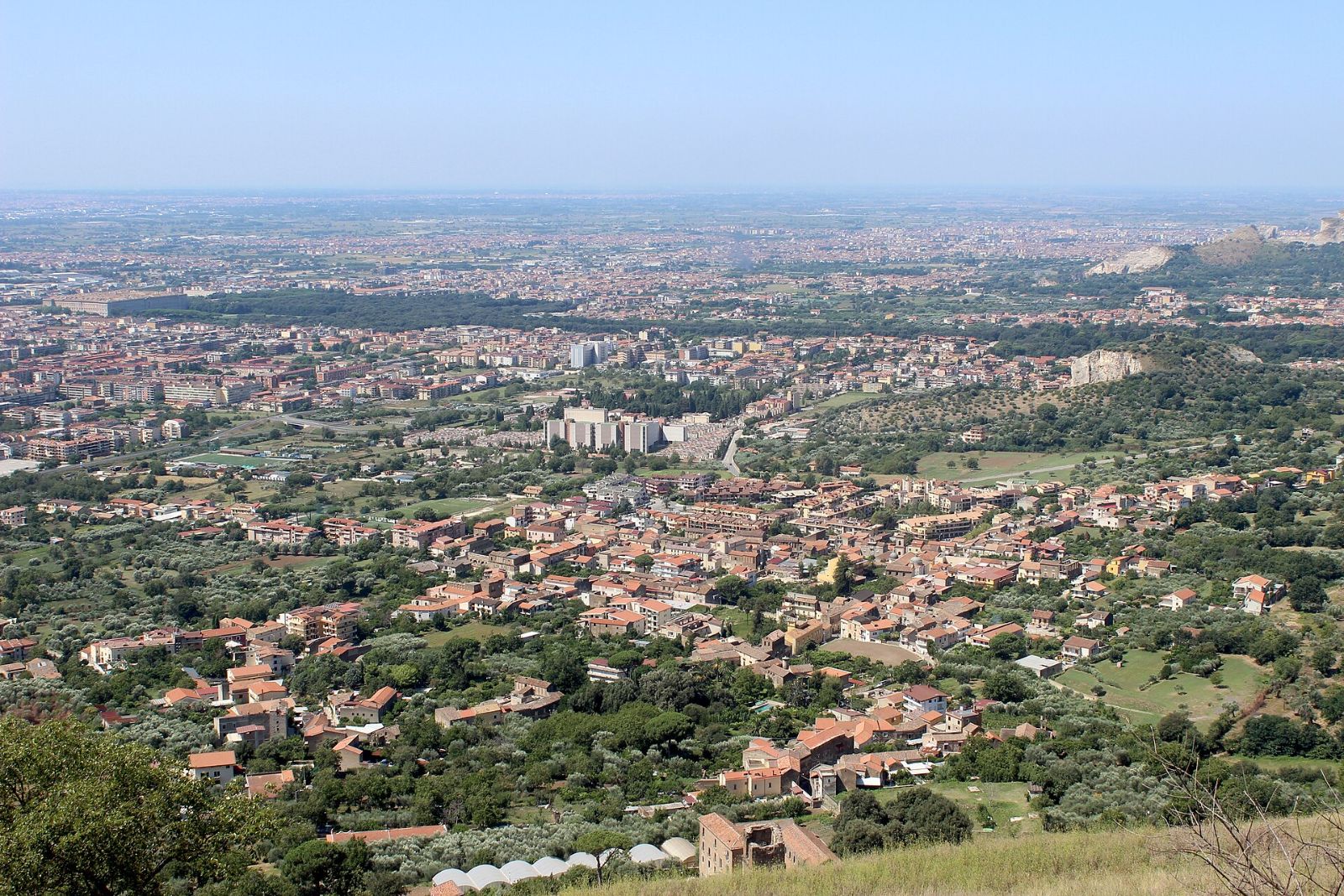
Photo at top (Caserta): Miguel Hermoso Cuesta, CC BY-SA 4.0, via Wikimedia Commons.