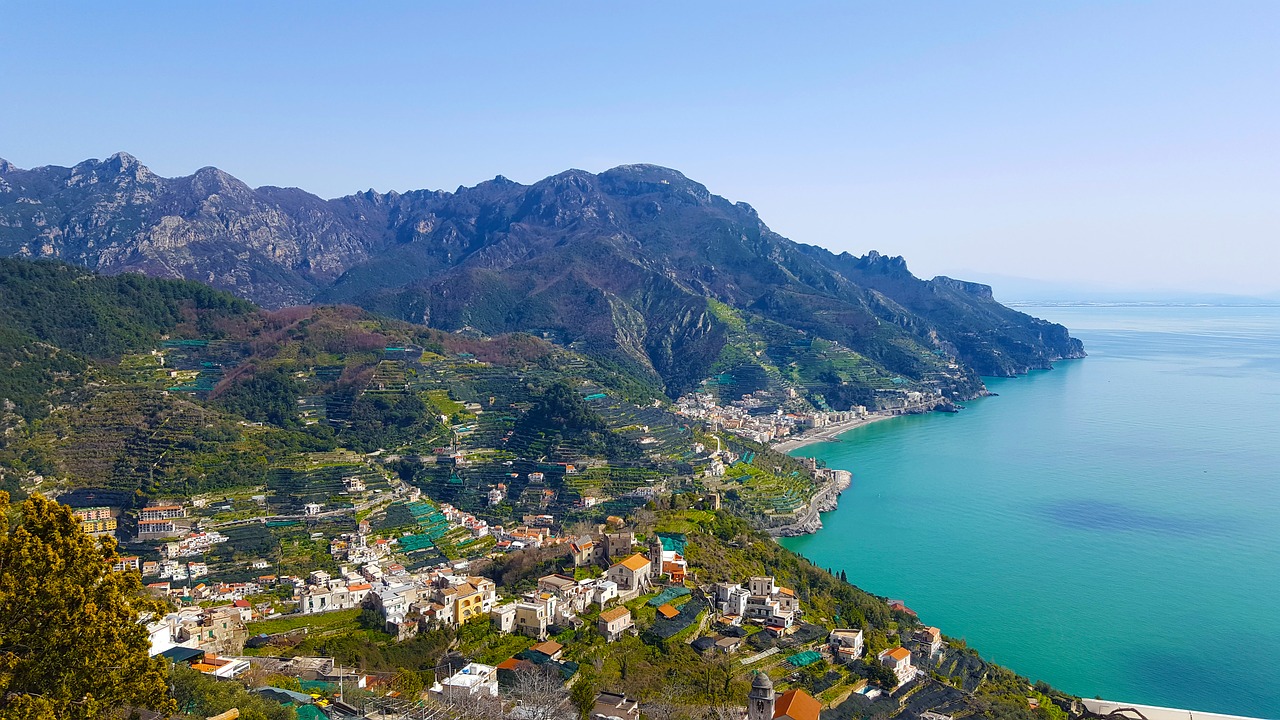
"If you lack physicians, let these three things be your physicians: a cheerful mind, rest and a moderate diet." We came across this centuries-old advice while strolling among the terraces of the Minerva Garden, in the historic centre of Salerno. It is the best way to step into the history of the Scuola Medica Salernitana, which for centuries made the city famous throughout Europe.
The Scuola Medica Salernitana
The Scuola Medica Salernitana (Salerno Medical School) was the first and most celebrated medical institution of medieval Europe, regarded as the ancestor of modern faculties of medicine. Its origins go back to the ninth and tenth centuries, but there is no precise founding date. A legend tells that it was founded by four masters, a Greek, a Latin, a Jew and an Arab, who met by chance in Salerno: a tale that sums up well the spirit of the school, a meeting point between different cultures.
Its most famous text is the Regimen Sanitatis Salernitanum, a collection of precepts in verse on diet, hygiene and lifestyle, which is the source of the line we opened with. The original Latin motto reads: «Si tibi deficiant medici, medici tibi fiant haec tria: mens laeta, requies, moderata diaeta».
Masters, women physicians and translations
Constantine the African, a physician born in Carthage, also came to Salerno, translating into Latin many texts of Arab medicine and of Greek classics such as Hippocrates and Galen, and enormously enriching the school's knowledge.
One aspect has always struck us: women also taught and practised at the School, remembered as the Mulieres Salernitanae. The best known is Trotula de Ruggiero, who lived in the eleventh century and worked in particular on obstetrics and women's health.
In 1231 Emperor Frederick II, with the Constitutions of Melfi, decreed that practising medicine in the kingdom required the approval of the masters of Salerno. The course of study was long: three years of logic, five of medicine and surgery and one year of practice alongside an experienced physician. The School was abolished in 1811 by Joachim Murat, as part of the education reform of the Kingdom of Naples.
The Minerva Garden, the first botanical garden
Teaching students to recognise medicinal plants required real places. In the early fourteenth century the physician Matteo Silvatico created a garden of simples on his family's land, where he showed his pupils the plants with their names and properties. This garden is considered the forerunner of all the botanical gardens of Europe. Silvatico gathered his knowledge in the Opus Pandectarum Medicinae, a great dictionary of natural remedies.
The garden we visit today was recovered and given back to the city in 2000, after archaeological investigations. It is twinned with the garden of Linnaeus in Uppsala, Sweden.
What to see in the garden
The garden is built on terraces that follow the slope and rest partly on the ancient city walls. We were captivated by the long stairway with its cross-shaped pillars supporting wooden pergolas, and by the system of channels, basins and fountains that distributes water between the levels: an example of hydraulic engineering designed to irrigate the crops.
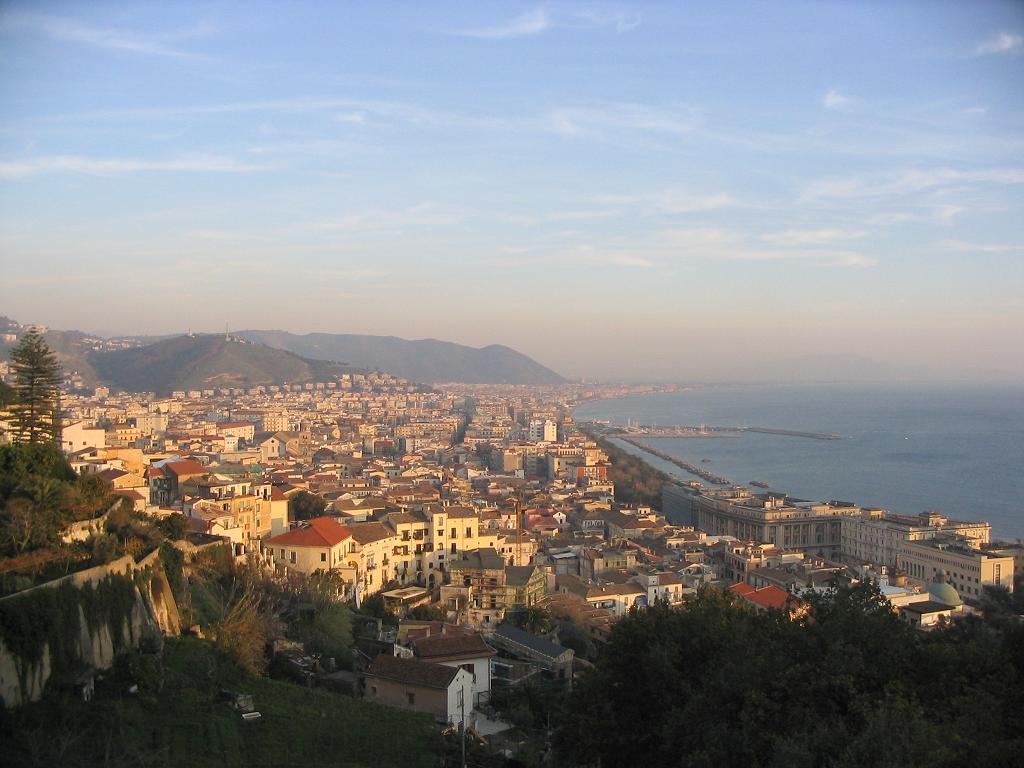
More than 300 species are grown here, many of them mentioned in the Regimen Sanitatis and in Silvatico's work, including the mysterious mandrake. Labels help you discover the uses medieval medicine attributed to each plant. Finally, from the top terrace there is a lovely view over the rooftops of the historic centre and the gulf.
How to get there and when to go
The garden is in the upper part of the historic centre, in Vicolo Ferrante Sanseverino, a few minutes' walk from the Cathedral. The climb is steep but short. To learn more about the history of the School, you can combine your visit with the Virtual Museum of the Scuola Medica Salernitana, in Via dei Mercanti, and the Roberto Papi Museum, devoted to medical instruments.
The loveliest time is spring, when the plants are in flower and the terraces are fragrant with aromatic herbs. Check opening times and tickets on the official website before you set off.
Nearby
- Heading downhill you reach Salerno Cathedral, where Alfanus I, a physician linked to the School, was archbishop.
- In the chapel of San Pietro a Corte the Medical School's degrees were conferred in the Middle Ages.
- For an even wider view, climb up to Arechi Castle.
- To plan the rest of your trip, start from our guide Salerno and its surroundings.
Photo at the top (Salerno): No machine-readable author provided. Giaros assumed (based on copyright claims)., CC BY-SA 3.0, via Wikimedia Commons.