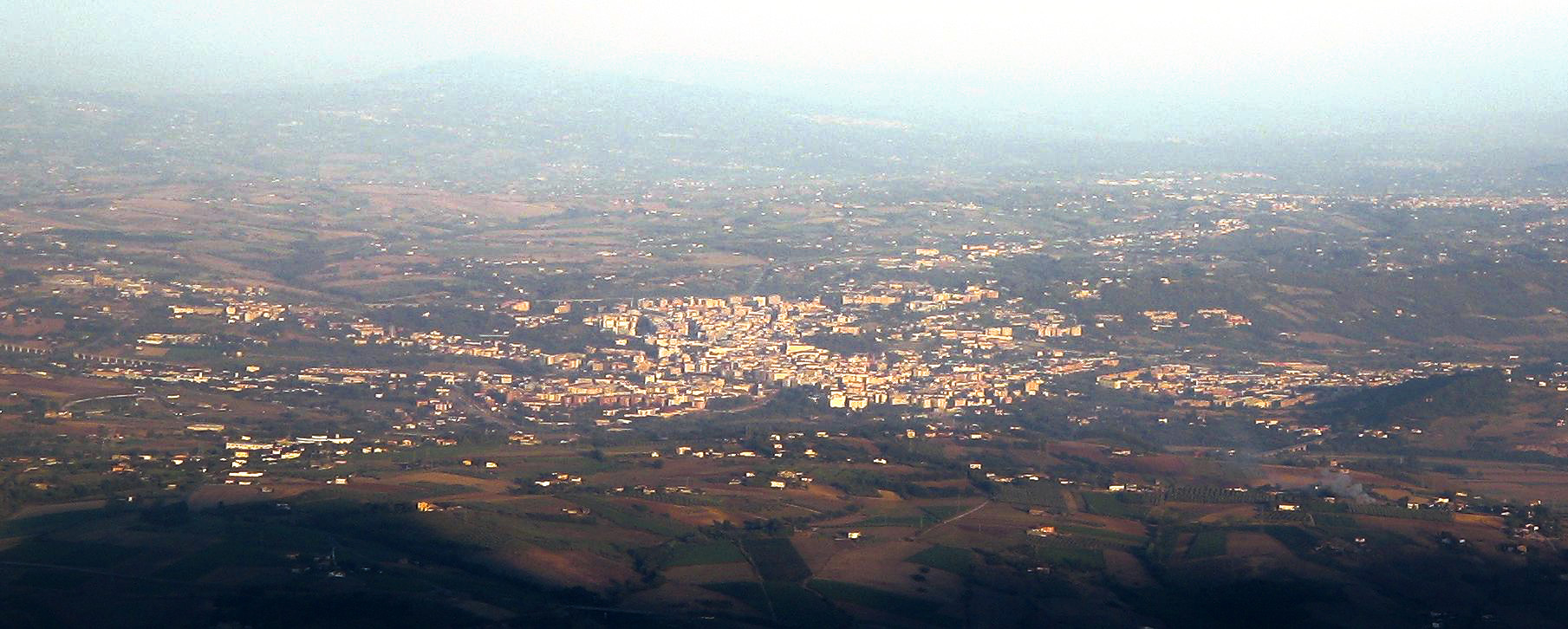
You cannot pass through Benevento without hearing about witches. We came across them everywhere: in the names of products, in the stories of people who live here, even in the crest of the football team. So we decided to find out where this legend comes from, and discovered a story that blends Lombard rites, trials and village superstitions.
Who the janare are
In the folk tradition of the Sannio the janara is the witch par excellence: a woman who leads a normal life by day and by night, anointed with a magic ointment, flies off to meet the others. There are two theories about the origin of the name. The first links it to Diana, the Roman goddess of the moon, hence "dianara", priestess of Diana. The second to the Latin ianua, meaning "door".
The second theory is tied to a curious custom: to keep the janara away, people placed a broom or a little salt behind the door. Before entering, the witch would be forced to count every bristle of the broom or every grain, until dawn, when the sunlight drove her away.
The walnut tree of Benevento
At the heart of the legend is a tree: the walnut tree of Benevento, which was said to grow along the Sabato river. According to tradition, the witches gathered beneath its branches for their sabbaths, flying in from all directions. The formula that brought them here is still known to many people in Benevento today: "Unguento unguento, portami al noce di Benevento, sopra l'acqua e sopra il vento" ("Ointment, ointment, take me to the walnut tree of Benevento, over the water and over the wind").
Reading it aloud on the riverbank always has a certain effect. But this legend did not come out of nowhere.
The Lombard roots
From the 6th century Benevento was the centre of an important Lombard duchy. Sources tell us that the Lombards still practised pagan rites around a sacred tree: they hung a goatskin from its branches and, riding past on horseback, struck it to tear off shreds. To the Christian population, those ceremonies must have looked very much like magic.
Tradition has it that Bishop Saint Barbatus, in the 7th century, persuaded the Lombards to abandon those cults and had the tree cut down, pulling up its roots. The legend links the episode to the siege of the city by the Byzantine emperor Constans II in 663, although the historical details of this version are debated by scholars. But the walnut tree, according to the popular tale, grew back, and with it the witches' fame.
From the trials to Piperno's treatise
In the following centuries the walnut tree found its way into the records of witchcraft trials. One of the best-known testimonies is that of Matteuccia da Todi, tried in 1428, who spoke of night-time gatherings beneath a walnut tree. Between the fifteenth and seventeenth centuries witch-hunting grew ever harsher throughout Europe, and the name of Benevento became synonymous with the sabbath.
In the seventeenth century the physician Pietro Piperno, who practised in Benevento, devoted several writings to the tree, including Della superstitiosa noce di Benevento, published in 1640, in which he linked the legend precisely to the Lombard rites of the 7th century. It is one of the texts that did most to fix this story.
Village beliefs
In folk tales the janare have precise habits. They were said to be born on Christmas night, their weak point was their hair, and at night they slipped into stables to plait the horses' manes. Anyone who found their horse in the morning with its mane full of little braids knew who had been there.
We were struck by how these beliefs, handed down orally for generations, are still alive in the memories of the elderly people of the Sannio. Today the witch has become an almost affectionate symbol of the city: you will find her in the crest of Benevento Calcio and in the name of Strega liqueur, "strega" being Italian for witch.
On the trail of the janare in Benevento
The ideal starting point is Benevento itself. Along Corso Garibaldi is Janua, a museum devoted to witches and to the magical traditions of the area, with ritual objects, herbs and a room with a reconstructed walnut tree. Check opening hours and tickets on the official website before you go.
The city does the rest: an evening stroll through the old town, perhaps as far as the bridge over the Sabato, and the legend takes shape on its own.
Getting there and when to go
Benevento can be reached by train and by car from Naples and the main cities of Campania. The centre is easy to explore on foot. To soak up the atmosphere of the janare we recommend autumn, with shorter evenings and a little mist over the river.
Nearby
- To discover the whole province, start from Benevento and its surroundings.
- The Lombard heart of the city is described in Santa Sofia and the Museo del Sannio.
- The legend also gave rise to a famous liqueur: Strega.
- For a complete tour of the city, see our guide to what to see in Benevento.
Top photo (Benevento): Dэя-Бøяg, CC BY-SA 3.0, via Wikimedia Commons.