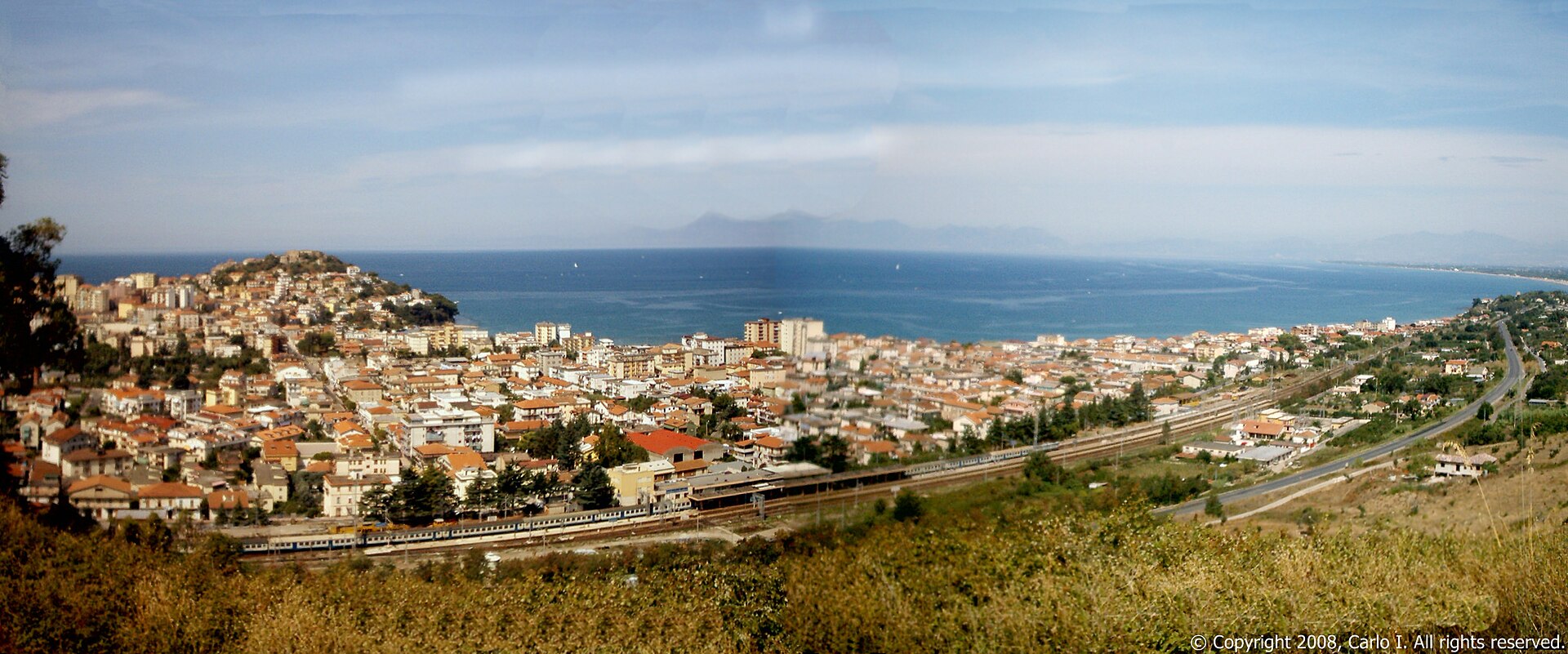
Arriving in Agropoli along the seafront, the first thing we saw was the rock rising sheer above the sea, with the houses of the old town huddled around the castle. We left the newer part of town behind and climbed up on foot: within a few minutes we were in another era. Here is what to see in what many call the gateway to the Cilento.
A "city set on high"
The name says a lot: Agropoli comes from the Greek Acropolis, meaning "city set on high". The promontory was fortified in the Byzantine period and in 882 it passed to the Saracens, who built a ribat there, a fortified outpost from which they launched their raids. Arab rule lasted until 915, when the Saracens were driven out and power returned to the bishops.
From then on Agropoli's history follows that of the whole of southern Italy: Normans, Angevins, Aragonese and finally the feudal lords who succeeded one another until the nineteenth century. Walking through the alleys, we felt we were reading these chapters directly in the stones.
The Gate and the stairways
The entrance to the old town is one of the loveliest moments of the visit. You climb the scaloni, the distinctive stepped ramp that for centuries was the only way into the town, and reach the monumental Gate, topped by the marble coat of arms of the Delli Monti Sanfelice dukes. We suggest taking your time on the way up and stopping now and then to look back: the view over the gulf changes with every flight.
Beyond the gate, the old town is a tangle of alleys, arches and little squares overlooking the sea. It is still lived in, which keeps it lively even out of season.
The churches of the historic centre
The oldest church is that of Santi Pietro e Paolo, with a single nave, already documented in 593 in a letter by Pope Gregory the Great. A few steps away, overlooking the sea, is the little church of Santa Maria di Costantinopoli: tradition says it was built after a statue of the Madonna was found in the sea, in the mid-sixteenth century, during the years of the Turkish raids.
Agropoli's bond with faith also runs through Saint Francis of Assisi, who according to tradition stopped here around 1219 (some say 1222). In his memory a convent with a church was founded, completed in 1230.
The Angevin-Aragonese castle
At the top of the promontory stands the castle, the symbol of the town. It has a triangular plan with three round towers at the corners and is surrounded by a wide, deep moat, clearly visible especially on the side facing the old town. What we see today is largely the result of Aragonese work in the fifteenth century, which renewed a much older structure.
Inside is the parade ground, now turned into a garden and a space for open-air performances, overlooked by the castle buildings. One of the halls recalls in its name the passage of French troops in the Napoleonic era: the Sala dei Francesi (Hall of the French). From the ramparts we were struck by the view, which stretches from the Gulf of Salerno to the Cilento coast. The castle hosts cultural events and visits: check opening times and tickets on the official website before you set off.
The sea: Trentova and the harbour
People do not come to Agropoli just for the history. South of the centre lies Trentova bay, with its rock joined to the mainland by a thin strip of land; a legend links the name to thirty eggs (trenta uova) found in the caves beneath the rock. The harbour, the largest in the Cilento, is the starting point for many boat trips along the coast. And there is no shortage of beautiful beaches in the province of Salerno to choose from for a swim.
How to get there and when to go
Agropoli is on the Tyrrhenian railway line and the station is a few minutes' walk from the centre. By car you arrive on the SS18, the road linking the Sele plain with the Cilento. We recommend spring and early autumn, when the old town is quiet and the light on the sea is beautiful; in summer, climb up to the castle towards sunset, when it is cooler.
Nearby
Agropoli is an excellent base for exploring the area: for a complete overview, start from our guide The Cilento: what to do and what to see. A few kilometres north are the temples of Capaccio Paestum, described in Paestum and its temples. Further south, The Archaeological Park of Velia is well worth a stop, while for a dip into the history of Cilento cooking Pioppi and the Mediterranean diet awaits you.
Photo at the top (Agropoli): Carlo IannuzziThe original uploader was Mujaidin at Italian Wikipedia., CC BY-SA 3.0, via Wikimedia Commons.