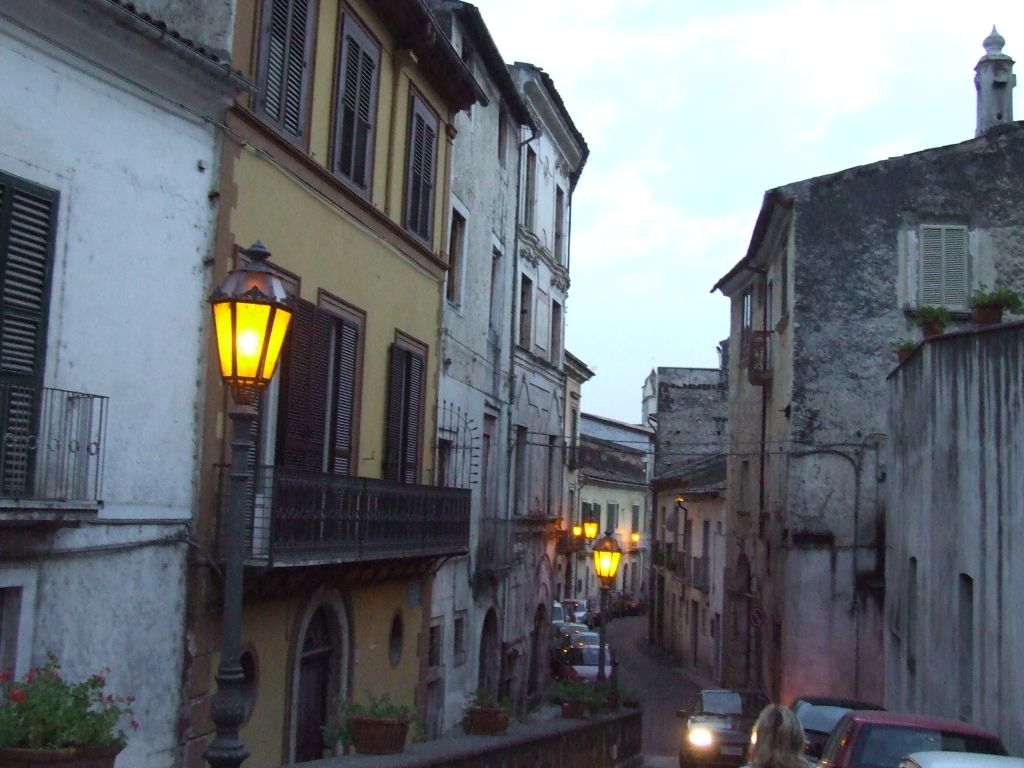
Climbing up towards the Matese, we felt as if we were entering a world apart: stone villages, pastures, high-altitude lakes and communities that proudly preserve the clothes, crafts and feasts of the past. Starting from Piedimonte Matese, the gateway to the massif on the Caserta side, we take you to discover the traditions that struck us most.
Piedimonte Matese, the town of wool and cotton
For centuries Piedimonte's economy was tied to textiles. Between the 16th and 18th centuries, under the long rule of the Gaetani family, a thriving woollen cloth industry developed here. In the early 19th century, during the French period, the Swiss entrepreneur Johann Jakob Egg set up a mill for the mechanical spinning and weaving of cotton, bringing around a hundred families of skilled workers from Switzerland. The cotton mill remained in operation until 1887.
To understand the area's most ancient roots, we recommend the Museo civico Raffaele Marrocco, founded in 1912, which holds archaeological finds from the area of Monte Cila. Among the town's religious feasts are those linked to its patron saint, San Marcellino, while on the nearby heights stands the sanctuary of Santa Maria Occorrevole, built in the 15th century.
The traditional costumes of Letino
If there is one symbol of the Matese's traditions, it is the women's costume of Letino, a village at about 961 metres above sea level. Its origins are ancient and partly mysterious, and many women in the village still wear it with pride for religious and popular feasts. It consists of an embroidered turquoise wool skirt, the 'unnella, a white blouse, a back panel whose colour changes according to marital status, and a headdress called the mappa, embroidered in gold and silver with lace around the neck.
Seeing it in person is quite an experience: every detail, from the colour to the embroidery, once told you who the woman wearing it was. The costume is one of the reasons why the village, awarded the Touring Club Italiano's Bandiera Arancione (Orange Flag), deserves a stop.
Gallo Matese and the art of bobbin lace
Not far away, in Gallo Matese, tradition passes through the hands of the women who make bobbin lace. A paper pattern is pinned onto a padded cylindrical cushion, then threads wound on small wooden bobbins are interlaced following the design: work that takes patience and great skill. Today only a few craftswomen practise it, which is precisely why it is such a precious skill.
Gallo also has its own women's costume, made of wool, with blue elements and coloured wool ornaments. One example, acquired in 1910, is kept in Rome at the Museo delle Civiltà. Local tradition links the village to a group of Bulgars who, according to early medieval sources, settled in the Matese area at the time of the Lombards, although scholars still debate the dates and details.
Shepherds, cheeses and mountain potatoes
The Matese is also shepherds' country. You can tell from the high pastures and from the cheeses found in the villages: pecorino, ricotta, scamorza and caciocavallo. Potatoes have been grown in Letino since 1820, and they are still one of the village's most prized products. Further down, towards the valley, we recommend tasting the products described in What to eat in Caserta.
Getting there and when to go
Piedimonte Matese can be reached by car from the A1 motorway, following signs for the Matese area; from here the mountain roads climb to the villages on the plateau. The best period runs from late spring to autumn: in summer the village feasts are the ideal opportunity to see the traditional costumes, while in winter check road conditions at altitude. For museums and sites open to the public, check opening times and tickets on the official website before you go.
In the surroundings
To place the Matese within the rest of the province, start from our guide Caserta and its surroundings. From the mountain villages it is just a few minutes to Lake Matese, between San Gregorio Matese and Castello del Matese. Heading down towards the Volturno valley, the village of Caiazzo awaits you, and if you love mountain landscapes you will find more ideas in Mountain tourism in Campania: peaks, trails and snow.
Top photo (Piedimonte Matese): Roamata, Public domain, via Wikimedia Commons.