One of the images that instantly takes us to Campania is a ricotta still warm, bearing the shape of the basket it was collected in. This is ricotta di fuscella, delicate and incredibly fresh, which we happily eat with nothing more than a spoon. Here is how it is made.
What ricotta is
Strictly speaking, ricotta is not a cheese. It is made from the whey left over after cheesemaking, by heating it again: hence the name, which comes from the Latin recoctus, meaning "cooked again". The Campania Region has included ricotta di fuscella in its list of traditional agri-food products (PAT), describing it as an age-old product found throughout the region.
The name comes from the basket
The process is simple and fascinating. The whey is heated to about 80 degrees: at that temperature a light, white, flaky mass rises to the surface, which is gathered while still hot and placed in small baskets. These containers, once made of woven rush and today often of plastic, are called fuscelle, and they give the product its name. The result is a prism-shaped, white ricotta with a very delicate texture.
Fuscelle are not only used for ricotta: in the Cilento, for example, they are also used for Cacioricotta caprino del Cilento.
The Sant'Anastasia version
The regional list also includes a version tied to one particular town: ricotta di fuscella di Sant'Anastasia, at the foot of Vesuvius. Unlike classic ricotta, this one starts from whole cow's milk, which is coagulated while hot. It has a truncated-pyramid or conical shape, can weigh up to 2 kilos and has a fresh, gently sweet flavour. The listing recalls that in the past, when sheep and goat farming flourished in the area, sheep and goat milk was used.
How to enjoy it
Ricotta di fuscella should be eaten very fresh. It is good on its own, with a drizzle of honey or a little sugar, but it is also a key ingredient in Campanian cooking: it goes into pasta fillings and traditional desserts, starting with pastiera: you will find the recipe in The Neapolitan pastiera. If you enjoy this world, we suggest comparing it with Ricotta di bufala campana, which has a richer flavour.
Where to taste it and what is nearby
You will find it in dairies all over the region; for the cow's milk version head to Sant'Anastasia, a few kilometres from Naples. From there it is easy to go up towards the volcano: read Mount Vesuvius: its history and taste the Pomodorino del Piennolo del Vesuvio DOP. For the city, see Naples and its surroundings, and for all the protected products our guide to Campania's DOP and IGP products.
Sources: Campania Region, PAT entry “Ricotta di fuscella”; Campania Region, PAT entry “Ricotta di fuscella di S. Anastasia”.
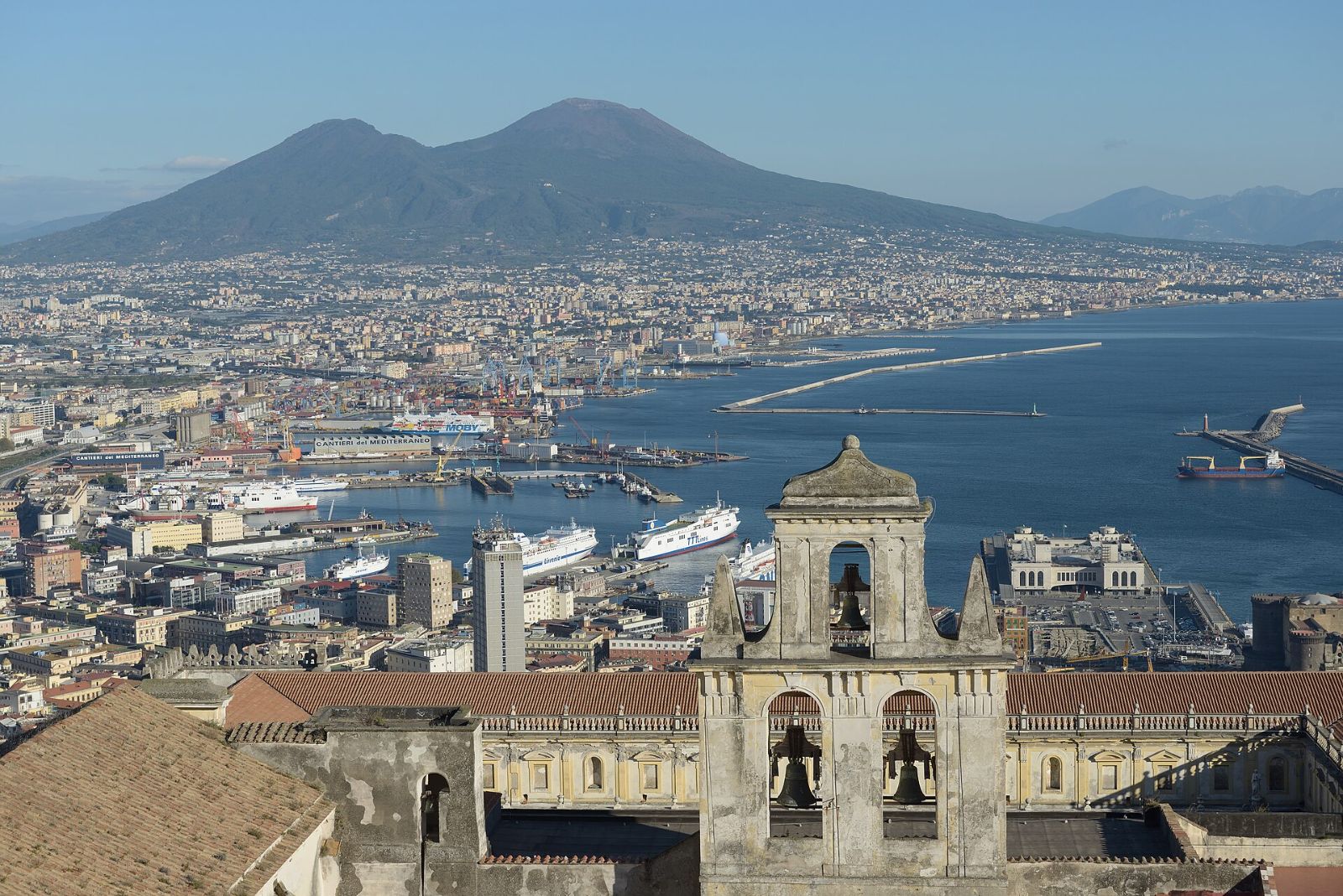
Top photo (Naples): This Photo was taken by Wolfgang Moroder. Feel free to use my photos, but please mention me as the author and send me a message. This image is not in the public domain. Please respect the copyright protection. It may only be used according to the rules mentioned here. This specifically excludes use in social media, if applicable terms of the licenses listed here not appropriate. Please do not upload an updated image here without consultation with the Author. The author would like to make corrections only at his own source. This ensures that the changes are preserved.Please if you think that any changes should be required, please inform the author.Otherwise you can upload a new image with a new name. Please use one of the templates derivative or extract., CC BY-SA 3.0, via Wikimedia Commons.