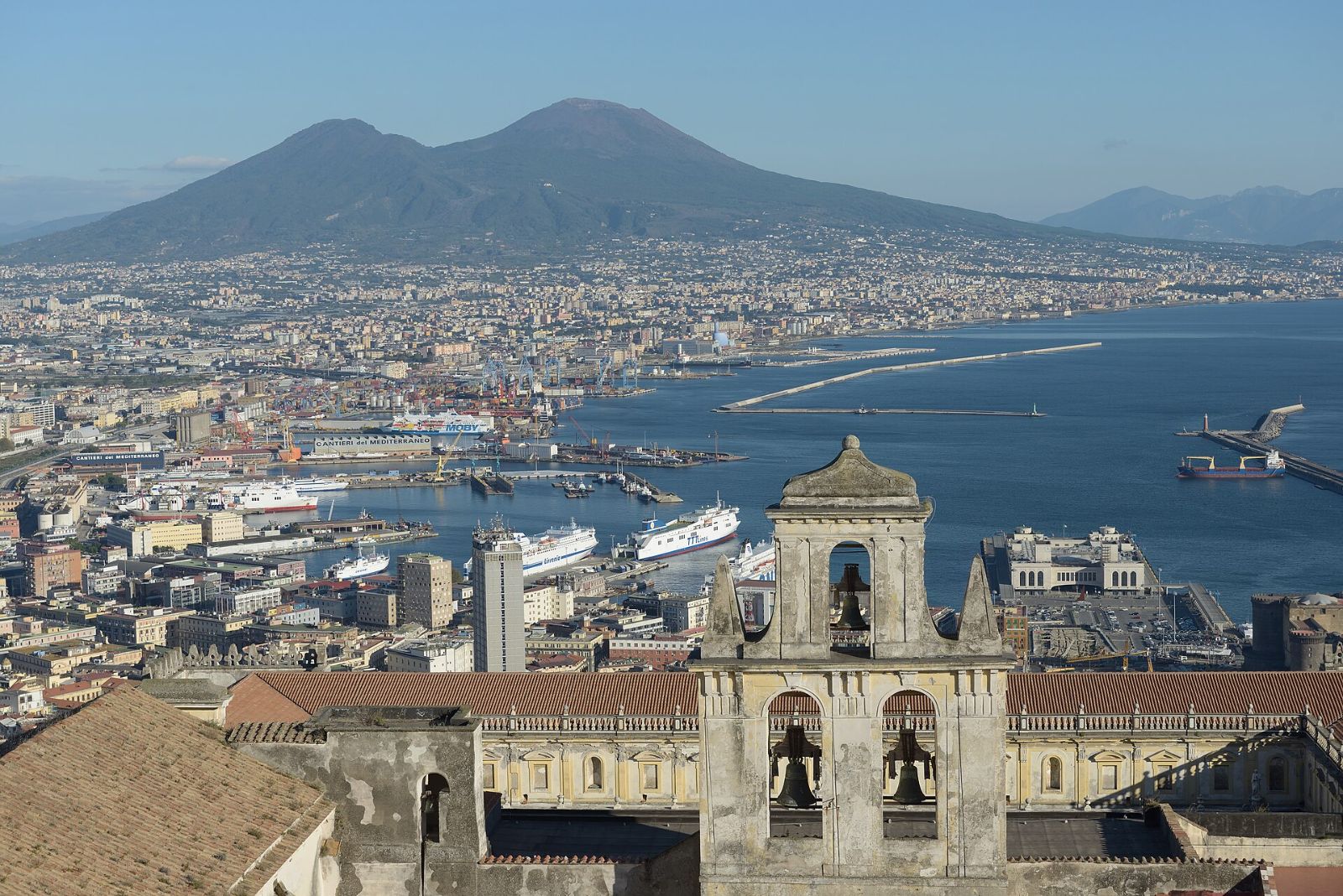
Every time we stroll along the seafront of Napoli, our gaze always ends up there, on the two-humped silhouette of Mount Vesuvius. It is the most famous volcano in Europe and, for those who live around the gulf, a daily presence: people love it and respect it. Here we tell you its story, from the eruptions that changed the landscape up to the present day.
A volcano inside another volcano
What we see from the city is not a single mountain. Vesuvius proper, the Gran Cono (Great Cone), grew inside the caldera of an older volcano, Monte Somma, of which the broad rim to the north remains. This is why geologists speak of a "somma volcano", and why two distinct peaks can be seen from Naples.
The Gran Cono reaches a height of about 1281 metres. Since 1995 the whole area has been protected by the Vesuvius National Park, which safeguards not only the volcano but also the woods, the lava flows and the vineyards climbing its slopes.
AD 79: the eruption that buried Pompeii and Herculaneum
The most famous eruption is that of AD 79, which buried Pompei, Ercolano, Oplontis and Stabiae. We know its details thanks to an eyewitness, Pliny the Younger, who described the event in two letters to the historian Tacitus. His uncle, Pliny the Elder, commander of the fleet at Misenum, died during the rescue efforts.
From his account, which describes a column of smoke and ash rising high into the sky, comes the term Plinian eruption, still used by volcanologists today to describe explosive eruptions of this kind. When we walked the streets of Herculaneum, buried under metres of volcanic material, we were struck by how legible that day still is in the houses and in the objects left in place. We talk about it in Herculaneum and Pompeii: what to see.
From 472 to 1631: centuries of activity
Vesuvius did not stop after 79. In the eruption of 472, according to the sources, the ash reached as far as Constantinople. After a long period of quiet, the most dramatic awakening of the modern era came on the night between 15 and 16 December 1631: pyroclastic flows devastated the towns at the foot of the volcano, from Torre del Greco to Portici, causing at least 4000 deaths.
From then on the volcano entered a phase of almost continuous activity, with frequent eruptions for about three centuries. In 1841 Ferdinand II of Bourbon had the Vesuvius Observatory built on its slopes, the oldest volcanological observatory in the world, initially directed by the physicist Macedonio Melloni. The historic building now houses a museum with the instruments used by scientists over more than a century and a half.
The 20th century: the eruptions of 1906 and 1944
The eruption of 1906 was the largest of the 20th century: it caused about 300 deaths and largely buried Ottaviano, on the north-eastern side.
The most recent eruption, on the other hand, is that of March 1944, in the middle of the Second World War, with Naples already occupied by Allied troops. The main phase began in mid-March and ended on 29 March. The lava flows reached San Sebastiano al Vesuvio and Massa di Somma, while the ashfall caused many roofs to collapse: there were 26 victims. Since then Vesuvius has been in a quiet phase, but it is by no means extinct.
Vesuvius today: a volcano under watch
Today the volcano is monitored day and night by the INGV - Osservatorio Vesuviano. Around the crater extends the so-called red zone, which includes dozens of municipalities: for this area the civil protection plan provides for preventive evacuation should activity resume. Living next to Vesuvius, in short, means living alongside a sleeping giant.
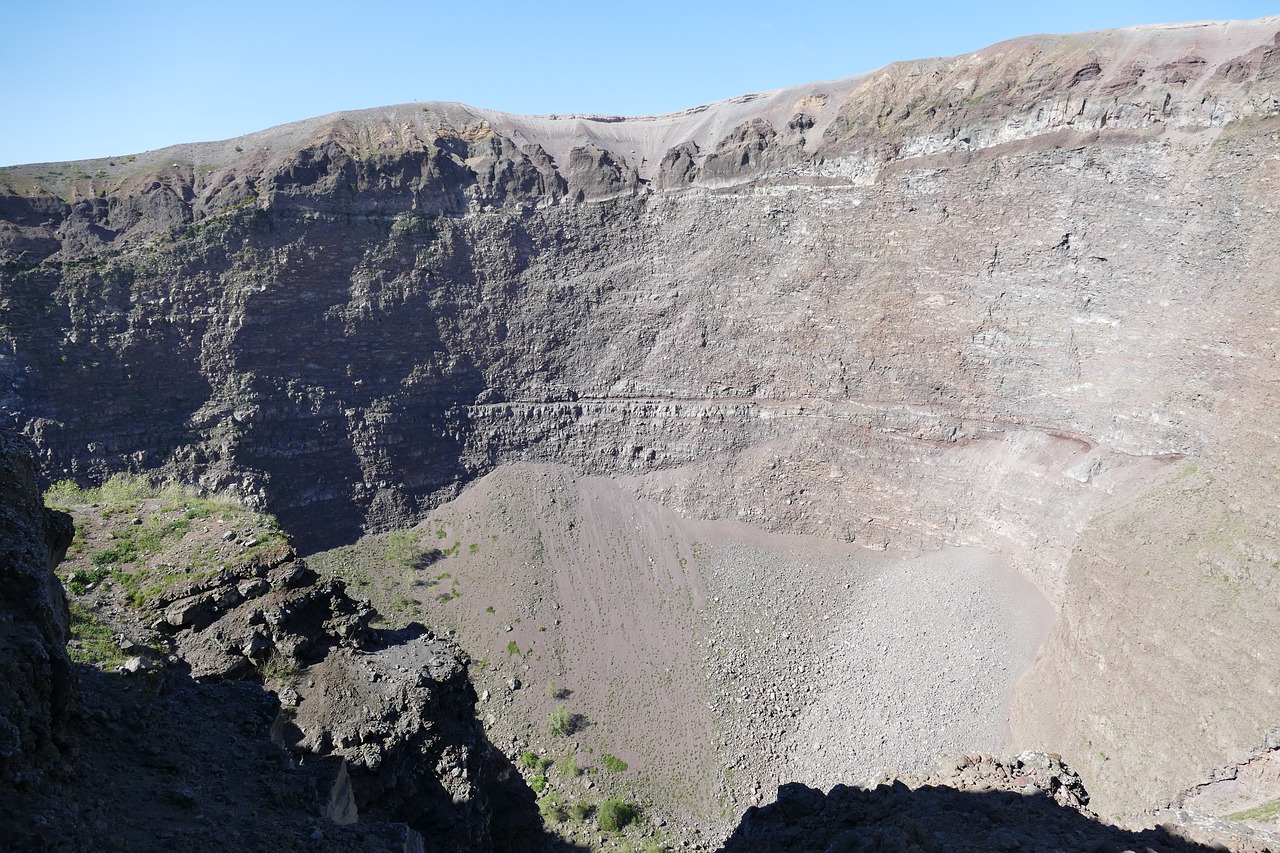
Climbing up to the crater remains an experience we recommend. Trail number 5 of the Park, "Il Gran Cono", leads to the rim of the crater, from where the view sweeps across the whole gulf, from the islands to the Sorrento peninsula. We went on a clear day and the view repaid us for the climb.
How to get there and when to go
The climb to the Gran Cono starts from the high car park on the Herculaneum side, which can be reached by car or by the shuttles leaving from the stations in the area. Access to the crater is limited and tickets must be bought in advance: check opening hours and tickets on the official website before you set off, also because the trail may close in bad weather or strong wind.
The best time is spring or autumn, when the air is clearer and the heat less intense. Bring hiking shoes, water and something warm to wear: it is often windy at the top.
Nearby
After the volcano we suggest heading down to the coast to visit the excavations: you will find our tips in Herculaneum and Pompeii: what to see and in the excavations of Oplontis. Wine lovers should not miss the reds and whites born on the lava, described in Vesuvio DOC wine and Catalanesca del Monte Somma IGT wine. For a walk among the Bourbon villas at the foot of the volcano read the Golden Mile: the luxury and elegance of the 18th-century villas, and to plan the rest of your trip start from our guide Naples and its surroundings.