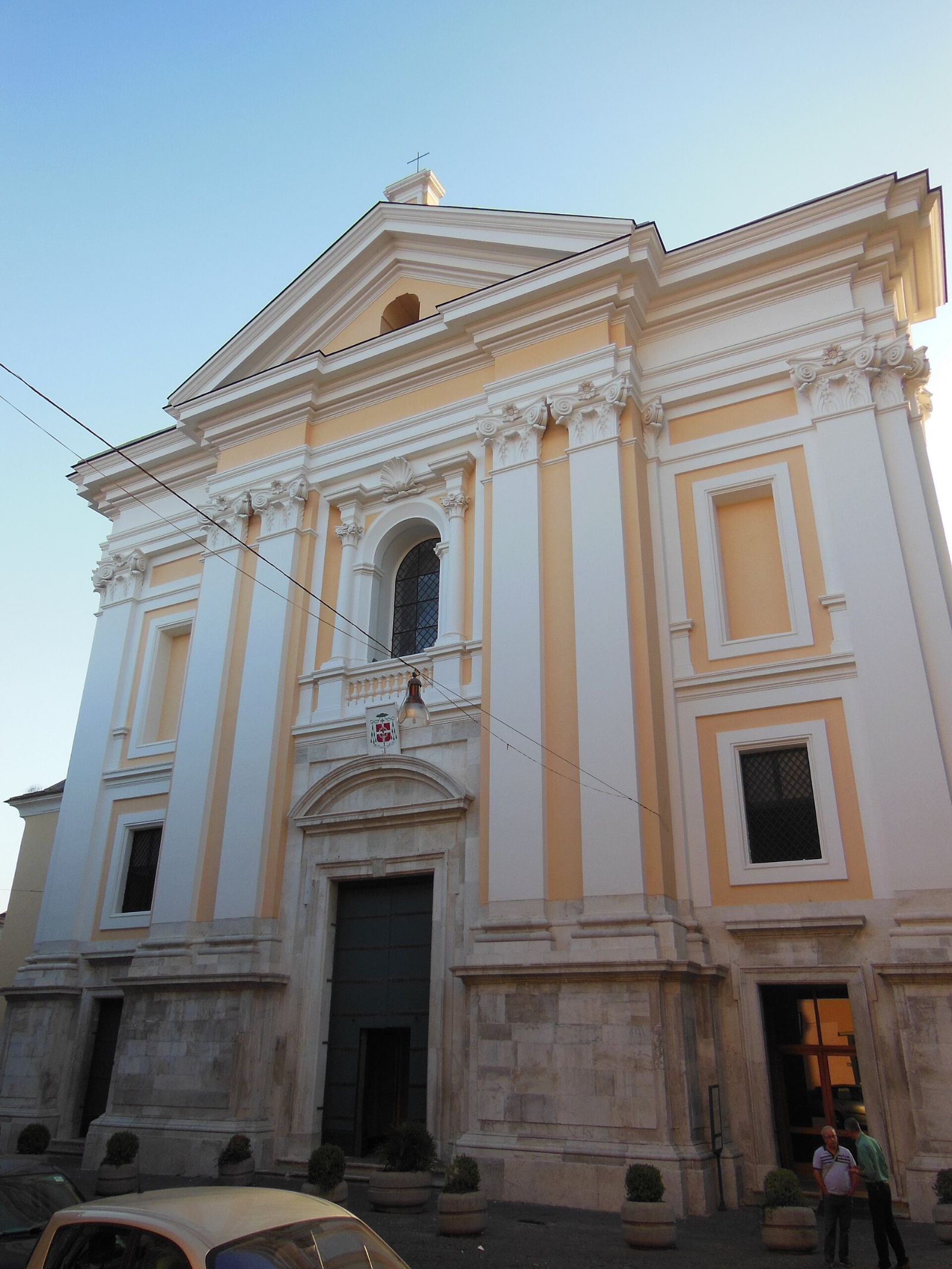
People often rush through Aversa, between Naples and Caserta, without stopping. We, on the other hand, took a whole day and discovered a city of churches, cloisters and palazzi, with a past few people know about: it was the Normans' first conquest in southern Italy. Here is our walking itinerary through the historic centre.
Italy's first Norman county
The story of Aversa begins in 1030, when the Duke of Naples, Sergius IV, granted this territory to the Norman commander Rainulf Drengot as a reward for his military help. Thus was born the first Norman county in southern Italy, in a land contested between the Byzantines of Naples and the Lombards of Capua.
From here the Normans launched the expansion that would lead them to rule southern Italy and Sicily. Around the middle of the 11th century Aversa also became a bishopric. The city's symbol, the basilisk cockerel, harks back to its Norman origins.
The Cathedral of San Paolo
The heart of the visit is the Cathedral of San Paolo, begun in 1053 under the Norman count Richard I. Over the centuries the building suffered fires and earthquakes and was largely rebuilt in the 18th century, but it preserves its oldest part in its most beautiful spot.
Walk around the presbytery: the Romanesque ambulatory, the corridor running behind the high altar, is a rarity in southern Italy and reminded us of the great pilgrimage churches of France. From outside, look at the octagonal dome with its Arab-Norman forms and a drum decorated with small columns.
Inside, look for the relief of Saint George and the Dragon, an extremely rare pre-Romanesque sculpture, and the Madonna del Gonfalone by Francesco Solimena. The treasury holds a remarkable collection of Baroque liturgical silverware.
The city of a hundred churches
Aversa is known as the city of a hundred churches, and as you walk around you realise it's no exaggeration. From the Cathedral we suggest heading to the Annunziata complex, a large charitable institution founded around the 14th century and expanded in the 15th century with a hospital. The church has an elegant Baroque façade overlooking a square courtyard.
Continue towards San Francesco, a church of medieval origin transformed in the 17th and 18th centuries, which preserves a charming cloister with paired columns and pointed arches. Another cloister, this time from the Renaissance, can be found in the former Benedictine abbey of San Lorenzo.
The castle and tales of kings
Aversa's Aragonese castle now houses law courts and can be seen from outside. The city is also linked to one of the darkest episodes of Angevin Naples: it was here in Aversa, in 1345, that Andrew of Hungary, husband of Queen Joanna I, was murdered.
Strolling through the alleys, we noticed the portals of the noble palazzi and the little churches opening onto the street: that's the beauty of Aversa, discovering something new around every corner, without hurrying.
Music, Asprinio and polacca
Aversa was the birthplace of Domenico Cimarosa (1749–1801), composer of the famous Il matrimonio segreto (The Secret Marriage), and of Niccolò Jommelli, another great name in 18th-century music. At the table, the area is famous for buffalo mozzarella and for Asprinio, the white wine made from vines "married" to poplar trees. In pastry shops, look for the polacca aversana, a brioche filled with custard and sour cherries.
Getting there and when to go
Aversa is about twenty kilometres from Naples and has a station on the Naples–Rome railway line via Formia, with frequent connections from the regional capital. By car, take the exit from the Asse Mediano or the A1 motorway. The historic centre can easily be explored on foot in half a day. The churches follow the times of services: check opening times on the official website of the diocese or the city council before you go.
Spring and autumn are the ideal seasons for walking; in summer, choose the early morning or late afternoon.
Nearby
If Asprinio has caught your interest, read Aversa's Asprinio and the married vines and Aversa DOC. Not far away, at Carditello, The Royal Site of Carditello awaits you, a Bourbon residence in the heart of the countryside. To stay in the Middle Ages, head to Capua and The Basilica of Sant'Angelo in Formis. All our other ideas are in Caserta and its surroundings.
Photo at top (Aversa): Dinamo86, CC BY-SA 3.0, via Wikimedia Commons.