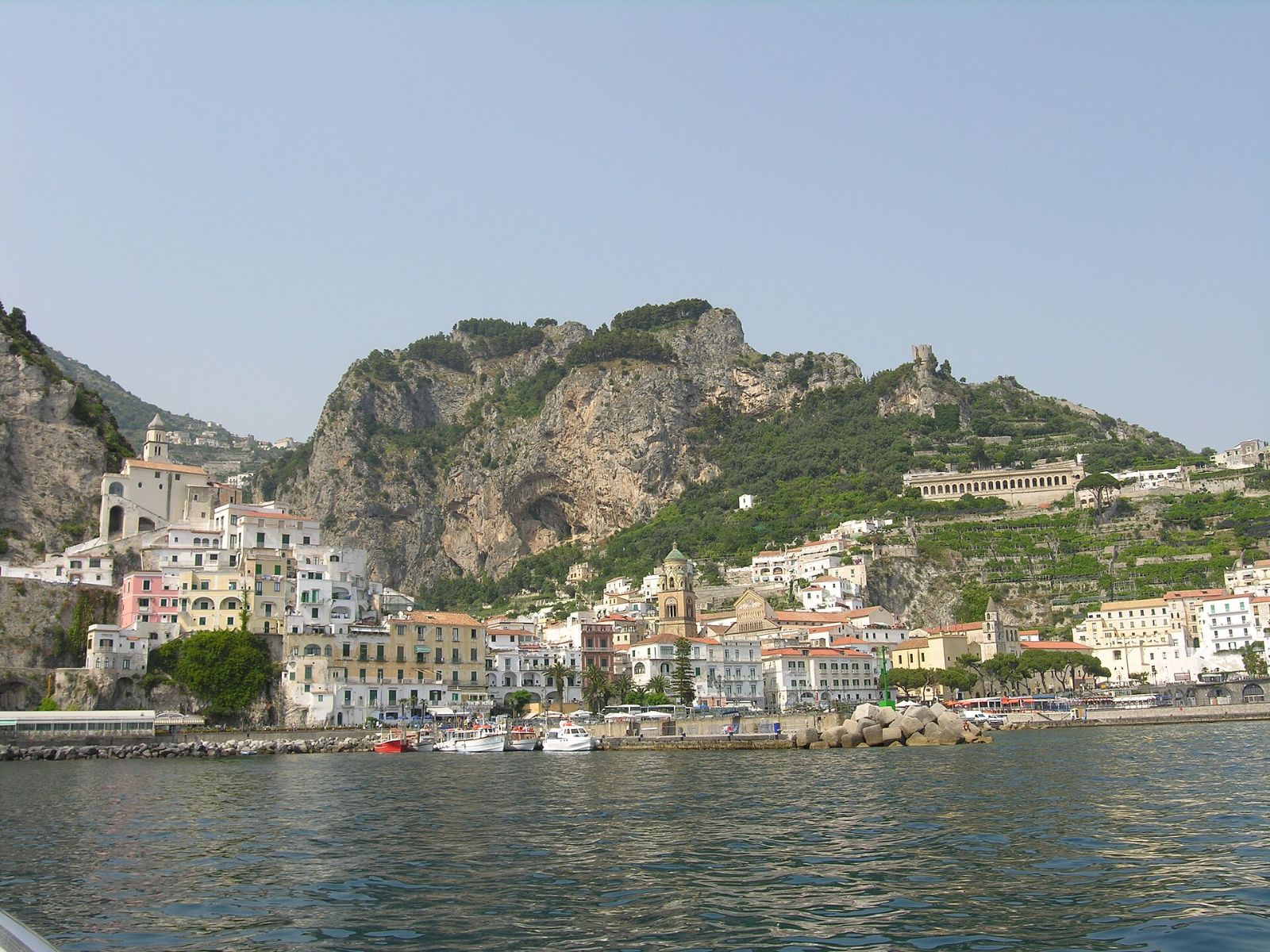
The first time we arrived in Amalfi from the sea, what struck us most was the Cathedral staircase, which you can already see from the pier. Amalfi is small, with fewer than five thousand inhabitants, yet for centuries it was a power in the Mediterranean. Here we tell you what to see and what to do, between art, trails and the sea.
A little history: the Maritime Republic
Amalfi was one of Italy's four Maritime Republics, together with Genoa, Pisa and Venice. It grew from the 9th century, reached its peak in the 11th century and began to decline after the Norman conquest of 1131. Its rules of navigation, the Tavole amalfitane (Amalfi Tables), were influential throughout the Mediterranean until the 17th century.
Here is a curiosity: legend credits the invention of the compass to Flavio Gioia, a native of Amalfi. Historians actually consider this a misunderstanding: if anything, Amalfi's navigators were among the first to use it. His statue, in any case, will welcome you on the seafront.
Since 1997 the Amalfi Coast has been a UNESCO World Heritage Site, and as you stroll through its alleys, arches and covered passageways you understand why.
The Cathedral of Sant'Andrea
The heart of the town is the Cathedral of Sant'Andrea, at the top of an imposing staircase that dominates the square. The façade we see today dates from the 19th century: it was redesigned by Errico Alvino after the damage suffered in 1861, with mosaics based on designs by Domenico Morelli. The central bronze door, on the other hand, is medieval and was cast in Constantinople, a gift from the merchant Pantaleone de Comite Maurone.
Go down into the crypt, commissioned by Cardinal Pietro Capuano: it holds the relics of the apostle Saint Andrew, which arrived from Constantinople in 1208. We were struck by the contrast between the exterior, so theatrical, and the Baroque decoration of the interior. Next to the Cathedral stands the older Basilica of the Crucifix, which is now part of the museum tour.
The Cloister of Paradise
From the Cathedral you enter the Cloister of Paradise, built between 1266 and 1268 at the behest of Archbishop Filippo Augustariccio as a cemetery for Amalfi's noble families. It is a place of great peace: a garden with palm trees surrounded by 120 columns supporting interlaced arches in the Arab style. Frescoed chapels open along the portico.
If you want to learn more, we have devoted a whole article to the Amalfi Cathedral and the Cloister of Paradise.
The Valley of the Mills and the Valle delle Ferriere
Behind the town centre opens a valley that tells of another Amalfi, the Amalfi of paper. The paper mills harnessed the power of the stream's water, and the famous Amalfi paper is still made today. The Paper Museum, housed in an old paper mill, will show you how the process worked.
Continuing upstream you enter the Valle delle Ferriere, a nature reserve with waterfalls, ruins of old ironworks and surprising vegetation: this is where the rare Woodwardia radicans fern grows. We walked it in summer and the cool air made us forget the heat of the coast. All the details are in the Valle delle Ferriere.
What to do: sea, trails and flavours
Amalfi is an excellent base for exploring the coast by boat, including towards Positano and the coves that can only be reached from the sea. Those who love walking can take on the Path of the Gods, one of the most scenic trails in Italy.
At the table, don't miss the fish dishes and lemon desserts: this is where the sfusato amalfitano lemon is grown, protected as Costa d'Amalfi PGI lemon. Pair it with a glass of Costa d'Amalfi DOC wine.
Festivals and traditions
Saint Andrew is celebrated twice a year: on 27 June, the patron saint's feast with a procession, and on 30 November, his liturgical feast day. Taking turns with the other three cities, Amalfi also hosts the Regatta of the Ancient Maritime Republics, established in 1955, with crews racing on medieval-style galleons.
How to get there and when to go
Amalfi can be reached by car along the Amalfitana coast road, but in high season traffic and parking can sorely test your patience. We recommend the regular buses or the ferries from Salerno and Positano. The best times are spring and early autumn, when the climate is mild and the crowds are smaller. For museums and the cloister, check opening hours and tickets on the official website before you set off.
Nearby
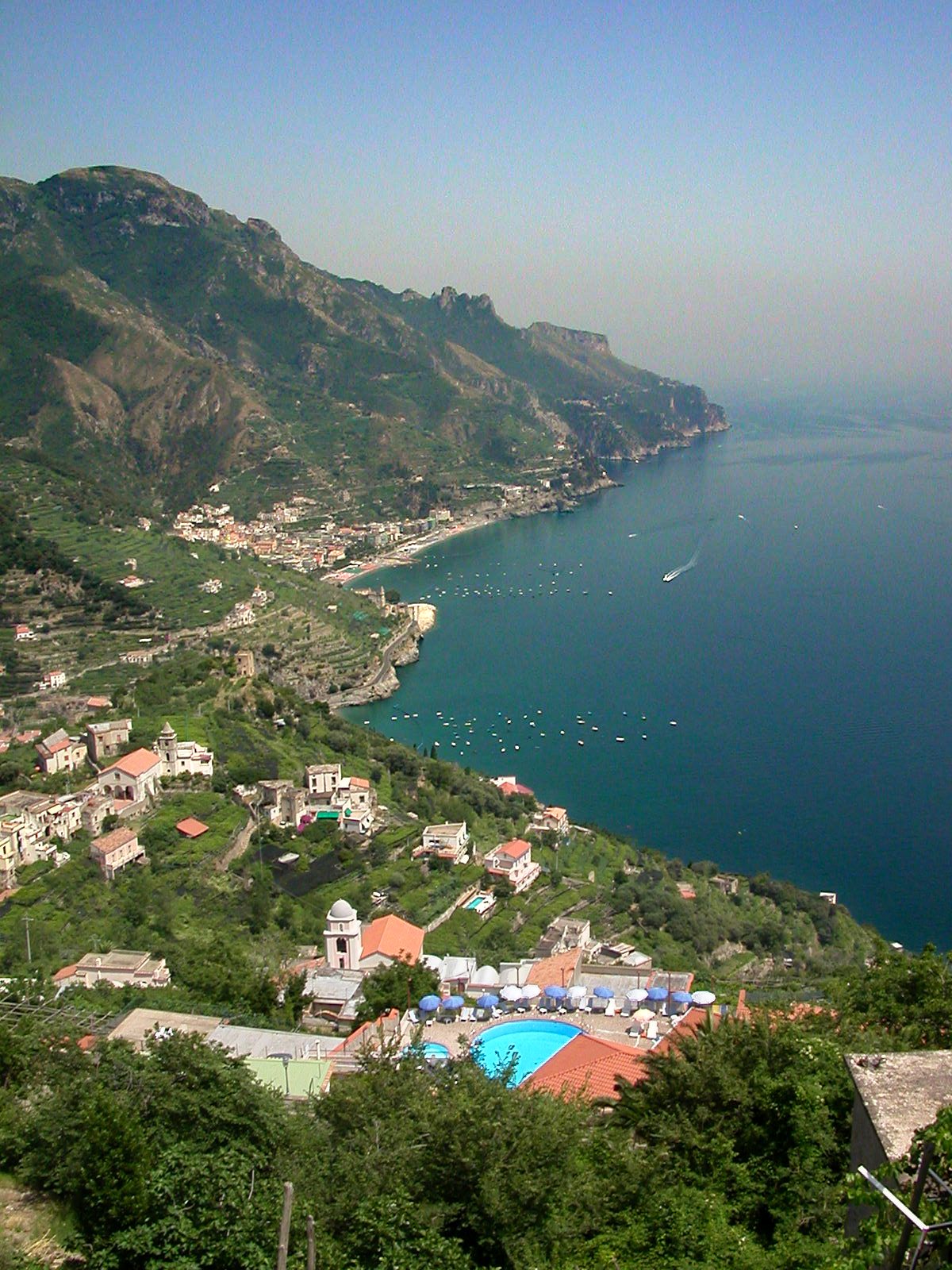
Just a short walk away is Atrani: read Atrani, the smallest village in Italy. Heading up towards Ravello you will find Ravello: what to see and major events, while to the west the Fjord of Furore and Positano and Praiano: what to visit await you. For an overview of the province, start from Salerno and its surroundings.
Top photo (Amalfi): No machine-readable author provided. Sudodana2048 assumed (based on copyright claims)., CC BY-SA 3.0, via Wikimedia Commons.