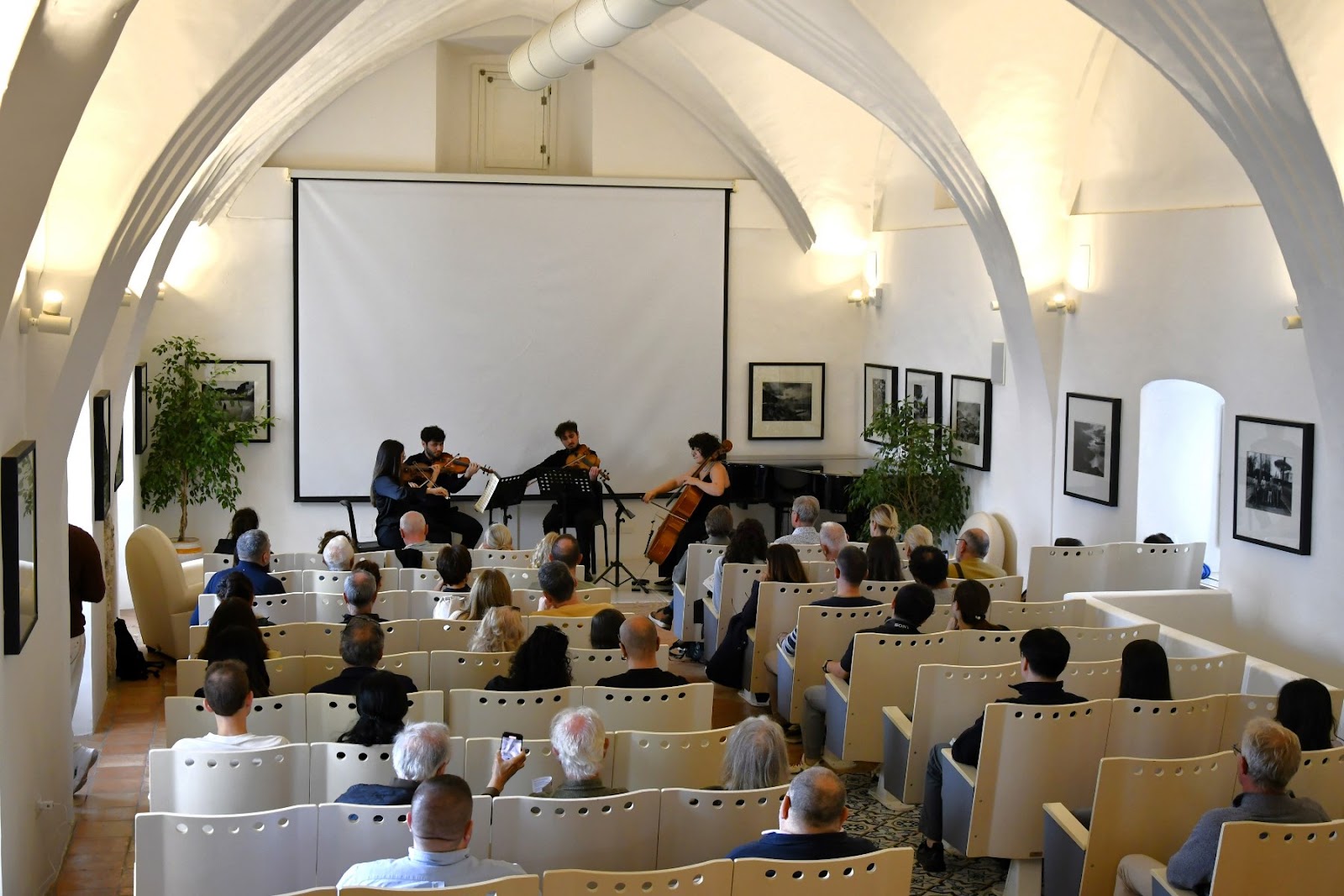
In the heart of Salerno's historic centre, along Via dei Mercanti, there is a small medieval church that today tells one of the city's most important stories: that of the Scuola Medica Salernitana. We went in expecting a traditional museum and found instead a story told through images, screens and reconstructions. Here is what you will see.
A Lombard church as its home
The museum is in the church of San Gregorio, a building of Lombard origin built around the year 1000 and restored in 1176 at the behest of the Norman king William II. The project grew out of an educational museum set up in 1993, later turned into a virtual museum using multimedia technology; after restoration work, the church reopened to the public on 18 December 2009.
Today the museum is run by the Fondazione Scuola Medica Salernitana, which also manages the nearby Roberto Papi Museum.
Why the Medical School matters so much
Before going in, it is worth recalling what we are talking about. The Scuola Medica Salernitana arose between the 9th and 10th centuries and is considered the first and most important medical institution of medieval Europe, with its golden age between the 11th and 13th centuries. Constantine the African, who translated Arabic medical texts into Latin, worked here, and Trotula, the most celebrated of the Mulieres Salernitanae, the women physicians of Salerno, taught here.
With the Constitutions of Melfi of 1231, the Emperor Frederick II laid down precise rules for the study and practice of medicine. The School was officially closed on 29 November 1811, as part of the education reform introduced by Joachim Murat. Learn more about its history in The Minerva Garden and the Scuola Medica Salernitana.
What you see inside
The museum is "virtual" in the sense that it does not display original finds, but tells the story of the School through multimedia stations, illuminated panels and replicas. We especially liked the animated miniatures taken from medieval codices: the images in the manuscripts come to life and show how people were treated, how remedies were prepared and how students learnt.
Among the replicas you will also find the famous Regimen Sanitatis Salernitanum, the verse text of practical advice for healthy living that made the School famous throughout Europe. There are also replicas of ancient surgical instruments and photographic and educational material. It is a museum that can be visited quickly and works well with young people too, precisely because it focuses on storytelling.
The legend of the four masters
The museum is also a chance to think again about the most famous legend about the School's origins. It is said that four travellers, the Greek Pontus, the Latin Salernus, the Jew Helinus and the Arab Abdela, met while sheltering from a storm and, discovering they were all physicians, decided to pool their knowledge. It is not documented history, but it captures well the character of the School, open to different kinds of knowledge. Tradition places this meeting beneath the arches of the aqueduct: read The medieval aqueduct of Salerno, the "Devil's Bridges".
The museum's current status
In recent years the museum has had some temporary closures for works and maintenance: it reopened in December 2023 and, after another short break for maintenance of its systems, again in September 2024, for the feast of San Matteo. Opening hours are reduced and concentrated mainly at weekends, while weekday visits may require booking: for this reason we recommend checking opening times and tickets on the Foundation's official website before you set off.
How to get there and when to go
The museum is on Via dei Mercanti, the main street of the historic centre, reachable on foot from the seafront and the station. It is an indoor visit, suitable for any season. We suggest combining it with a stroll through the historic centre and, if possible, a visit to the Papi Museum, with which there is usually a combined ticket.
In the surroundings
To complete your journey through Salerno's medicine, continue with The Roberto Papi Museum and climb up to the Minerva Garden. A few steps away you will find San Pietro a Corte and The churches and Cathedral of Salerno. For all the other destinations in the province read Salerno and its surroundings.
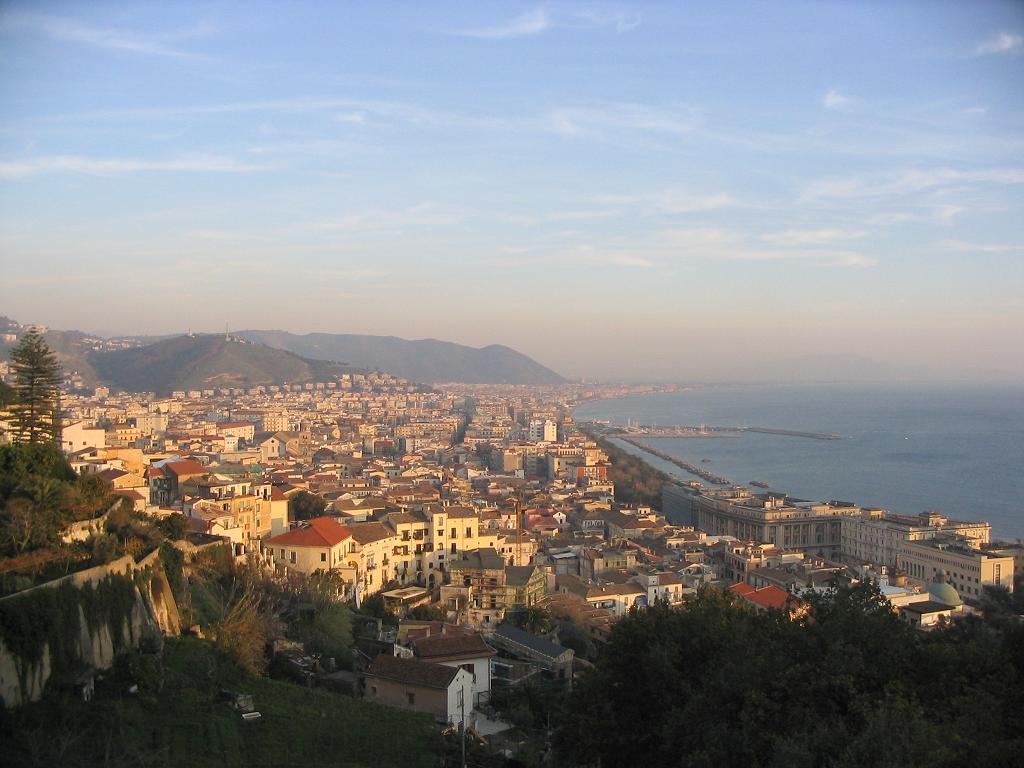
Top photo (Salerno): No machine-readable author provided. Giaros assumed (based on copyright claims)., CC BY-SA 3.0, via Wikimedia Commons.