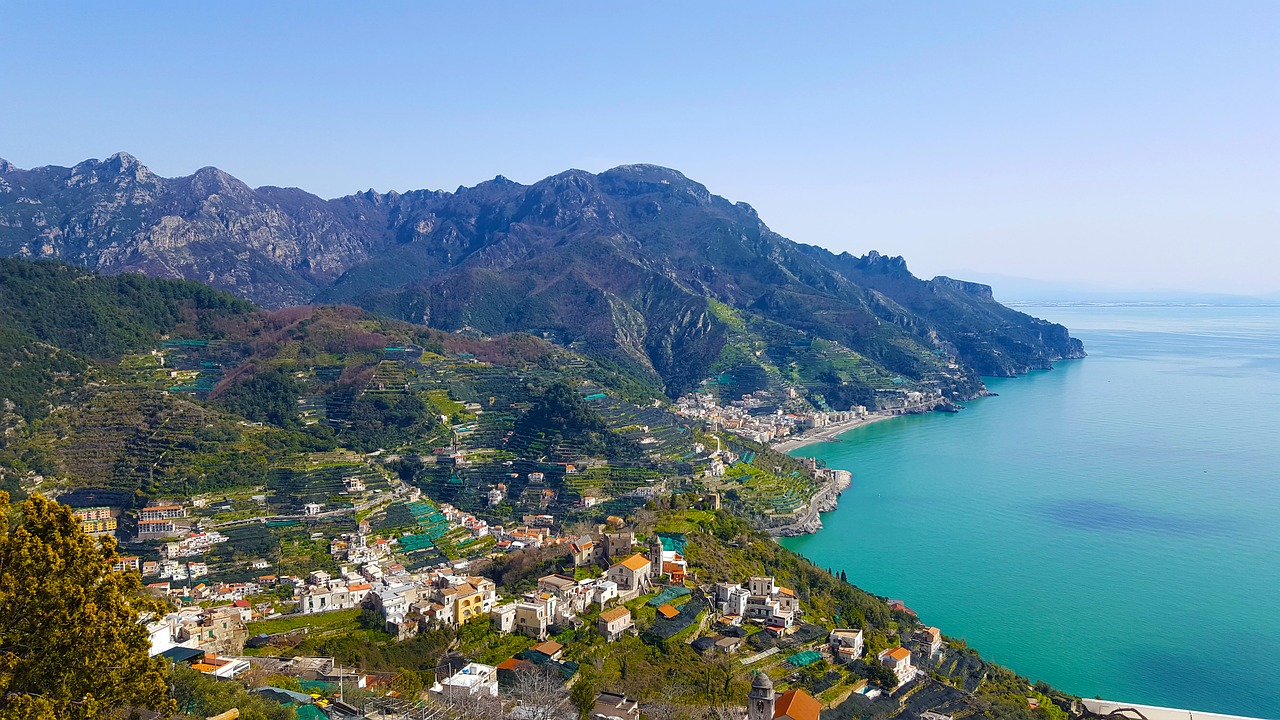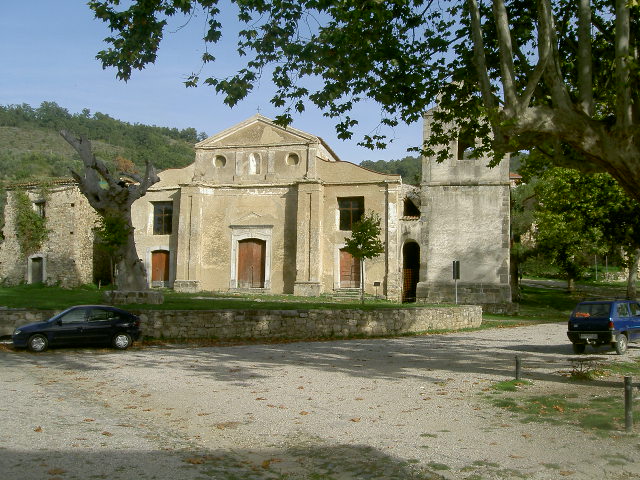
Arriving in Roscigno Vecchia is like stepping into a black-and-white photograph. The stone houses are still there, with their doors shut and their tiled roofs, around a large square with a fountain. We wandered through it slowly, in silence, and here we tell you why an entire village was left empty and what you can see today.
The village that kept moving
Roscigno Vecchia is the old core of Roscigno, a small town at the foot of the Alburni Mountains, in the Cilento, Vallo di Diano and Alburni National Park. Its history has been shaped by a constant enemy: landslides. The ground it stands on is unstable, and over the centuries the village was forced several times to rebuild and move, earning itself a reputation as a "wandering" village.
At the beginning of the twentieth century the situation became untenable. From 1902 the authorities issued relocation orders requiring the inhabitants to move higher up, where Roscigno Nuova was being built. Many could not afford to build a new house and stayed where they were for years; others left for America or Switzerland.
A slow abandonment
The emptying was gradual and lasted decades. It was above all in the 1950s and 1960s that the last families left the village, helped in part by money sent home by emigrant relatives. The result is a village that has remained practically intact, as if frozen: that is why it is called "the Pompeii of the twentieth century".
For many years a single inhabitant went on living in the village, welcoming visitors and telling its story; he passed away in 2024, and today it is mainly the stones that tell the village's tale. Walking among the empty houses, we were struck by how clearly the life of the past can still be read in the stones.
What to see in the village
At the centre of everything is the large Piazza Giovanni Nicotera, with its stone fountain and the wash-house where women gathered to do the laundry. On one side stands the eighteenth-century church of San Nicola di Bari, now closed for safety reasons.
All around stretch the farmhouses of the eighteenth and nineteenth centuries. Take a closer look: on the ground floor were the stables and storerooms, upstairs the kitchen and living quarters. Here and there you can still make out the workshops of the blacksmith and the cobbler. A small museum of rural life has been set up in the former town hall, with tools and everyday objects from the past.
Remember that many buildings are unsafe: do not go into the houses and stay on the routes open to the public.
A future for the village
Roscigno Vecchia has not been forgotten. In 2026 the Ministry of Culture began a planning process to turn it into an open-air widespread museum and cultural laboratory, with the support of the Fondazione Monte Pruno. In the same area, on Monte Pruno, the University of Naples Federico II is carrying out archaeological excavations together with the Soprintendenza: one more reason to come back and follow the story of this corner of the Alburni.
How to get there and when to go
You need a car. Roscigno can be reached from the Vallo di Diano, leaving the A2 del Mediterraneo motorway and crossing the Alburni, or from the Paestum plain by heading up the Calore valley; from Roscigno Nuova, signs lead to the old village. The best time is spring or autumn, when the soft light makes the stones even more beautiful and the heat is not oppressive. Wear comfortable shoes, as the lanes are steep and the paving is uneven. If you want to visit the museum, check opening times with the Municipality before you set off.
Nearby
Roscigno is an excellent base for getting to know the Alburni. On one side of the massif are The Pertosa-Auletta Caves, with an underground river to cross by boat; on the other, The Castelcivita Caves. Continuing towards the Vallo di Diano, Teggiano, the city of portals awaits you, and to learn about the inland villages, discover the travelling trades of the Cilento. You will find everything else in our guide The Cilento: what to do and what to see.
Photo at the top (Roscigno): Локомотив, CC BY-SA 3.0, via Wikimedia Commons.