There are places in the Cilento where the sea feels very far away, and the Calore Gorges are one of them. We walked down from the village of Felitto to the river, past old mills and rock walls, and found ourselves facing a green, silent canyon. Here is how to visit it, on foot or with a dip in its cool waters.
A canyon below the village
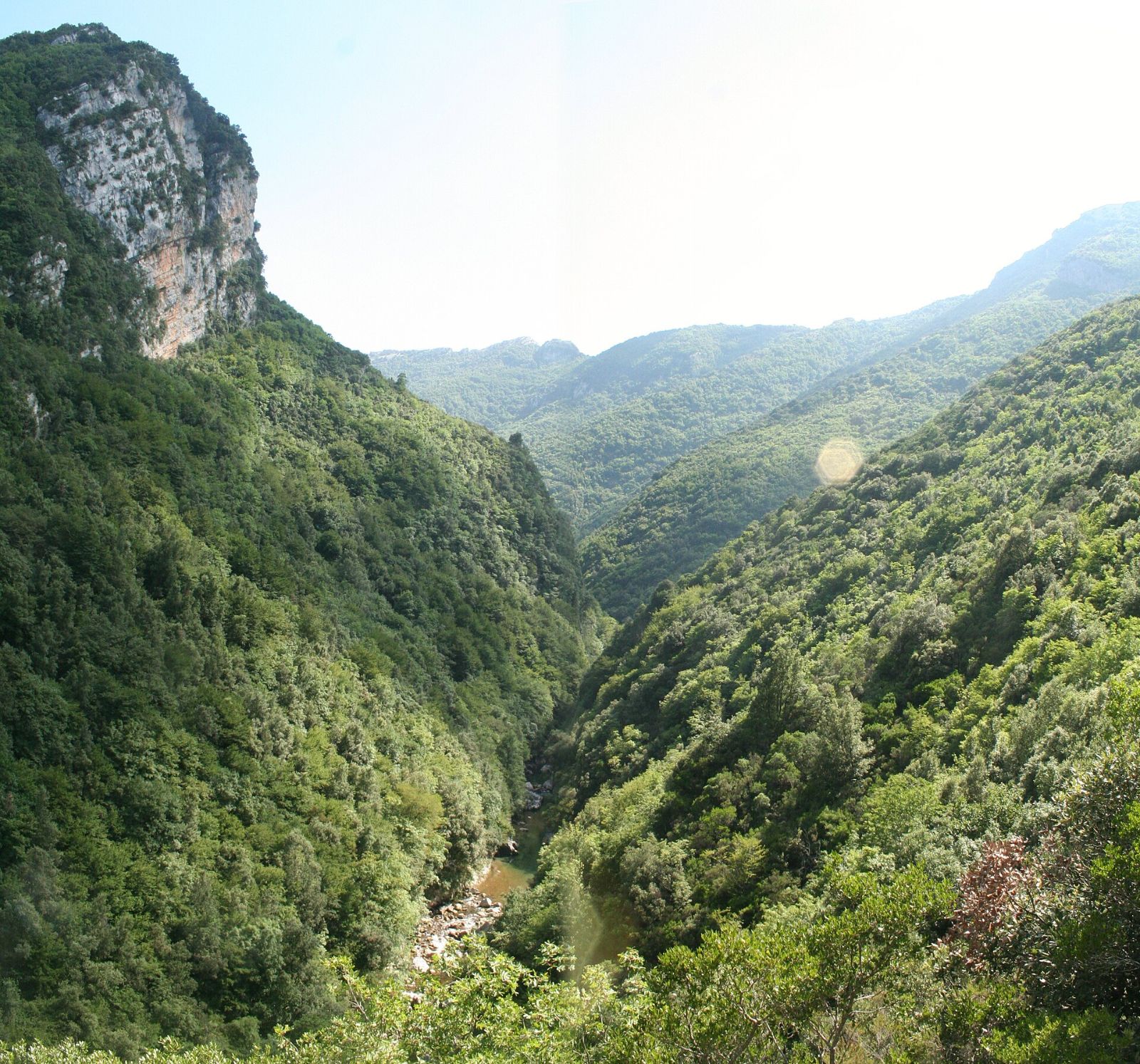
On its way through the mountains of the inland Cilento, the Calore river has carved a series of gorges into the limestone. The most spectacular are in the territory of Felitto, a small village perched right on the edge of one of these cliffs. Looking at the river from the top of the village, and then finding it beside us after the descent, gave us a sense of just how deep this gorge is.
The finest stretch is protected as a nature area: about 120 hectares between the medieval bridge downstream and the boundary with the municipality of Magliano Vetere. The heart of the area is the Remolino, an equipped visitor area run under licence from the municipality.
The giant's kettles and the Petratetta bridge
Walking along the river you understand the power of the water. In the rocks open the giant's kettles, large round potholes carved by whirlpools during floods. A little further on is the Petratetta Bridge, a natural bridge formed by two huge limestone boulders that fell and wedged against each other above the river.
The gorges are narrow and shady, creating a cool, damp microclimate where rare ferns and horsetails grow. This is also the territory of the otter, the true symbol of these waters, and of birds such as the goshawk, the peregrine falcon and the kingfisher, which we saw darting low over the water like a flash of blue.
The trails
The main route starts from the centre of Felitto, runs down past the old watermills and reaches the Remolino. The round trip is about 8 kilometres, with a modest change in elevation, and takes 4-5 hours including stops. Several routes start from here:
- the trail along the Calore starting from the Remolino;
- the one to the Petratetta Bridge;
- the one to the Grotta di Bernardo, named after a 19th-century hermit;
- the more demanding route, best done in summer, to the medieval bridge.
On Sundays the municipality also organises guided tours; for days and times, and for trail conditions after rain, ask at the municipal visitor centre before setting off.
Swimming, canoeing and picnics
In summer the Remolino fills up with families. Thanks to an old dam no longer in use, the river forms a calm pool here where you can swim, hire canoes and pedal boats, and eat in the shade in the picnic areas. The water is cool even in August: for us it was the best way to end the walk. Only swim in the marked areas, follow the signs and watch out for the current, which can rise quickly after rain. For experienced visitors there is also canyoning, always with qualified guides.
Felitto's fusillo
You can't leave Felitto without tasting the fusillo felittese, the handmade pasta rolled around a thin iron rod, which is the pride of the village. Every year in August the village holds a very popular festival in its honour, which is also a great chance to see Felitto in celebration.
Getting there and when to go
Felitto can be reached by car from the Paestum plain, heading inland towards Roccadaspide; from there, signs lead to the village and to the Remolino. The best time for walking is spring, when the river is full and the woods are green, or autumn; summer is perfect for swimming, but avoid the hottest hours on the trail. Hiking shoes, a swimsuit and drinking water are a must.
Nearby
Following the Calore downstream you reach the Castelcivita Caves, while the nearby hills produce the wines of the Castel San Lorenzo DOC, made around Castel San Lorenzo. To learn more about the customs of these villages, read Cilento traditions. You will find all the other destinations in our guide The Cilento: what to do and what to see.
Top photo (Felitto): Heinz-Josef Lücking, CC BY 3.0, via Wikimedia Commons.