Archaeological site
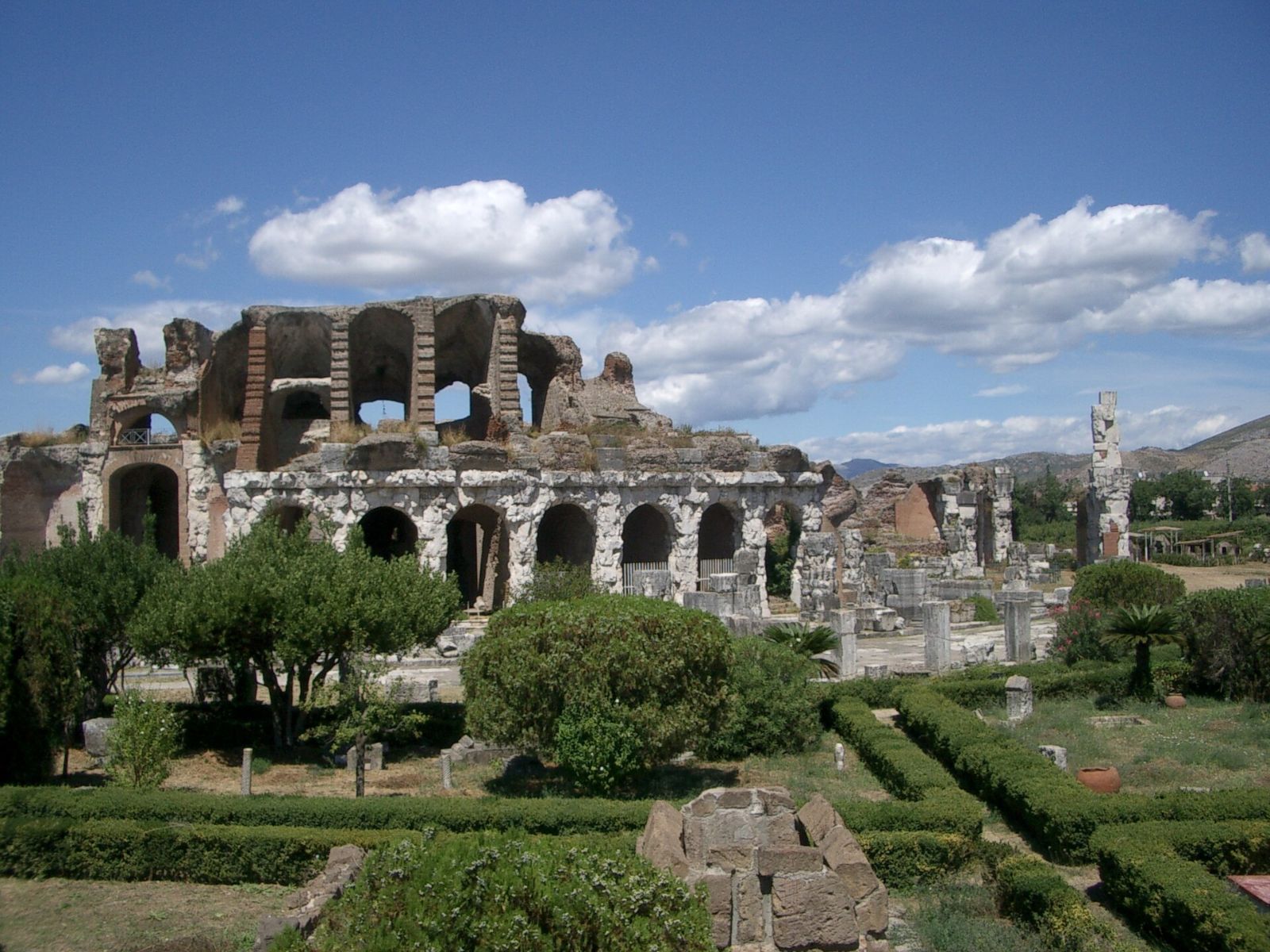
Amphitheatre of Capua
L'anfiteatro dell'antica Capua, tra i più grandi del mondo romano, con il Museo dei Gladiatori.
Archaeological site · Santa Maria Capua Vetere (CE)
The monumental fountain of a Roman domus garden, uncovered in the 1950s and now incorporated into a modern building.
In the early 1950s, during excavations for a new building on Via Bonaparte, the remains of a nymphaeum came to light: the fountain that adorned the garden of a Roman domus. Thanks to photographs taken before construction, it has been possible to work out the plan of the house that contained it.The nymphaeum reveals the refined taste of the Romans: a fountain surrounded by a peristyle of columns, of which few traces remain, enlivened by water features that evoked the dances of the woodland nymphs. We like the way it has been preserved inside the modern building, which keeps it visible. A small archaeological surprise right in the centre.
Do you have a photo of this place? Send it to us: we will publish it with your name.
Archaeological site
L'anfiteatro dell'antica Capua, tra i più grandi del mondo romano, con il Museo dei Gladiatori.
Archaeological site
L'arco romano detto anche Arco Felice, tra Santa Maria Capua Vetere e Capua, probabilmente dedicato all'imperatore Adriano.
Church
La basilica di Santa Maria Maggiore a Santa Maria Capua Vetere, fondata nel 432 da san Simmaco, unisce marmi antichi e decori barocchi.
Archaeological site
L'antica Capua, una delle città più grandi dell'Italia romana, oggi Santa Maria Capua Vetere.
Archaeological site
Edificio romano a pianta centrale con tamburo ottagonale e cupola, oggi interpretato come ambiente di un grande complesso termale.
Church
Archaeological site
Il più grandioso criptoportico della Campania: tre lunghi bracci voltati sotto l'ex carcere, con ottanta finestre e trenta nicchie.
Itineraries, events and flavours: an email now and then, no pushy advertising.