Archaeological site
Amphitheatre of Capua
L'anfiteatro dell'antica Capua, tra i più grandi del mondo romano, con il Museo dei Gladiatori.
Archaeological site · Santa Maria Capua Vetere (CE)
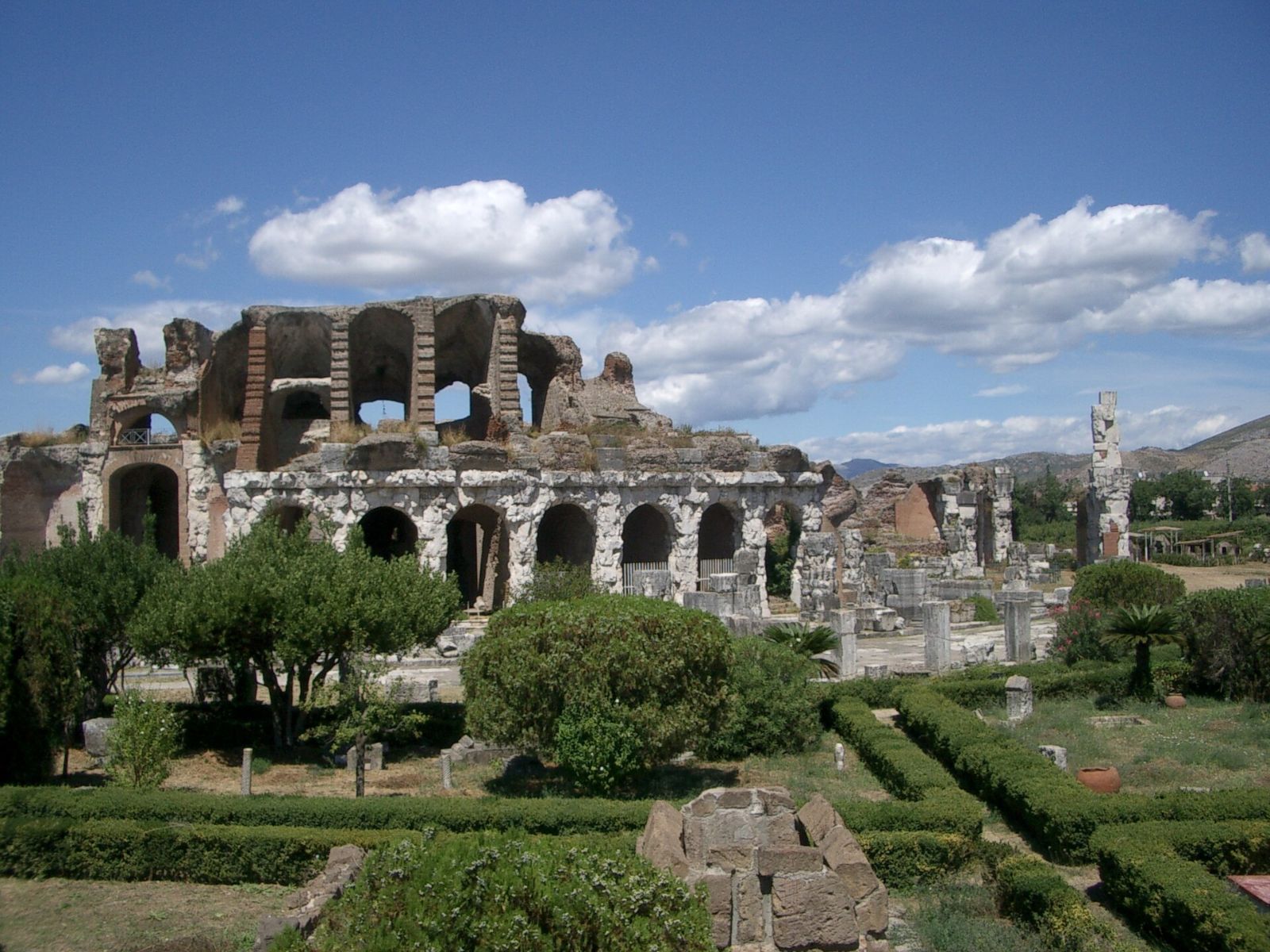
The Roman arch also known as Arco Felice, between Santa Maria Capua Vetere and Capua, probably dedicated to Emperor Hadrian.
At the end of Corso Aldo Moro, not far from the Amphitheatre, rises the Arch of Hadrian, also called Arco Felice or, in dialect, l'Arco 'e Capua: it ideally marks the boundary between Santa Maria Capua Vetere and present-day Capua. According to the most widely held theory, it was built around AD 130 in honour of Emperor Hadrian.It is said that Hadrian loved Capua, where he stopped to rest on his travels, enjoying the climate and the countryside, and that he embellished the Amphitheatre and enlarged the colony: the arch would be a sign of the Capuans' gratitude. We also like the plaque placed in 1860 to commemorate the Battle of the Volturno. We recommend visiting it together with the Amphitheatre.
Do you have a photo of this place? Send it to us: we will publish it with your name.
Archaeological site
L'anfiteatro dell'antica Capua, tra i più grandi del mondo romano, con il Museo dei Gladiatori.
Church
La basilica di Santa Maria Maggiore a Santa Maria Capua Vetere, fondata nel 432 da san Simmaco, unisce marmi antichi e decori barocchi.
Archaeological site
L'antica Capua, una delle città più grandi dell'Italia romana, oggi Santa Maria Capua Vetere.
Archaeological site
Edificio romano a pianta centrale con tamburo ottagonale e cupola, oggi interpretato come ambiente di un grande complesso termale.
Church
Archaeological site
Il più grandioso criptoportico della Campania: tre lunghi bracci voltati sotto l'ex carcere, con ottanta finestre e trenta nicchie.
Archaeological site
Casa romana nata in età augustea e rinnovata fino alla tarda antichità, con ambienti termali, mosaici e pavimenti in opus sectile.
Itineraries, events and flavours: an email now and then, no pushy advertising.