Archaeological site
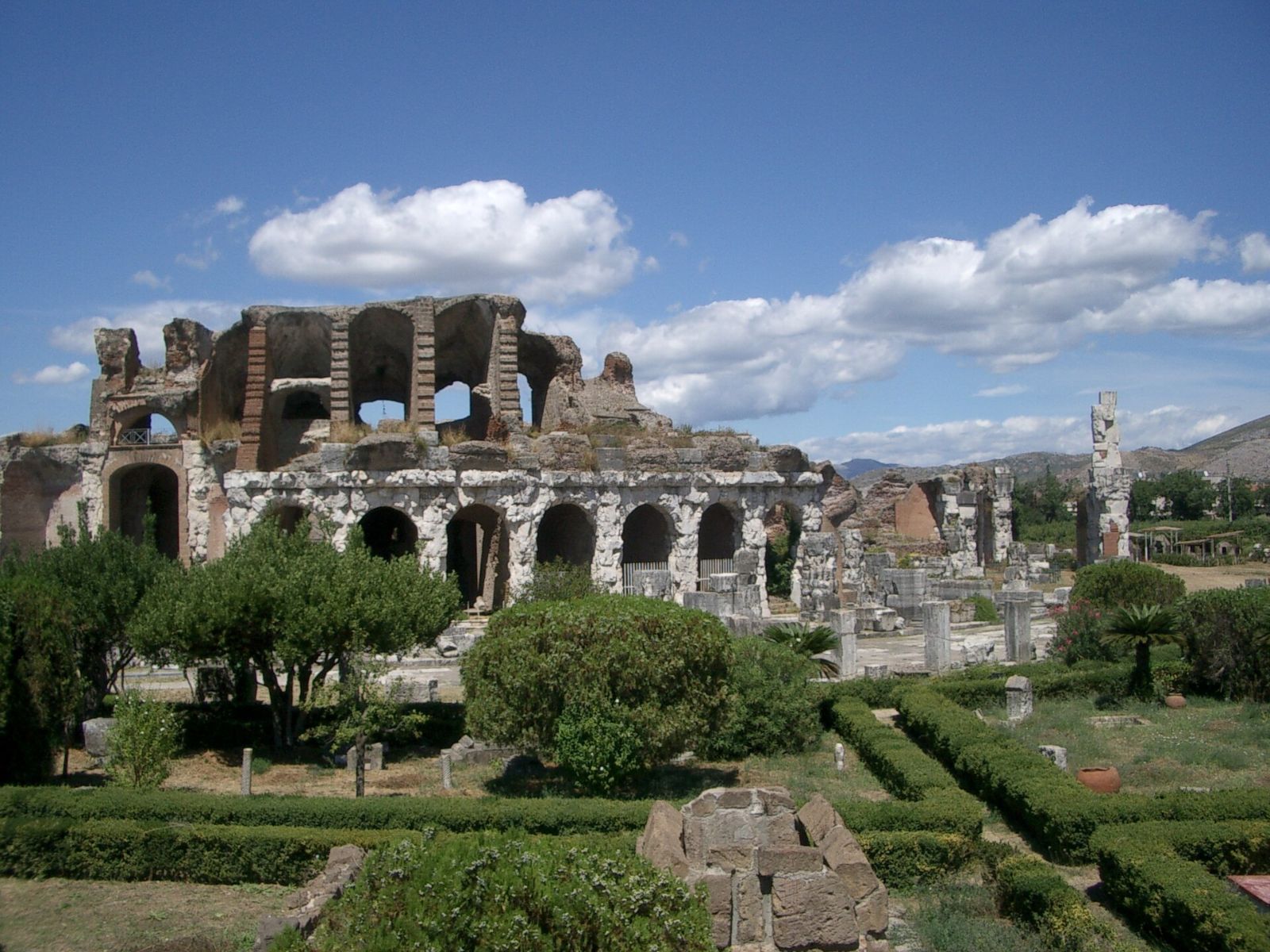
Amphitheatre of Capua
L'anfiteatro dell'antica Capua, tra i più grandi del mondo romano, con il Museo dei Gladiatori.
Archaeological site · Santa Maria Capua Vetere (CE)
Roman house built in the Augustan age and renovated until late antiquity, with bath rooms, mosaics and opus sectile floors.
This domus of ancient Capua tells of centuries of transformation. The first layout dates from the late Republican and Augustan periods: the rooms faced an open space with an elongated pool in the middle, and even then some rooms served as baths.In the second half of the 1st century AD the rooms were decorated with frescoes and stucco, while in late antiquity the house took on the layout we see today, with a renovated bath area and floors in mosaic, opus sectile and stone slabs. The building was probably abandoned in the 5th century. We recommend looking for the differences between the various floors.
Do you have a photo of this place? Send it to us: we will publish it with your name.
Archaeological site
L'anfiteatro dell'antica Capua, tra i più grandi del mondo romano, con il Museo dei Gladiatori.
Archaeological site
L'arco romano detto anche Arco Felice, tra Santa Maria Capua Vetere e Capua, probabilmente dedicato all'imperatore Adriano.
Church
La basilica di Santa Maria Maggiore a Santa Maria Capua Vetere, fondata nel 432 da san Simmaco, unisce marmi antichi e decori barocchi.
Archaeological site
L'antica Capua, una delle città più grandi dell'Italia romana, oggi Santa Maria Capua Vetere.
Archaeological site
Edificio romano a pianta centrale con tamburo ottagonale e cupola, oggi interpretato come ambiente di un grande complesso termale.
Church
Archaeological site
Il più grandioso criptoportico della Campania: tre lunghi bracci voltati sotto l'ex carcere, con ottanta finestre e trenta nicchie.
Itineraries, events and flavours: an email now and then, no pushy advertising.