Few people imagine that, not far from Salerno, there are beech forests where wolves live and valleys carved by streams with waterfalls and caves. We discovered them by climbing into the Monti Picentini, between the provinces of Salerno and Avellino, in two oases managed by the WWF. Here is what awaits you and how to plan your trip.
Two oases, one park
The two protected areas are close to each other but different. The Monte Polveracchio Oasis lies in the territory of Campagna, while the Valle della Caccia Oasis is just across the provincial border, at Senerchia, in Irpinia. Both are part of the Monti Picentini Regional Park and are managed under an agreement between the WWF and the two Municipalities.
The dates tell of a commitment that has lasted for decades: the Polveracchio oasis was established in 1988 and protects about 200 hectares; Valle della Caccia was set up in 1992, opened to the public in 1993, and protects about 450.
Monte Polveracchio, the realm of the beech
As you climb Polveracchio the vegetation changes quickly and, above a thousand metres, you enter the beech forest. Beneath the beeches grow holly, spurge laurel and some old yew trees, alongside sycamore maples. In spring the clearings fill with crocuses, violets and many wild orchids.
Among the most important animals is the wolf, along with the pine marten, the badger and a rare species such as the rock partridge. Areas have also been created for amphibians, such as the fire salamander and the Italian newt. Two signposted nature trails start from the Salamandra spring, and can be walked alone or with a guide. We walked in silence beneath the beeches, and the rustle of the leaves was the only soundtrack of the morning.
Valle della Caccia, water and rock
Valle della Caccia is wilder and more rugged. It is crossed by the Acquabianca stream, which has carved the rock into waterfalls and small caves; among them is the so-called grotta del muschio (moss cave), where clear water trickles down between green walls.
Black pines cling to the rock faces, and on the warmer slopes there is a holm oak wood of great beauty; we were also intrigued by the presence of birch, a tree you would not expect here. The nature trail follows the stream for about an hour, past caves and cascades: it is the route we recommend if you are short of time or walking with children.
Tips for your visit
Mountain oases are delicate environments and not always staffed, so we recommend contacting the WWF or the Municipalities beforehand to find out which trails are open, whether guided tours are scheduled and how to reach the starting points. After heavy rain or in winter some stretches may be difficult or closed.
- wear hiking boots: the paths along the stream are often wet;
- bring water and something to eat, as there are no refreshment points in the oases;
- stay on the marked trails and do not disturb the animals.
How to get there and when to go
You need a car. For Polveracchio, drive up from Campagna towards the mountain; for Valle della Caccia, head to Senerchia, in the upper Sele valley, and from there to the Acquabianca area. The best seasons are spring, with its blossoms and streams full of water, and autumn, when the beech forest turns yellow and red. In summer the woods are pleasantly cool, while in winter snow can make the climb difficult.
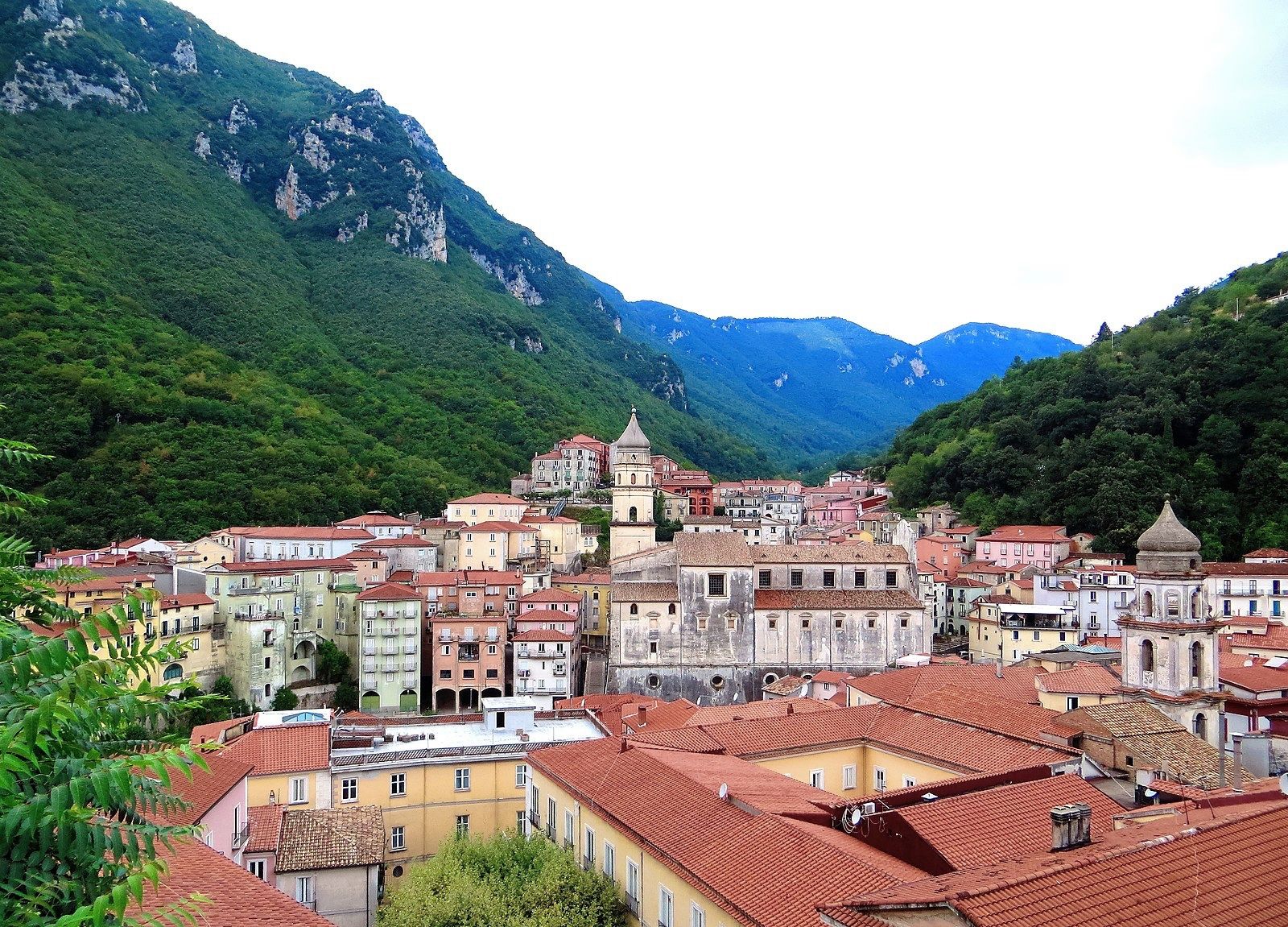
Before or after your hike, we recommend a stroll through the historic centre of Campagna, with its churches and steep lanes.
Nearby
Down on the Sele plain you will find another WWF-protected area, The Persano WWF Oasis. On the other side of the Picentini, towards Giffoni Valle Piana, the Giffoni IGP hazelnut is grown. Nature lovers can go on to explore green tourism and mountain tourism in Campania, from parks and reserves to peaks, trails and snow. For all the other destinations, start from our guide Salerno and its surroundings.
Photo at the top (Campagna): Gianfranco Vitolo, CC BY 2.0, via Wikimedia Commons.