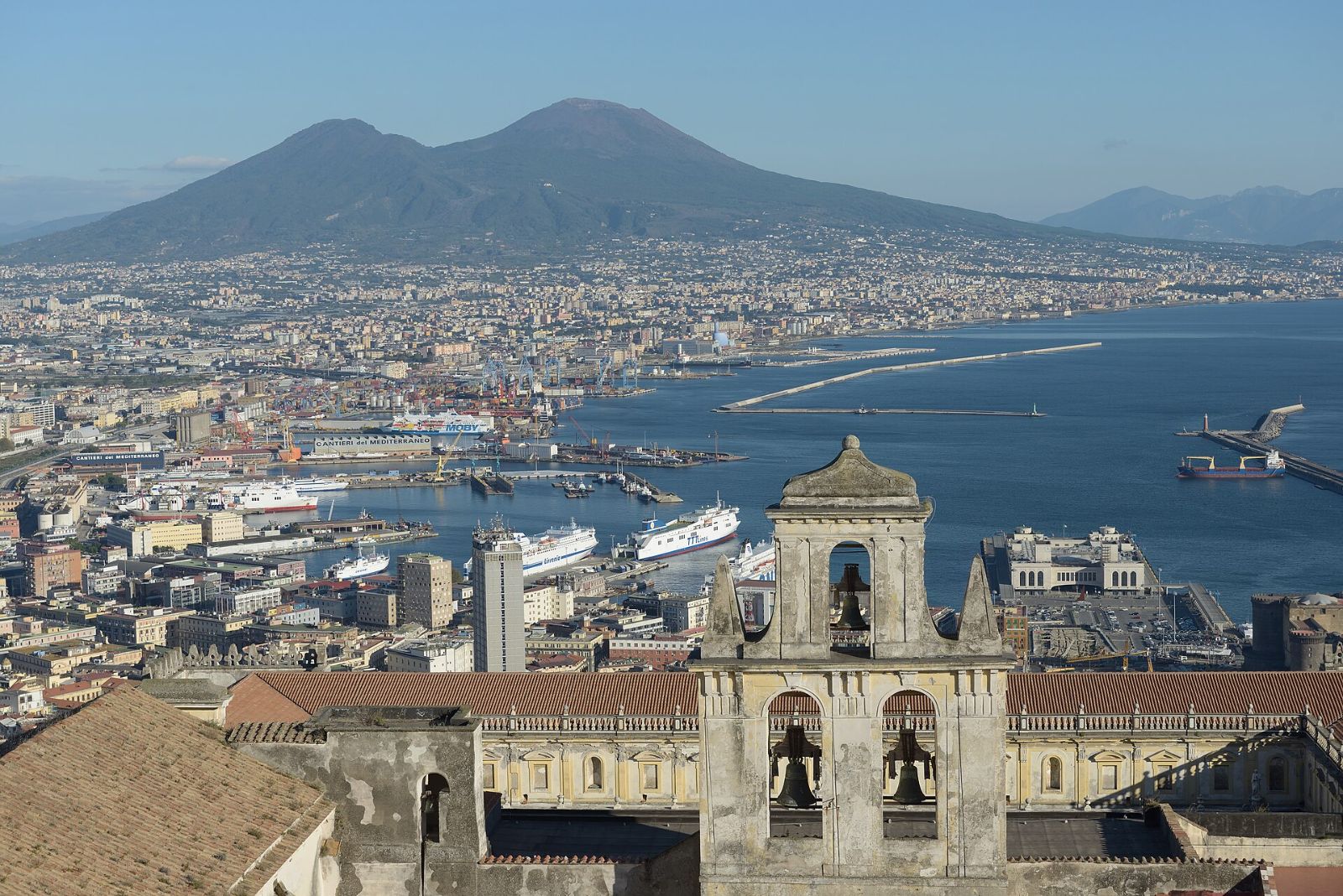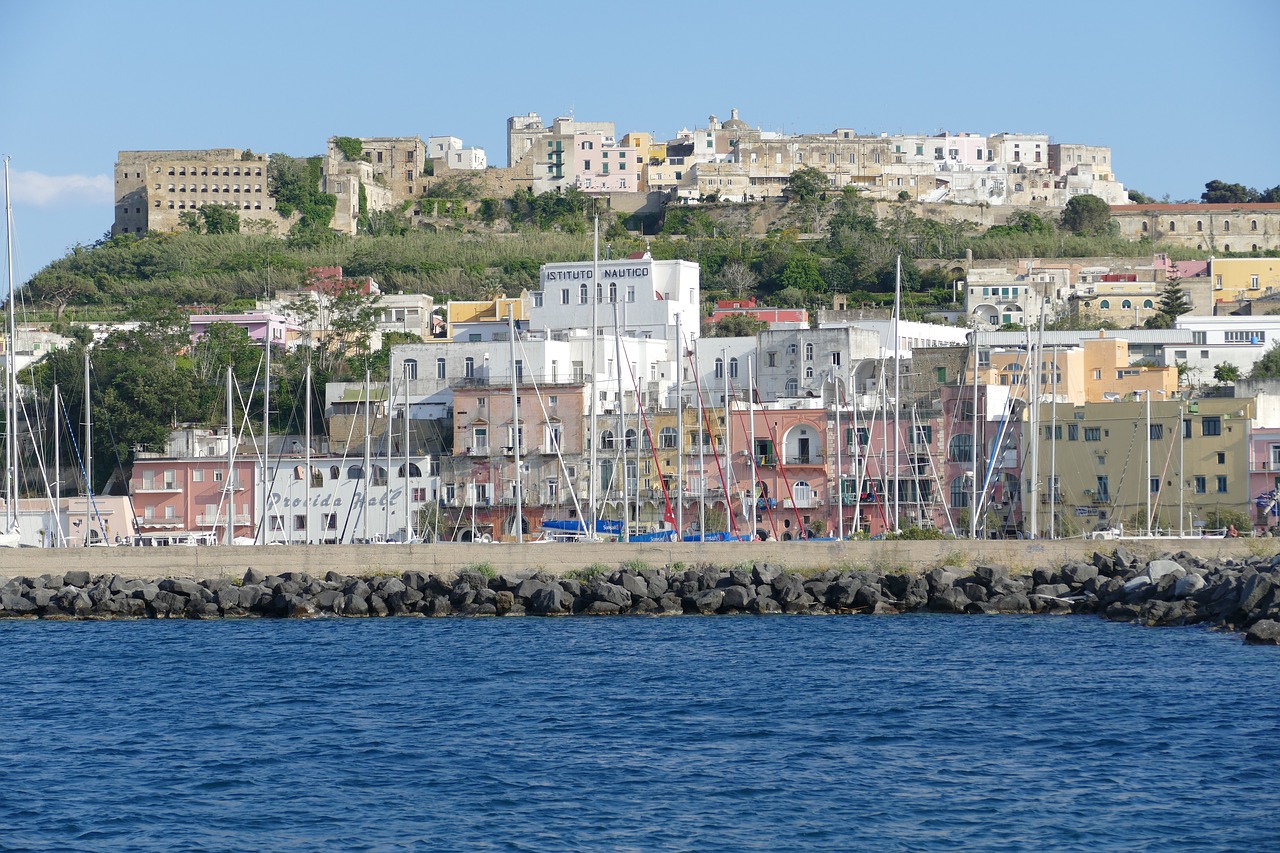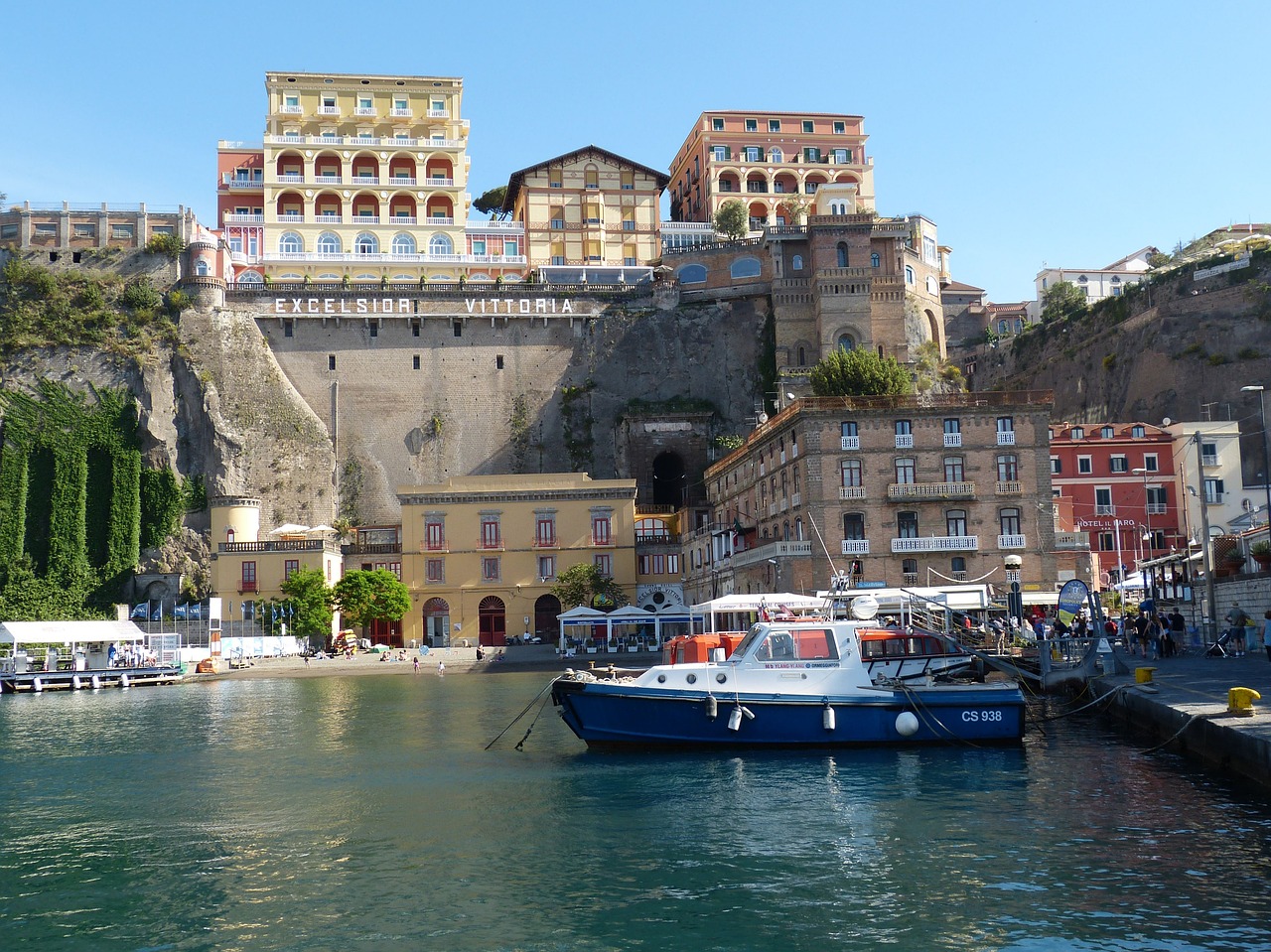
Every time we arrive in Sorrento we are struck by the same thing: the town seems to rest on a tuff terrace plunging sheer into the sea, with Mount Vesuvius opposite and the scent of lemons everywhere. It is the best-known resort on the Sorrento peninsula and, besides the view, it has a historic centre steeped in history. Here we tell you what to see, among monuments, ravines and small beaches.
A town on the rock
Sorrento stands on a high terrace of tuff, cut by deep ravines and overlooking the Gulf of Naples with sheer cliffs. Its Latin name was Surrentum. In the Middle Ages it was an independent duchy, until its annexation to the Norman kingdom in 1137, and in 1558 it suffered a violent attack by the Turks, which led to the strengthening of its walls.
In the 19th century it became one of the favourite destinations of foreign travellers, and the song "Torna a Surriento" by the De Curtis brothers, published in 1905, made it famous all over the world.
Piazza Tasso and the Vallone dei Mulini
The heart of the town is Piazza Tasso, dedicated to the poet Torquato Tasso, born in Sorrento in 1544. It is everyone's meeting point, always lively, and the main streets of the centre start from here.
A few steps further on, look down into the Vallone dei Mulini (Valley of the Mills): a deep gorge formed about 35,000 years ago after a violent eruption of the Campi Flegrei and later carved out by streams. At the bottom you can see the remains of a mill, a sawmill and a public wash house, abandoned in the early 20th century. In 1866 part of the ravine was filled in to create the square, and the remaining humidity has allowed ferns and rare plants to grow. Seen from above, it is one of the most unusual views we know.
The historic centre: churches, cloisters and museums
In the historic centre we recommend not missing the Cloister of San Francesco, built in the 14th century by the Franciscan friars. We were enchanted by the combination of round arches and interlaced Arab-style arches around a central garden. In summer the cloister often hosts concerts and exhibitions.
Not far away are the Cathedral of Saints Philip and James, of medieval origin, and the Basilica of Sant'Antonino, dedicated to the town's patron saint. Walking through the alleys you will notice the workshops of wood inlay, a traditional Sorrento craft along with lace-making.
For art lovers there is the Museo Correale di Terranova, born from the bequest of the brothers Alfredo and Pompeo Correale and housed in an 18th-century villa with a garden overlooking the sea. The collections include furniture, porcelain, paintings from the 15th to the 19th century and archaeological finds.
Marina Grande and the Bagni della Regina Giovanna
From the centre you walk down to Marina Grande, the old fishing village, with colourful boats pulled up on dry land and small beaches. It is the ideal place for a stroll at sunset.
For an unforgettable swim, go to Capo di Sorrento, home to the Bagni della Regina Giovanna (Queen Giovanna's Baths): a natural pool of turquoise water, connected to the sea by a passage under a rock arch. Tradition links it to Queen Joan II of Anjou, and next to it lie the ruins of the Roman villa of Pollius Felix. It can only be reached on foot, in about twenty minutes: bring water and water shoes, because there are no facilities.
How to get there and when to go
From Napoli, Sorrento can be reached by the Circumvesuviana railway, Naples-Sorrento line, or by sea with hydrofoils and ferries, which in season also connect it to Capri. By car the road is scenic but often congested. For the museum and the sites open to visitors, check opening hours and tickets on the official website before you set off.
Spring and autumn are the best seasons, with a mild climate and fewer crowds; in summer Sorrento is lively but very busy.
Nearby
To learn more about the town's history read the ancient walls of Sorrento and, for the local wine, Penisola Sorrentina DOC wine. From the port of Sorrento you can quickly reach the island of Capri: what to see and what to do, while at the tip of the peninsula the Bay of Ieranto awaits you. Heading south you enter the Amalfi Coast: read Positano and Praiano: what to visit. To plan the rest of your trip, start from our guide Naples and its surroundings.